Portugal and Spain Rule Out Regauging Their Railways to Europe's Standard, Judging a €30 Billion Switch Barely Worth the Cost
Lisbon and Madrid have told the European Commission they will not convert their railways from the wide Iberian gauge to Europe's standard, calling a switch that Spain prices at some €30 billion and 30 years of works economically unjustifiable. The new Lisbon–Porto and Lisbon–Madrid high-speed lines
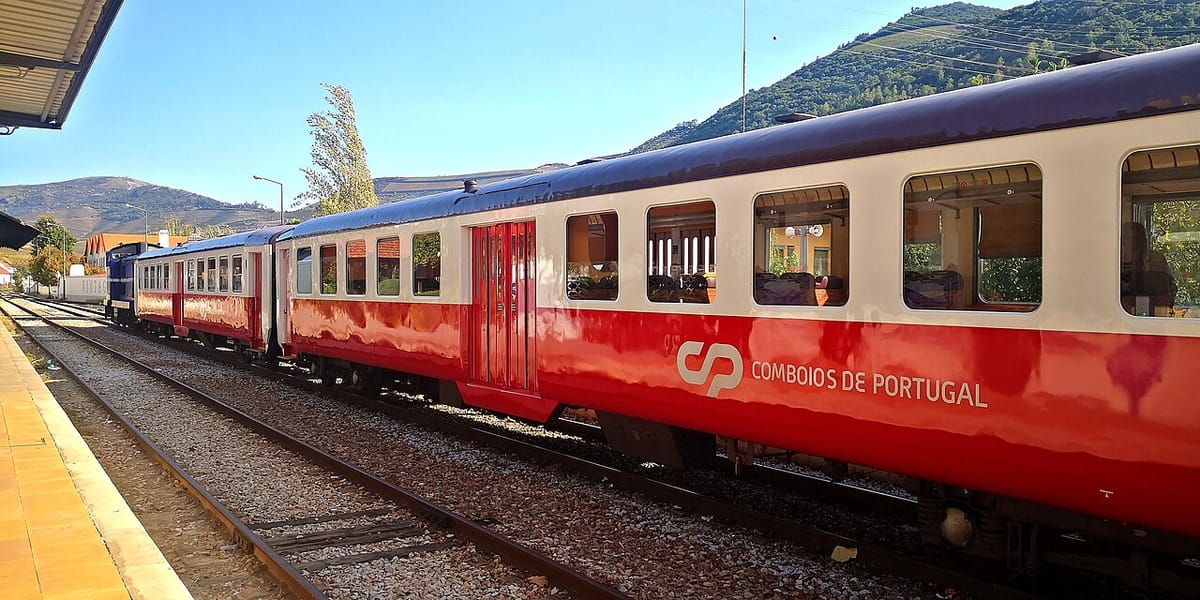
Portugal and Spain have told Brussels they will not rip up and rebuild their railways to match the rest of Europe's, defending a quirk of Iberian engineering that has kept the peninsula's trains a breed apart for more than 150 years. In separate assessments submitted to the European Commission, both governments concluded that converting their networks from the wide Iberian gauge to the narrower European standard would cost tens of billions of euros for benefits that do not come close to justifying the bill, ECO reported on 16 August.
The issue is a difference of 233 millimetres. Iberian track sits 1,668 mm apart; the European standard used across most of the continent — and required by EU rules for new lines — is 1,435 mm. That gap means a train built for Portuguese or Spanish rails cannot simply roll onto French or German ones; cross-border services need gauge-changing equipment or a swap of the wheel assemblies, and freight moving between Iberia and the rest of Europe carries the friction with it.
Brussels has been pressing to close that break. Under the revised Trans-European Transport Network (TEN-T) regulation, all new railway lines must be built to the 1,435 mm standard, and member states whose networks diverge — Iberia's broad gauge, the wider gauge inherited across parts of Eastern Europe — must study migrating the existing lines that sit on Europe's priority freight and passenger corridors. Since July, ECO notes, Portugal has been formally obliged to hand the Commission a detailed cost-benefit analysis of doing exactly that.
The answer, on both sides of the border, was no. Spain's transport ministry put the price of converting its roughly 13,000 kilometres of conventional line at about €30 billion and some 30 years of continuous, disruptive works, and calculated that for every euro spent on the switch only around five cents would come back in economic benefit, according to ECO and Público. Portugal, working through its own network, reached the same conclusion. (The headline cost figures are Spanish and should be read as such; no equivalent Portugal-wide total has been published.)
Crucially, the decision is not confined to old lines. Portugal is building its flagship new railways in Iberian gauge too. The future Lisbon–Porto high-speed line is being designed at 1,668 mm, and the Lisbon–Madrid link through Évora, Elvas and Badajoz is being laid to match the Spanish side at the frontier rather than to the European standard. Lisbon has asked the Commission for a derogation from the gauge rule reported to run until 2040, with a joint Portugal–Spain–Commission study on whether to migrate the high-speed lines later expected around 2027 — dates drawn from earlier reporting rather than this weekend's filings. Spain, for its part, has built some 4,000 kilometres of domestic high-speed line in European gauge, yet deliberately kept the Iberian standard on the high-speed branches reaching toward its Galician and Extremaduran borders with Portugal.
For anyone who has followed the promises of a fast Lisbon–Madrid or Lisbon–Porto journey, the practical upshot is worth spelling out. The new lines will be faster and modern, but they will still speak Iberia's own track language, and a seamless standard-gauge run from Lisbon into France remains, for now, a deferred ambition rather than a plan with a date. The two capitals are betting that the money saved by not regauging is better spent on actually building the lines — and that the day of reckoning with Brussels can wait until the corridors are further along.
That bet still has to survive the EU's own deadlines. The TEN-T timetable calls for the core network to be complete by 2030, its extended reach by 2040 and the comprehensive network by 2050 — the same 2040 horizon Portugal has pencilled in for its derogation. Whether the Commission accepts a five-cents-on-the-euro verdict as reason enough to leave a permanent seam down the middle of Europe's western rail map is the question the coming assessments will force into the open. On the wider question of where the national network is heading, what Portugal has told Brussels about changing the gauge of its railways sets out the Infraestruturas de Portugal study delivered to the European Commission, which prices conversion to European gauge at 6 to 6.9 billion euros and 17 to 30 years of works and concludes that it will hardly be justifiable.