Sines Industrial Cluster Closes In on 10% of Portugal's GDP With €20 Billion of Announced Investment
Sines' industrial and digital corridor is approaching 10% of Portugal's GDP, with more than €20 billion in announced projects — CALB batteries, Start Campus data centres, Galp's H2Park, Madoqua green ammonia, Repsol Alba, and a slice of the EU AI gigafactory — but mayor Álvaro Beijinha warns rents n
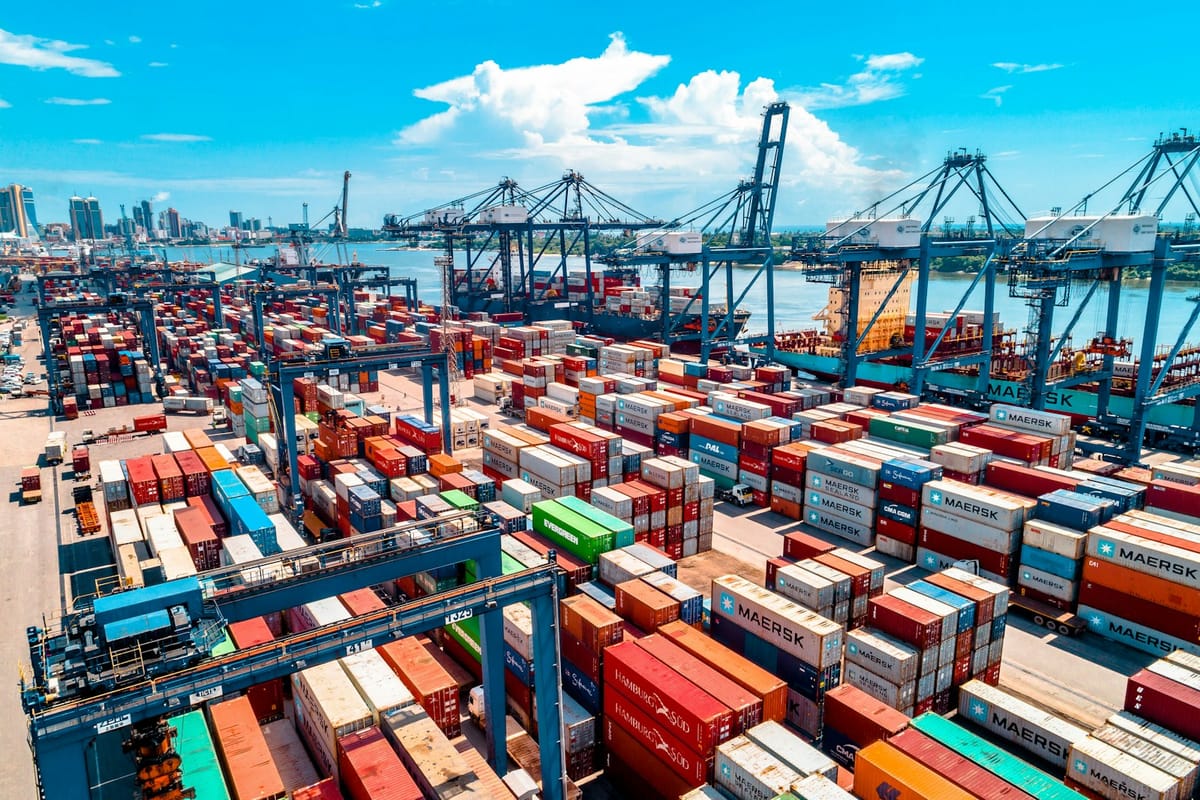
The industrial and digital corridor anchored at Sines (a deep-water port and industrial zone on Portugal's south-west coast, in the Alentejo Litoral) is now approaching 10% of national wealth on the back of more than €20 billion in announced or contracted projects — a structural shift that pulls battery factories, gigascale data centres, green-hydrogen plants and a slice of the European Union AI gigafactory into a single 3,300-hectare footprint that AICEP Global Parques (the state body that runs Portugal's industrial parks) manages from a 1970s land bank.
The headline reportage came out of ECO on 4 June 2026, building on AICEP's own pipeline disclosures. Total announced investment in projects either contracted or under evaluation crosses €20 billion across roughly a decade — with Supply Chain Magazine putting the broader prospection pipeline at over €25 billion. Stack that against Portugal's 2025 nominal GDP of around €290 billion and the corridor is on a path to representing close to one euro in every ten generated in the country.
The €20 Billion Pipeline, Project by Project
The single largest committed bet is the CALB (China Aviation Lithium Battery) gigafactory: €2.8 billion in capital expenditure, 1,800 direct jobs at full ramp, target commissioning by 2028. CALB anchors Sines' battery vertical and ties the corridor into Europe's electric-vehicle supply chain just as Brussels tightens battery-passport rules.
Start Campus is the second pillar. The data-centre operator running the SIN01 campus has flagged up to €9 billion of cumulative investment across the multi-phase build-out, with Luís Rodrigues (Start Campus chief operating officer) signalling none of the project is cancelled — only sequenced. The crucial decision for the local tax base is Start Campus's move of its headquarters from Lisbon to Sines, which will route derrama (the municipal corporate income surcharge) into the câmara municipal de Sines (town hall) rather than the capital.
Green hydrogen and derived molecules form the third leg. Galp's H2Park electrolyser, sized at €1.2 billion, is under construction alongside a €269 million HVO (hidrocarboneto vegetal hidrogenado, hydrogenated vegetable oil) sustainable-aviation-fuel partnership with Mitsui. Madoqua Power 2X is building green hydrogen and ammonia at roughly €1 billion and 115 direct jobs. AICEP Global Parques director Miguel Borralho told ECO that "more than 60 hydrogen projects approached us," with eight already in installation or licensing and aggregate hydrogen-sector capex past €3 billion supporting around 1,000 jobs across the cluster.
The petrochemical incumbents are reinvesting. Repsol Polymers is putting €650 million into the Alba plastics expansion. Catalyxx is bringing €100 million for a green-butanol plant. Stegra (the Swedish green-steel start-up) is at the proposal stage.
The wildcard is the EU AI gigafactory: €6 billion in European-level funding that Brussels may delegate to Portugal, to be shared between Sines, Lisbon and Abrantes. Sines' draw is the EllaLink submarine cable (a 6,000 km Brazil–Portugal fibre-optic landing operational since 2021) plus surplus low-carbon power and land — the three things AI training compute actually needs at scale.
Why Sines Wins These Mandates
The structural advantages stack: a deep-water port opened in 1971 to handle post-Suez tanker traffic, 3,300+ hectares of pre-expropriated industrial land (out of more than 20,000 hectares the state took in the original 1970s mega-project), the only refinery still operating in Portugal (Galp's), and a maturing fleet of REN gasodutos (natural-gas pipelines run by the system operator). The 2021 decommissioning of EDP's coal-fired thermal plant freed both grid capacity and brownfield land for the hydrogen pivot.
The container terminal story is the soft spot. The Vasco da Gama terminal — the planned doubling of port capacity beyond the existing PSA Terminal XXI — has been delayed. APS port-authority president Pedro do Ó Ramos told ECO he will not relaunch a tender carelessly: "If we launch one and it remains empty, the project will scarcely recover." A second-concourse bid study was expected in May 2026.
The Cost Side: Housing, Tax Leakage and a Single Secondary School
The boom has a perverse effect on the town that hosts it. Sines mayor Álvaro Beijinha (PS, Socialist Party) has been blunt with ECO: "There's a perverse effect — rental prices match Lisbon/Porto metro areas; restaurants and supermarkets have risen significantly." T2 apartments (two-bedroom flats) are reportedly renting at €2,000 per month as landlords pivot to corporate tenants from the construction sites and operating plants.
The tax base does not benefit proportionally. Hugo Ferreira, president of the Associação Empresarial de Sines (the local business association), summed the asymmetry up to ECO: "Most large companies don't pay municipal tax here. Some don't pay in Portugal at all. Decision centres are in Lisbon. This is just the workshop." That is what makes Start Campus's headquarters move material — it sets a precedent for derrama localisation that other corridor occupants will be pressured to follow.
Public infrastructure is straining too. Heavy goods vehicles are damaging municipal roads built for residential traffic. Local schooling capacity is concentrated in a single overcrowded secondary school plus the small Escola Tecnológica do Litoral Alentejano (ETLA, the regional technical school) with around 250 students across four programmes — a thin pipeline for an economy that will need thousands of skilled operators by 2028.
What It Means for Residents and Expats
For anyone weighing where to settle in Portugal beyond Lisbon, Porto and the Algarve, Sines is now a third-tier housing-cost market in practice — not on paper. The corridor is generating high-skill jobs in battery manufacturing, data-centre operations, electrolyser plants and port logistics, but the wage premium is being eaten by accommodation costs that have converged with the metropolitan areas. The story to watch is whether the Évora–Badajoz railway connection (currently in execution as part of the trans-Iberian freight corridor) routes enough workforce in by daily commute to relieve the rental squeeze on the town itself.
For investors and observers, the Sines bet is a leveraged play on three Brussels-led structural shifts at once: European battery sovereignty, AI-compute repatriation, and the hydrogen build-out. If two of the three land — CALB hitting 2028 on time and either Start Campus or the EU AI gigafactory share materialising at scale — the 10% of GDP figure will move from projection to baseline within the decade. If they slip, Portugal absorbs a stranded-asset risk concentrated in a single municipality of fewer than 14,000 residents. On the industrial-land, foreign-investment and multinationals side of the file, Portugal's plan for six large business zones sets the latest reference. On the ports, shipping and trade-logistics side of the file, the Port of Sines' record container month sets the latest reference. On the Sines industrial file, Repsol's 830 million euro Alba project collecting its operating title for two 300,000-tonne polymer plants, a year behind the company's own published schedule is the latest step. On where that gas actually enters the country, ERSE's 2025 report on the gas sector, which counts 46 tanker discharges at Sines, half of them from Nigeria and 7 percent from Russia, against 5 percent of national supply arriving by pipeline from Spain sets the latest reference.
Sources
- ECO, "Sines, 'Megalópolis' industrial e digital aproxima-se dos 10% da riqueza nacional," 4 June 2026
- Supply Chain Magazine, "Sines atrai mais de 25 mil milhões de euros e reforça posição como hub industrial e logístico," 10 March 2026
- AICEP Global Parques pipeline disclosures
- INE GDP series (Eurostat-harmonised)