Russia's Embassy in Lisbon Calls Portugal "One of the Most Hostile Countries in Europe" on Portuguese Television
Press attache Aleksei Chekmarev told CNN Portugal that Moscow places Portugal among Europe's most hostile states, citing Lisbon's support for EU sanctions and for Kyiv, days after a drone exploded 300 metres from the Portuguese embassy in Kyiv.
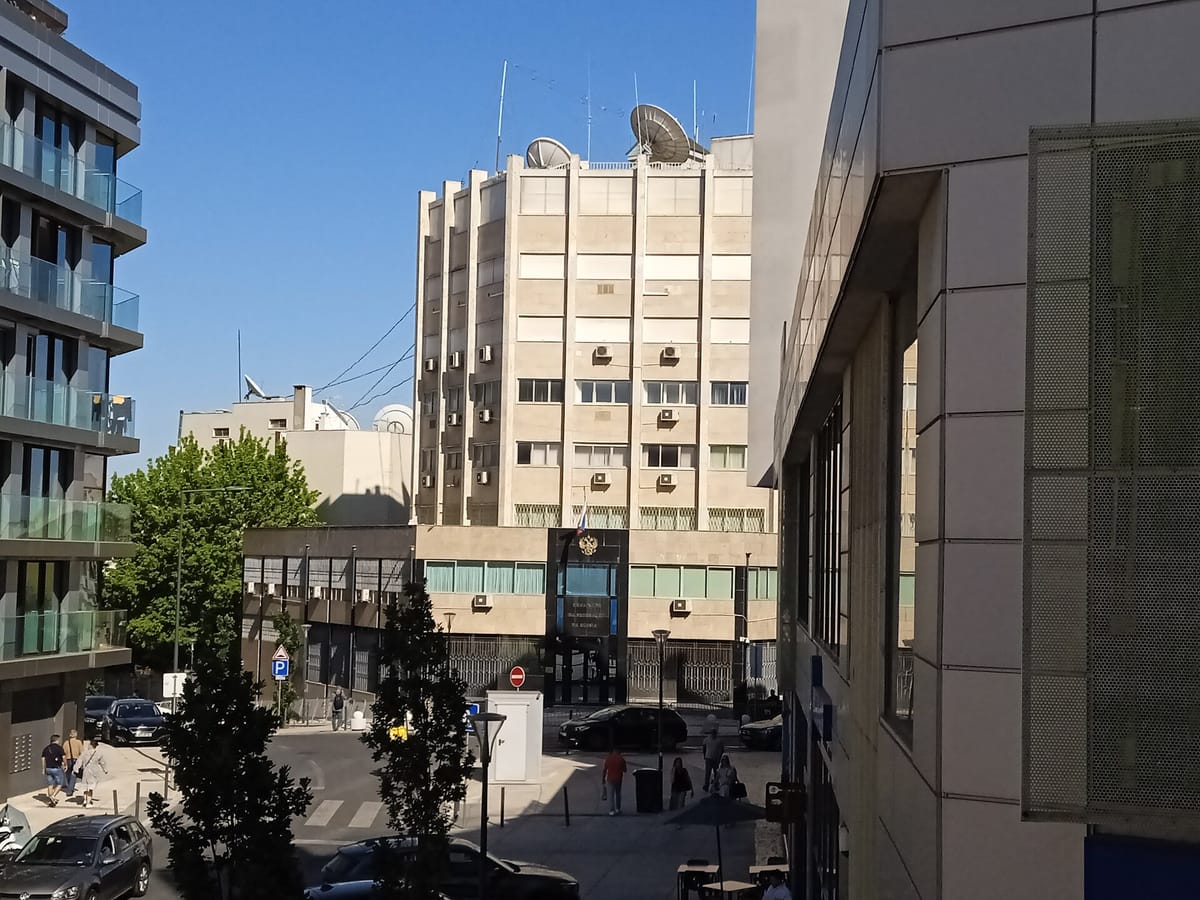
The press attaché of the Embaixada da Federação da Rússia (Embassy of the Russian Federation) in Lisbon has said on Portuguese television that Moscow regards Portugal as "one of the most hostile countries in Europe" towards Russia. Aleksei Chekmarev made the remark in an interview with CNN Portugal broadcast on Sunday, adding: "About this there should be no doubt whatsoever."
Chekmarev grounded the characterisation in Portuguese policy rather than in any single incident. Lisbon, he said, follows the anti-Russian policies of the European Union and NATO and fully backs the Brussels sanctions regime against Moscow. He also said Portugal "provides comprehensive support to the Kyiv regime, aimed at reinforcing Ukraine's defensive capabilities and thereby causing damage to Russia." Pressed on the phrasing, he repeated it: "Portugal is a hostile country. I think that is a fairly clear statement."
The exchange behind the interview
The attaché was responding, in part, to Paulo Rangel, Portugal's Ministro dos Negócios Estrangeiros (Minister of Foreign Affairs). Last Thursday a drone came down and exploded roughly 300 metres from the Portuguese embassy in Kyiv. It caused no casualties and no material damage to the building, and staff were reported unharmed, but Rangel condemned the strike in unusually direct terms: "When diplomatic premises are hit, that means the level of non-compliance with the international rules of war is total."
Chekmarev dismissed that as "nothing new" and as the "same fairly aggressive narratives, without evidence." Russia, he said, strikes only military targets or infrastructure serving Ukrainian troops and the Ukrainian military industry. He then turned the accusation around, citing an attack on a school dormitory in Starobilsk, in Luhansk, on 22 May, which he said killed 21 people according to Russian authorities. On the prospect of talks, he said Russia "is always open to peace negotiations as soon as concrete proposals are presented," while arguing that no adequate conditions currently exist.
Not the first incident, and not the first rupture
Last week's drone was not the first time the Portuguese mission in Kyiv has been caught in a strike area. In 2024, two Russian missiles landed near the embassy and damaged windows and doors, again without casualties.
The diplomatic relationship has been narrowing steadily since the full-scale invasion of Ukraine in 2022. Last year Russia terminated a military cooperation agreement with Portugal signed in 2000, with the Russian embassy in Lisbon citing Portuguese support for what it called the European Union's "hybrid war" against Moscow. This week's language continues that posture rather than breaking from it, though it is rare for a serving diplomat to place the host country on a public list of adversaries by name.
Portugal, for its part, has been steadily deepening the defence commitments the attaché objects to. The government is borrowing 3.9 billion euros for three new frigates, has just signed off on a new Iberian defence cluster, and last week hosted the world's largest maritime robotics exercise off Troia with 36 navies taking part.
What This Means for Expats
- No practical change today: Diplomatic relations remain in place. Consular services, travel documents and residency processes are unaffected by rhetoric of this kind.
- Russian nationals in Portugal: Nothing here signals a change to visas, residence permits or banking. The practical constraints remain EU sanctions and bank compliance checks, not embassy statements.
- Travel: Portuguese government advice against travel to Ukraine and Russia is unchanged, and consular capacity in Kyiv is limited.
- Defence spending is the real story: The programmes Chekmarev objects to are budget commitments running for years, and they are where the policy consequences actually sit. Public statements from the Lisbon embassy have grown sharper each year since 2022; treat them as commentary, not as a warning of an operational change.
Neither the Ministry of Foreign Affairs nor the government responded publicly to the attaché's characterisation on Tuesday. The more consequential question is not whether Moscow calls Portugal hostile, but whether the frigate programme, the Iberian defence cluster and Portugal's NATO commitments survive the 2027 budget negotiations intact.