Residence Permits Drew Almost a Third of Everyone Who Complained to Portugal's Ombudsman in 2025
The Ombudsman's 2025 report counts 15,342 complainants, up 30.1 percent, and 31 percent of them complained about foreign citizens' entry and residence. It lists AIMA failures from a portal that shut out CPLP applicants to an asylum claim pending since 2016.
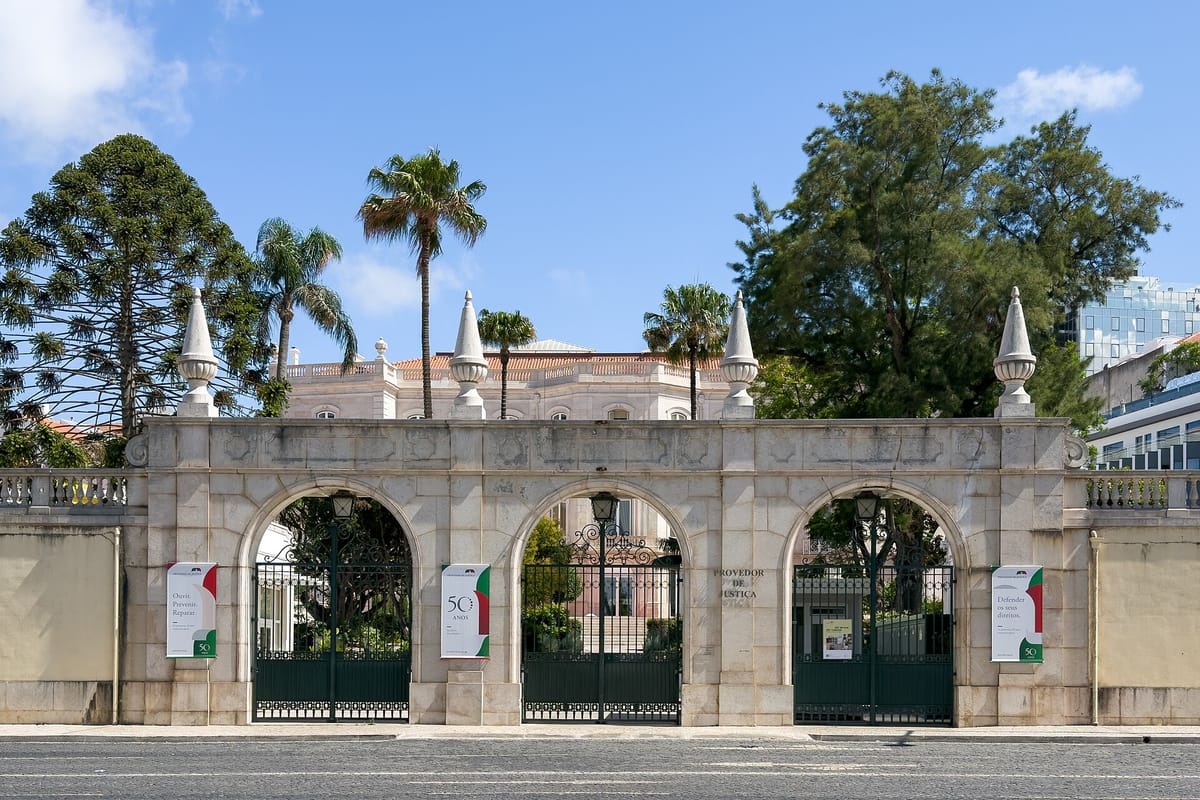
The number of people complaining to Portugal's Provedor de Justiça (Ombudsman) rose by 30 percent in 2025, and the single biggest reason was the immigration system. The institution's annual report, delivered to the Assembleia da República (Parliament) on Wednesday, counts 15,342 complainants, up 30.1 percent from 11,790 in 2024. Almost a third of them, 31 percent, complained about the entry and residence of foreign citizens.
No other subject comes close by that measure. Social security, the largest topic when counted by case files rather than by people, accounts for 13 percent of complainants. The two measures differ because one complaint can come from many people. In all, the office opened 9,685 procedures, 6.6 percent more than a year earlier: 3,773 full investigations and 5,912 preliminary assessments.
What went wrong at AIMA
The report's section on foreign citizens is direct. Despite the backlog drive led by a dedicated task force, delays in residence-permit procedures at the Agência para a Integração, Migrações e Asilo (Agency for Integration, Migration and Asylum, AIMA) "continued, in 2025, to prompt a very significant number of complaints". The one-year mark without a decision, counted from the in-person appointment, was "frequently far exceeded", and issuing the card itself took a long time too.
Among the specific failures it lists:
- CPLP applicants shut out by the portal. Citizens of Portuguese-speaking countries who entered legally without a consular visa were eligible for a CPLP residence permit, but AIMA's portal "never accommodated" their applications. When the law changed in 2025 to require a residence visa, they lost that route altogether.
- Documents requested again because papers already submitted expired while the file sat undecided, with students among those hit.
- Biometrics collected more than once, data lost between stages of a case, and errors printed on residence cards.
- A proof-of-pending document that does not do enough. AIMA created one after the Ombudsman intervened, but some private employers reportedly refused it, and it does not let holders travel abroad.
- Family reunification online only for relatives already in Portugal, and only where the household includes a child.
Among the 3,773 full investigations, 427 concerned foreign citizens, the largest group being 107 about applications for a residence permit without a visa. The report also found an asylum application from October 2016 still under examination, and cites Eurostat figures of 8,595 asylum claims pending at the end of 2025. AIMA's own migration report, which we covered on Tuesday, counted 1,585,854 foreign residents at the end of 2025.
Thirteen months without an Ombudsman
The year was unusual for the office itself. Maria Lúcia Amaral left on 4 June 2025 to become Minister of Internal Administration, and her successor, Luísa Neto, was elected by Parliament only on 3 July 2026. During the vacancy staff kept handling complaints, but two powers lapsed with the post: issuing formal recommendations and asking the Tribunal Constitucional (Constitutional Court) to review a law. Neto calls this "a notable anomaly" in the constitutional checks and balances, because Portuguese citizens cannot petition the court directly.
That second power is back in use. Neto's office told Notícias ao Minuto that it is weighing a request to send the new face-covering law, Lei n.º 58/2026, to the Constitutional Court. The law took effect on Wednesday, and the office stressed that the review has no effect on it in the meantime.
If you want to complain
A complaint to the Ombudsman can be made online at provedor-jus.pt. The report shows how cases tend to end: of the full investigations closed in 2025, 50.6 percent ended because the public body corrected the problem while the case was open. Half of all cases were answered within 21 days, although full investigations took an average of 275.6 days.