Regional Authority Found Licence Breaches at the Amarsul Landfill on the Moita and Palmela Border, According to Zero
Zero says the CCDR LVT has confirmed in writing that the Amarsul landfill at the Ecoparque de Palmela broke its licence and the landfill rules by taking untreated organic waste. Amarsul says it has been told of no conclusions.
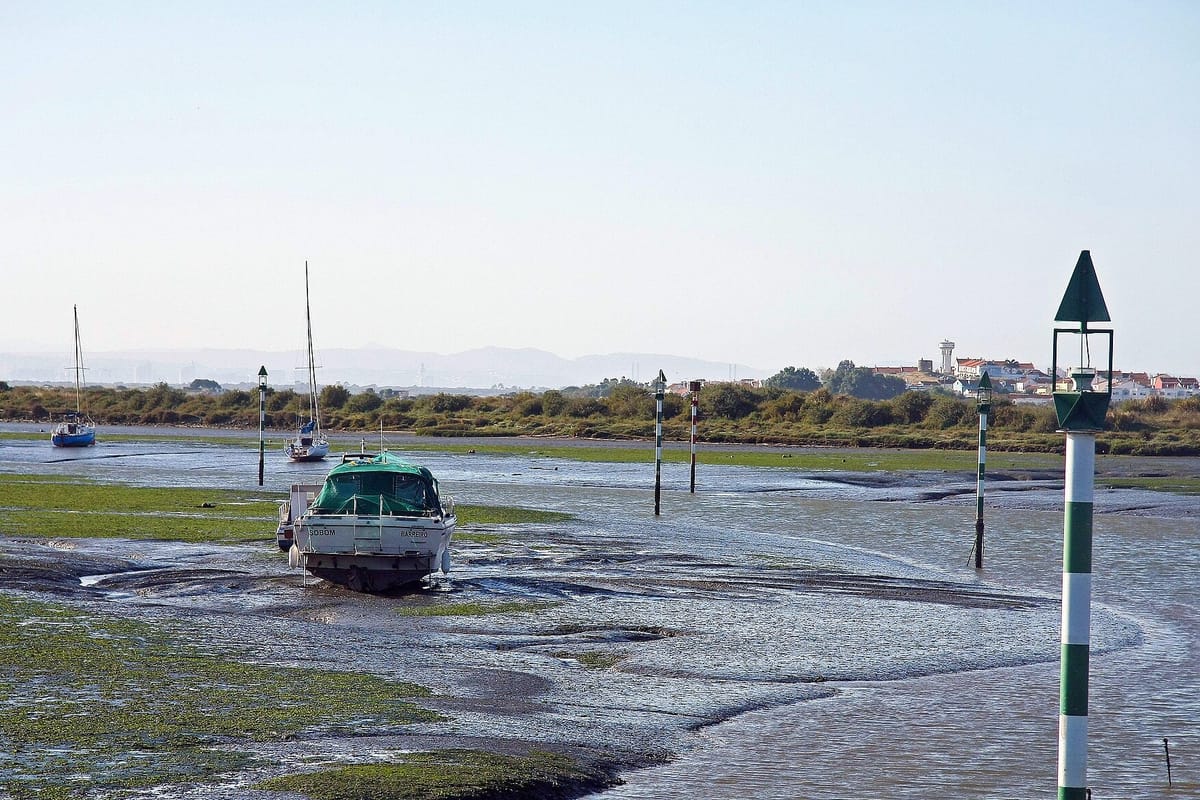
The regional environmental authority for Lisbon and the Tagus Valley has found that the Amarsul landfill on the border between Moita and Palmela broke the terms of its licence, according to the environmental association Zero, which says it has received a letter confirming the findings. Amarsul, the company that runs the site, told Lusa that nobody has told it of any conclusions.
In a statement published on 15 October, Zero said the Comissão de Coordenação e Desenvolvimento Regional de Lisboa e Vale do Tejo (CCDR LVT, the regional development authority for Lisbon and the Tagus Valley) replied in writing to several complaints it had filed. Zero quotes the letter as finding "breaches of the conditions of the landfill licence and of the rules of the Regime Jurídico de Deposição de Resíduos em Aterro (RJDRA, the legal regime for landfilling waste)", and saying that "the legally prescribed procedures" had been started. Zero did not publish or date the letter or say what those procedures are, and the CCDR LVT website carries nothing on the case. We could not check the finding independently.
What Zero says is going wrong
Zero's complaint is about organic waste. It says the landfill takes household food and garden waste that has not been stabilised first, which articles 5 and 9 of the landfill regime (annexed to Decree-Law 102-D/2020) have banned since 2020. Zero links this to methane, odours, polluted run-off and more gulls, rodents and flies.
Zero cites Agência Portuguesa do Ambiente (APA, the Portuguese Environment Agency) data showing that in 2024 Amarsul sent 75 percent of the urban waste it handled to landfill, and that 112,000 tonnes of that had no treatment at all. Zero wants Amarsul's mechanical and biological treatment plant enlarged so that it can process all organic waste that is not collected separately. It also wants door-to-door collection of food waste and household bills based on how much rubbish people produce rather than on water use. In a complaint to the European Commission in November 2025, Zero listed both Amarsul landfills (Palmela and Seixal) among 28 sites it says operate illegally.
What Amarsul says
Amarsul treats the rubbish of the nine municipalities of the Setúbal peninsula: Alcochete, Almada, Barreiro, Moita, Montijo, Palmela, Seixal, Sesimbra and Setúbal. Asked by Lusa, the company said it has given the authorities every clarification and document they requested. It said it is preparing an investment plan to adapt its plants. It also pointed out that waste in the region is growing 7.4 percent faster than the national plan for urban waste (PERSU 2030) expected. Amarsul said it supports burning non-recyclable waste for energy and expanding separate collection of food waste.
What it means for people nearby
The site is Amarsul's Ecoparque de Palmela, which has a Moita postal address. Its neighbours have complained before. On 18 March, Moita council said it had reported "irregularities" at the site after that winter's storms to the APA and the CCDR LVT. It said Amarsul had agreed to an urgent assessment of water quality and groundwater. A monitoring committee led by the CCDR LVT was due to inspect the site on 26 March.
Neither Zero nor Lusa reported a fine, a licence change or a closure order. What the CCDR LVT does next, and whether Amarsul is formally notified, will decide whether residents see any change. The government's national plan for landfills, the waste strategy approved this year, already puts 13 of Portugal's 32 landfills close to full. Portugal is also well short of EU recycling targets.