Prosecutors Open a Criminal Inquiry Into the United States' Use of the Lajes Base in the War on Iran
The Prosecutor-General's Office confirmed the inquiry, opened on a complaint the Bloco de Esquerda filed in April. It is the first time the base's use since the war began has come before the justice system rather than only parliament.
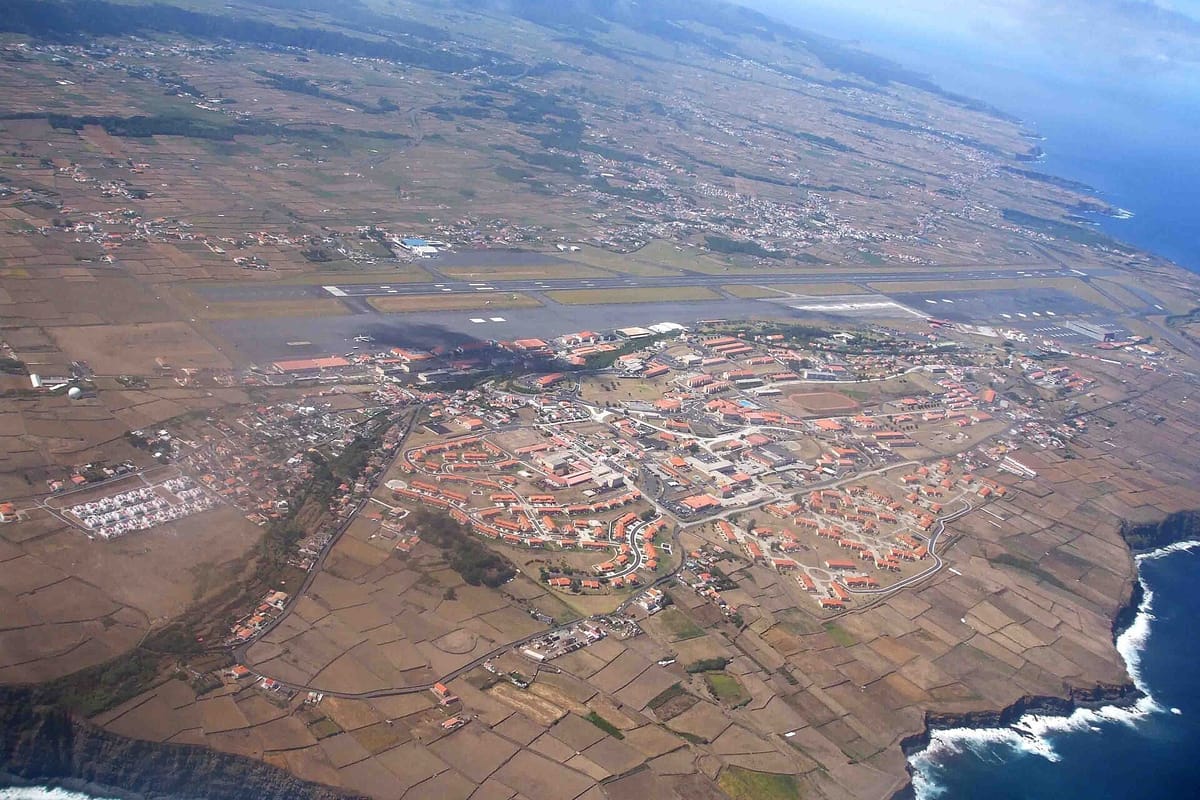
Portugal's public prosecution service has opened a criminal inquiry into whether the United States' use of the Lajes air base, on the Azorean island of Terceira, during the war on Iran has complied with the law. The Prosecutor-General's Office (PGR) confirmed the inquiry in a reply to the Lusa news agency on Friday, saying it was "opened following a complaint submitted by members of the Bloco de Esquerda".
The left-wing party filed its complaint in April. It asked the PGR to establish whether the American use of the base had respected Portuguese law, and argued that it could amount to a "gross violation of international law". The PGR's reply, as reported by Lusa, did not say which offences, if any, are being examined or whether anyone has been named as a suspect.
What an inquiry means, and what it does not
Under Portugal's Code of Criminal Procedure, a report of a possible crime always leads to the opening of an inquiry, the investigative phase run by the Ministério Público. Opening one is therefore the standard response to a formal complaint, not a finding that a crime took place. Prosecutors will now decide whether there is anything of criminal relevance to pursue; most inquiries end either in a charge or in the case being shelved.
When the complaint was lodged, the Bloco's coordinator, José Manuel Pureza, said that in Portugal the body responsible for ensuring that the law is fully respected, including by organs of the state, is the Ministério Público. He asked the Prosecutor-General, Amadeu Guerra, to open an inquiry "if signs of criminal relevance are confirmed".
The government's position
The Foreign Minister, Paulo Rangel, has denied that there has been any breach either of the agreement under which the United States uses Lajes or of international law. Pureza rejected that at the time. "Saying that the Lajes base is not being used for aggressive purposes is pure invention. Saying that the Lajes agreement is being complied with is another invention," he said.
The United States and Israel launched joint attacks on Iran on 28 February. Iran has retaliated against Israeli territory and against countries hosting American interests, including military bases and other infrastructure in the Gulf. Lajes, a long-standing staging point for American transatlantic flights, was already hosting its largest American military presence in decades by March.
The base has been a running political question since then. In June, parliament rejected proposals from the PCP and the Bloco for a parliamentary inquiry, and Rangel said a revision of the defence agreement would wait until the Middle East crisis had passed. The treaty most often cited in the debate is not the one actually in force; as we explained in September, the 1951 accord was replaced in 1995 by a cooperation and defence agreement whose terms are narrower than many assume.
Pressure from outside parliament
Last week the Bloco delivered a letter to the Prime Minister's official residence signed by "about 8,500 people", asking the government to ban the use of Lajes by the United States for attacks on Iran.
It is not the first time the party has turned to prosecutors over foreign policy. In 2024 its then leader, Mariana Mortágua, asked the Ministério Público to act so that Portugal could not be accused of "complicity with a genocide", over a Portuguese-flagged ship carrying explosives that the party believed were bound for the Israeli army during the war in Gaza.
For residents of Terceira, where the base is a major employer, the inquiry changes nothing on the ground for now. Its significance is political: for the first time since the war began, the use of Lajes is formally under examination by the justice system rather than only in parliament.