About 1,065 Clothing Bins Have Been Pulled From Portuguese Streets, and the Textile Sector Asks for Stopgap Money Until 2028
At least 75 municipalities have lost some or all of their used-clothing collection, 17 textile organisations say, because old clothes are worth less and the producer-funded scheme meant to pay for collection only starts in April 2028.
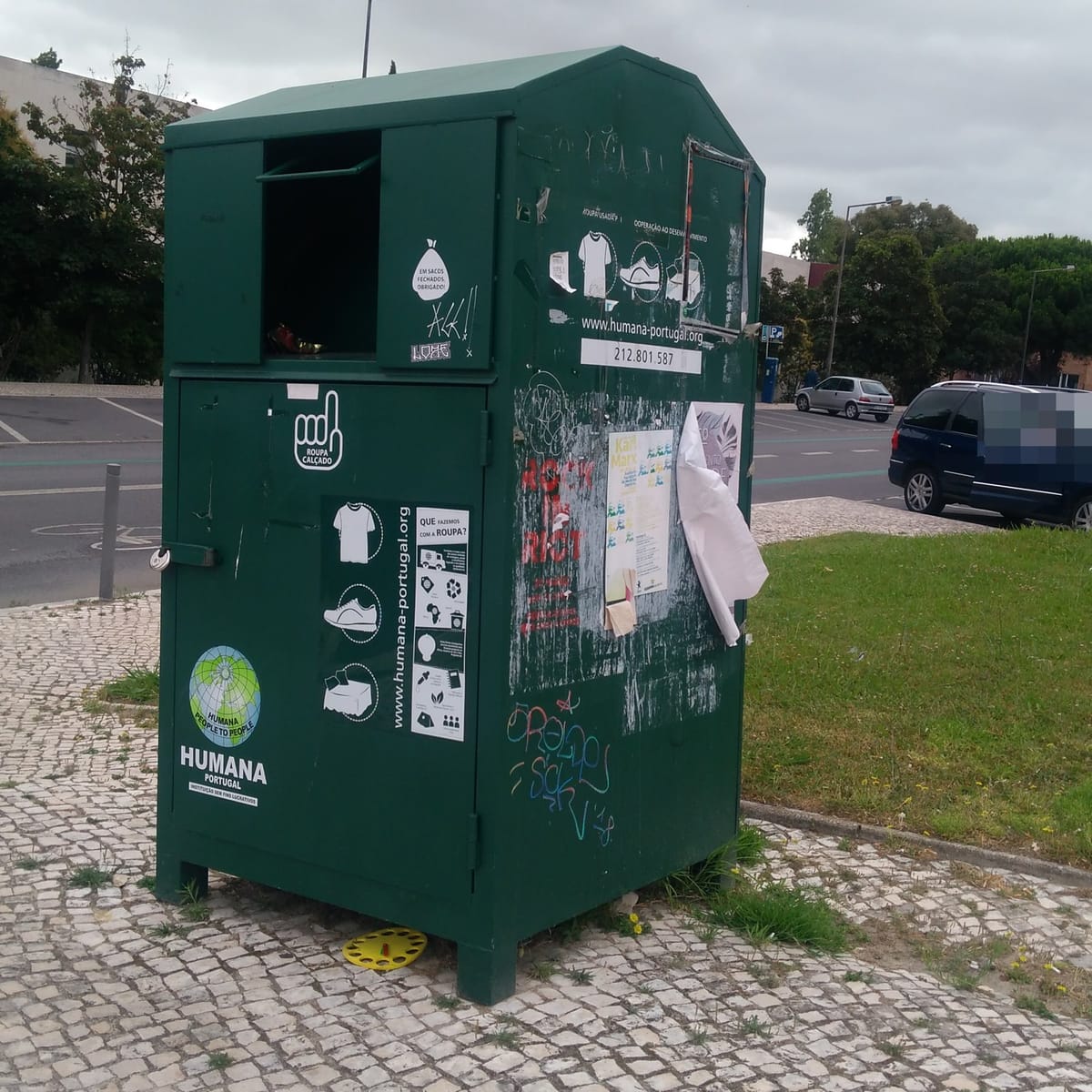
The clothing bin at the end of your street may not be there much longer. About 1,065 containers for used clothes and textiles have been taken off the streets, and at least 75 municipalities have seen collection cut back or stopped altogether, according to 17 organisations from Portugal's textile sector who on Tuesday asked the government for urgent help, Lusa reported (via ECO).
The signatories include textile industry associations, research and development centres, and the companies and charities that collect, resell and recycle used textiles. Lusa did not list them by name.
What the figures show
The numbers come from a survey of six collection operators:
- at least 75 municipalities have had collection reduced or ended;
- about 1,065 containers have been removed;
- at least 3,770 tonnes of textiles could go uncollected in 2026, or 16.4 percent of what these operators gathered in 2024. The signatories call this an indicative estimate.
Why the bins are going
Used clothing is worth less on international markets while collection costs keep rising, the signatories say, and that is "undermining the economic viability of a service that, until recently, was provided at no cost to municipalities". Separate collection of textile waste has been compulsory since January 2025, but the system meant to pay for it, under which producers would fund collection and treatment through a Responsabilidade Alargada do Produtor (RAP, extended producer responsibility) scheme, is not expected to start until April 2028.
The charity Humana Portugal raised the alarm in February, when it stopped collecting in seven municipalities: Caldas da Rainha, Santarém, Entroncamento, Almeirim, Moita, Évora and Estremoz. Until then, it said, operators paid councils a fee for the public space their containers occupied, or paid for the right to provide the service. It was left with 826 containers nationwide after removing 256, and said it had recovered 3,919 tonnes of used textiles in 25 municipalities the previous year, 61 percent of it for reuse.
What the sector wants
The 17 organisations ask for two things before the producer scheme starts:
- clear guidance from the government to councils so that separate textile collection carries on;
- temporary public money for municipalities to pay for the service until 2028.
They point to other parts of Europe. Catalonia's waste agency pays councils 50 euros a tonne, plus 64 euros in semi-urban and 75 euros in rural municipalities. In Wallonia, in Belgium, operators already received 400 euros a tonne for textiles prepared for reuse, and the regional government added a temporary 151 euros a tonne for textiles sent for sorting. "We know of municipalities in several countries that pay for the collection service, even without national measures. In Portugal there is not a single case," they said. Lusa reported no response from the government.
What it means for households
Before taking a bag of clothes out, check that your usual container is still there and has room: your câmara municipal (town council) or its waste service can tell you which collection points still operate. Portugal is already behind on waste: it recycled 39 percent of its urban waste in 2025, well short of the EU's 55 percent target. Furniture is the first household item to get its own producer-funded scheme, and sellers will collect old sofas and mattresses from January.
Clothing is a big industry here: Portugal has almost 12,000 clothing and textile companies employing about 118,000 people.