Portuguese Filigree, Embroidery and Pottery Can Apply for EU-Wide Protection of Their Place Names From 30 September, Through the Industrial Property Institute
Decree-Law 194/2026 applies the EU regulation on craft and industrial geographical indications. INPI takes applications, an IEFP-led council gives a binding opinion, objections run for two months and ASAE polices misuse, online included.
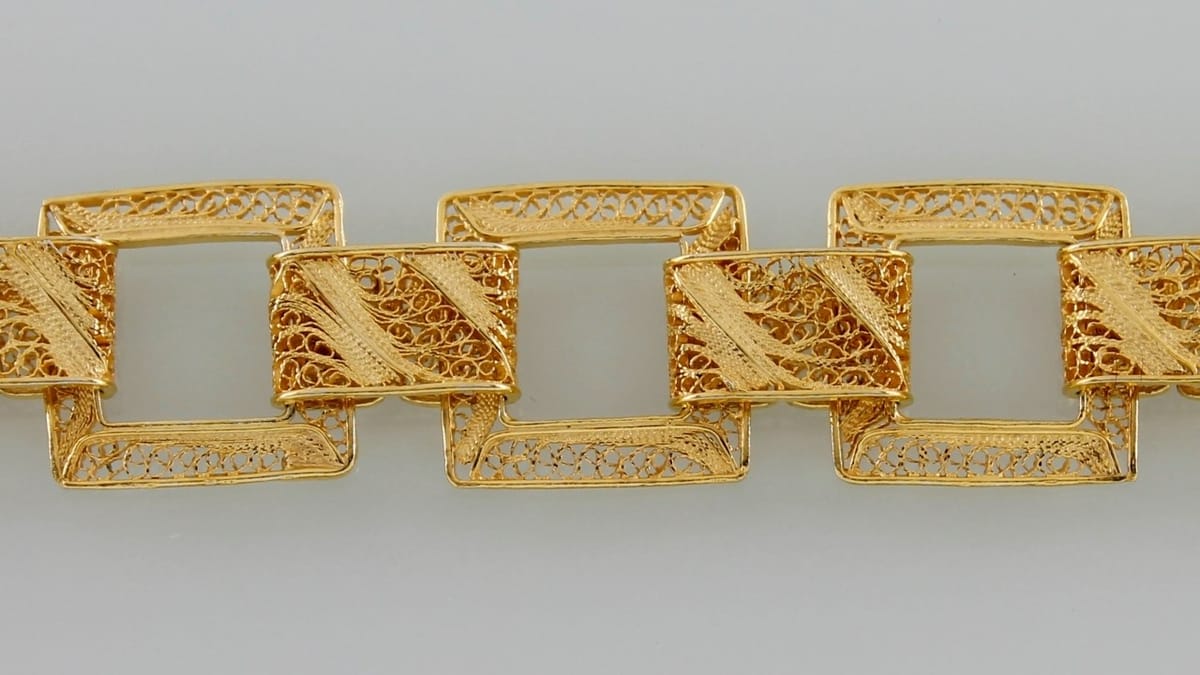
From 30 September, Portuguese makers of filigree, embroidery, ceramics, glass and other crafts will have a national route to a geographical indication protected across the whole European Union. Decreto-Lei n.º 194/2026 (Decree-Law 194/2026), published in the Diário da República (the official gazette) on Friday 25 September, puts into practice the EU regulation that extended place-name protection beyond food and drink for the first time.
What changes
Until now, EU law protected geographical indications only for wines, spirits, other agricultural products and foodstuffs. Regulation (EU) 2023/2411 created an equivalent protection for craft and industrial products. The decree's preamble lists jewellery, goldsmithing, clothing, weaving, embroidery, ceramics, glass and basketry as examples. Once a name is registered, only producers in the defined area may use it and the official EU symbol, which the government says guards against counterfeiting and misuse of the name.
Registration happens in two stages: first at national level, then at EU level. Producers therefore apply once rather than in every member state. The EU regulation is directly applicable, but it leaves member states to name an authority, run objection procedures and organise enforcement. That is what the Portuguese decree does.
Who decides
The Instituto Nacional da Propriedade Industrial (INPI, the national industrial property institute) is the competent authority for the national stage. Applications, preferably made through INPI's online services, must be written in Portuguese and include a product specification and a single document as required by the EU rules.
INPI does not assess the substance alone. A new advisory council, set up within the employment and vocational training institute IEFP and chaired by it, issues a binding opinion on every application, normally within 20 working days. Its permanent members come from IEFP, the heritage agency Património Cultural, the Directorate-General for the Economy, the Directorate-General for Agriculture and Rural Development and the Portuguese UNESCO commission. Depending on the product and region, IEFP can also call in the Madeira wine, embroidery and handicraft institute, the Azores crafts and design centre, the Portuguese federation of arts and crafts, the Ricardo do Espírito Santo Silva Foundation, the business confederation CIP and the Portuguese industrial association AIP.
For a craft product, the specification must require every producer using the name to hold a craft production unit card (carta de unidade produtiva artesanal) under the 2001 statute of artisans.
Objections, controls and fines
INPI publishes each application in the Boletim da Propriedade Industrial (Industrial Property Bulletin). For two months after that, anyone established or resident in Portugal with a legitimate interest can object. The parties then get up to two months, extendable once, to reach an agreement, with mediation available. If no objection succeeds, INPI grants the national registration and forwards the application to the European Union Intellectual Property Office (EUIPO).
Accredited certification bodies will check that products meet their specifications. Enforcement in shops and online falls to ASAE, the food and economic safety authority, on the mainland, and to the regional inspectorates in the Azores and Madeira. Misuse of a registered name is punished under the unfair competition and geographical indication provisions of the Industrial Property Code.
When it applies
The decree sets no start date of its own, so the general rule for Portuguese legislation applies: it takes effect on the fifth day after publication, 30 September. It repeals a 2015 decree-law and two articles of the Industrial Property Code that governed the old national procedure. Applications lodged before 1 December 2025 and still awaiting a decision will be completed under those old rules.
The decree is separate from the national crafts network the government put out for consultation this month, which we reported on 21 September.