Portugal's Public Payroll Climbs to a Record 768,378, With Town Halls Outpacing the Central State
The state employed 768,378 people at the end of June 2026, a new high, official DGAEP data show — up 1% on the year, with local councils, health and education driving the growth as public pay outpaces inflation.
Portugal's public sector has set another employment record. At the end of June 2026 the country's general government — the administrações públicas, or all central, regional, local and social-security bodies — employed 768,378 people, according to the quarterly Síntese Estatística do Emprego Público (Public Employment Statistical Summary) published on 14 August by the Direção-Geral da Administração e do Emprego Público (DGAEP, the Directorate-General for Public Administration and Employment). It is the highest figure in a series that begins in December 2011, and it caps a run in which the state payroll has grown in every year since 2015.
The headline increase is modest. The workforce rose by 7,390 posts, or 1.0%, over the year to June, and by just 895 posts — a rounding 0.1% — over the previous quarter. But the direction is unmistakable: since the series began at 727,701 posts nearly fifteen years ago, general government has added more than 40,000 jobs, a 5.6% expansion.
Town halls, not the central state, are driving the growth
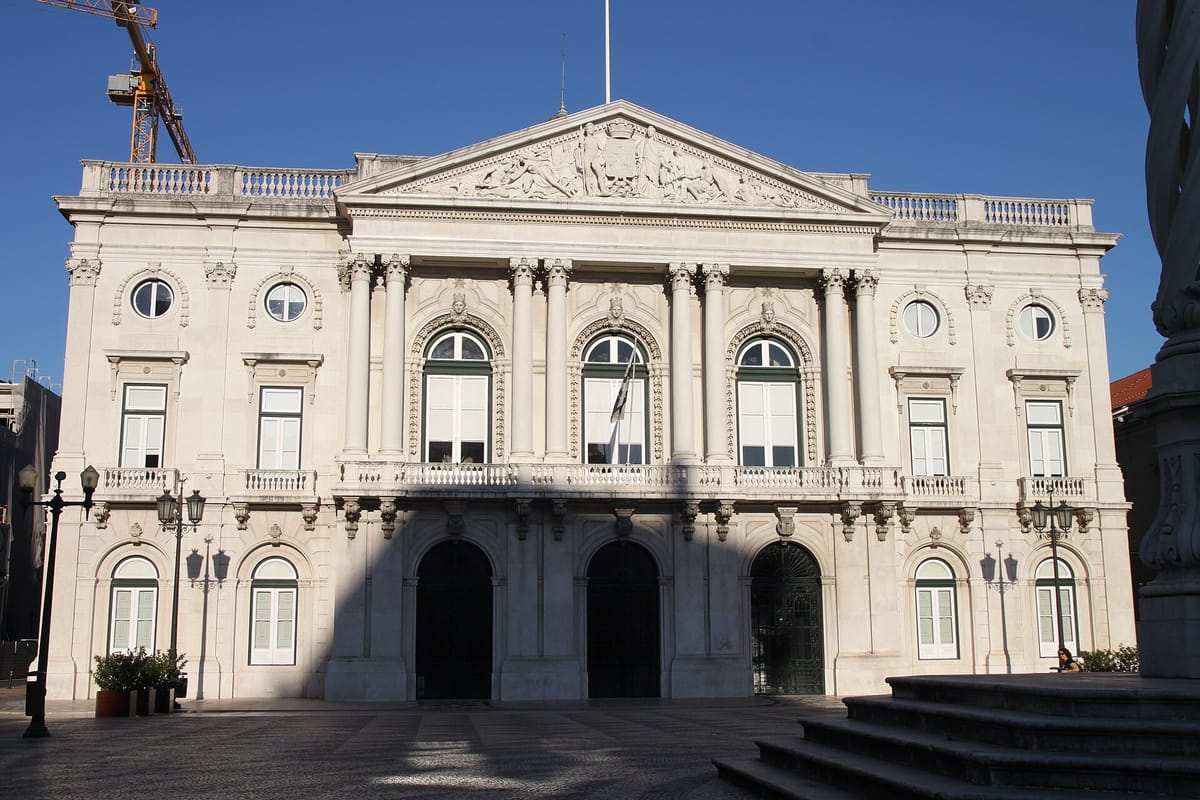
Most public workers still sit in central administration, which accounts for 571,859 posts, or 74.4% of the total. Local administration — municipalities and parish councils — holds 145,773 posts (19.0%), the regional governments of Madeira and the Azores a further 5.3%, and social-security bodies the remaining 1.3%.
Yet the momentum is local. Over the past year central administration grew 0.7%, while local administration expanded 2.5% — more than three times as fast — adding 3,606 posts. Stretch the lens back to 2011 and the contrast is sharper still: central government headcount is up 3.7% across the whole period, but regional and local bodies are up 13.9%, with municipalities alone swelling more than 17%. The social-security funds, by contrast, have shrunk by a fifth since 2011.
By activity, the state's three big functions divide the workforce cleanly: general public administration, defence and compulsory social security take 39.7% of all posts, education another 33.9%, and human health and social work 22.8%. The clearest year-on-year gains came among senior technical staff (técnicos superiores, up 2,854 or 3.3%), nurses (up 1,009), the armed forces (up 974), schoolteachers (up 788) and doctors (up 673). Justice-sector staff fell by 461, a 4.2% drop DGAEP attributes largely to retirements.
Public pay is rising faster than prices
The same release shows public-sector pay accelerating. Average base pay for a full-time worker reached €1,967.40 a month in April 2026, up 5.6% on a year earlier, while average total earnings — base pay plus the meal allowance, regular supplements and overtime — hit €2,342.00, up 5.5%. DGAEP credits the rise to the increase in the national minimum wage to €920, the lift in the public-sector base rate to €934.99, and the negotiated pay measures agreed with the unions.
The averages mask a wide internal gap. Central-administration workers earn €2,128.90 in base pay, against €1,505.80 in the regional and local tiers — a difference that reflects the concentration of lower-graded operational and technical-assistant roles in town halls rather than any single pay rule.
Set against the wider labour market, the public sector now represents 13.5% of Portugal's active population and 14.2% of everyone in work — figures that dipped very slightly over the quarter. Women make up 63.0% of the workforce overall, rising above 82% in the social-security bodies and above 83% among non-medical health staff, but falling below 30% in the police and armed forces.
What the record does — and does not — count
Two caveats matter. First, the 768,378 figure covers general government only; it excludes the state-enterprise sector (the setor empresarial do Estado), which the same report tallies separately at roughly 33,000 posts in centrally owned companies — a total inflated this quarter by the reclassification of the railway operator CP – Comboios de Portugal into that perimeter. Second, the number counts filled job posts, not full-time equivalents, so part-time roles are not netted down. DGAEP also revised its back series to late 2023, which means several previously reported "records" now read slightly differently.
The number lands in a charged political context. The government has been squeezing new pensions through a shift to a full-career benefit formula even as it presses ahead with extra hiring in the health service and has just placed more than 20,000 teachers for the coming school year. Whether a state that keeps setting employment records can also deliver the raises its unions want — the multi-year pay deal is back on the table for 2027 — will define the autumn budget fight. For now, the data settle one point: even with private-sector wages climbing too, the Portuguese state has never employed more people than it does today.
Figures in this article are drawn from DGAEP's Q2 2026 Public Employment Statistical Summary (14 August 2026) and reporting by Público, ECO and Observador. The June 2026 headcount and April 2026 pay data are provisional.