Fátima's Bid to Break Away From Ourém and Become a Municipality Now Hinges on a Government Report Due 26 October
A dispatch in Wednesday's official gazette sets the deadline for the report parliament needs before it can vote on the bill. Fátima's parish backs the split; Ourém council has withheld an opinion.
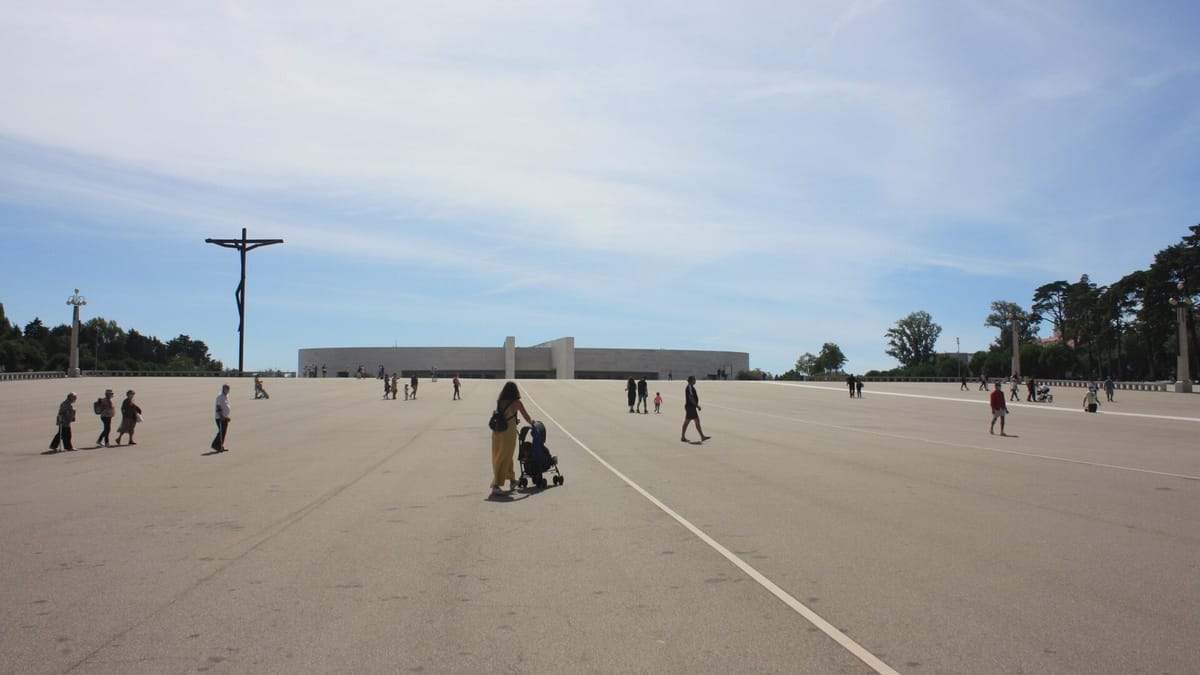
The government has until 26 October to send parliament the report that will decide whether Fátima, the shrine town that draws pilgrims from around the world, has what it takes to become a municipality of its own. The deadline is set in a dispatch from the Secretary of State for Local Administration and Spatial Planning, Silvério Rodrigues Regalado, published in the Diário da República (Official Gazette) on Wednesday.
Fátima is today a parish in the council of Ourém, in the district of Santarém. The bill that would separate it, Projeto de Lei n.º 596/XVII/1.ª, was tabled on 30 April by three MPs: Filipe Sousa of Juntos pelo Povo (JPP), Fabian Figueiredo of the Left Bloc and Inês de Sousa Real of PAN. It was admitted on 5 May and is with parliament's Committee on State Reform and Local Government.
Why a report is needed
Under Lei n.º 142/85, the framework law on the creation of municipalities, a new council can only be created if it meets a set of demographic, territorial and service criteria, and the government must give parliament a report with the facts it needs to judge whether they are met. That covers administrative, territorial, demographic, property and financial matters. The same law allowed the creation of Odivelas, Vizela and Trofa, according to Lusa.
The report has already slipped once. Parliament asked for it on 29 May, with a 90-day deadline. The government sought more time on 26 August, and parliament granted a 60-day extension in Resolution n.º 251/2026 of 28 September. Wednesday's dispatch, signed on 29 September, sets the final date of 26 October.
The commission writing the report was set up by a dispatch from the economy and territorial cohesion minister, Manuel Castro Almeida, published on 4 September. It has five members, one each from the Direção-Geral das Autarquias Locais (Directorate-General for Local Authorities), which coordinates, the Inspeção-Geral de Finanças (General Inspectorate of Finance), the Direção-Geral do Território (Directorate-General for Territory), Ourém council and Fátima parish council.
Ourém holds back
The local opinions gathered by parliament so far are split. Fátima's parish council and parish assembly both backed the bill unanimously, while making that support conditional on every legal requirement being met. Ourém council told parliament it was not in a position to give any opinion until all the legal requirements had been verified and the financial sustainability of both possible councils was guaranteed, according to the regional outlet mediotejo.net. The National Association of Portuguese Municipalities declined to give a view, saying it was for the councils involved, while the National Association of Parishes said the decision should reflect the wishes of the people of Fátima and Ourém.
The bill builds on the work of the Fátima a Concelho (Fátima as a Council) movement, which in December 2025 delivered a file of about 120 pages to parliament, with financial data drawn from Ourém council's accounts.
A second attempt
This is not the first time Fátima has come close. Parliament approved a law creating the municipality in 2003, but President Jorge Sampaio vetoed it. The campaign revived in the 2020s.
Once the report is in, the committee can complete its work and the bill can be scheduled for a vote. A new council would need a law passed by parliament and signed by the President. The debate comes as councils press for a bigger share of state tax revenue in the new local finance law, a question that would shape the finances of both Fátima and what remained of Ourém.