Portugal's Flags Law Is Published: Public Buildings Have 30 Days to Take Down Banned Flags, and Fines Reach 4,000 Euros
Law 63/2026 appeared in the official gazette on 19 October. It takes effect 30 days later, public bodies have the same 30 days to remove flags not on its list, and fines run from 200 to 4,000 euros. Private buildings are outside it.
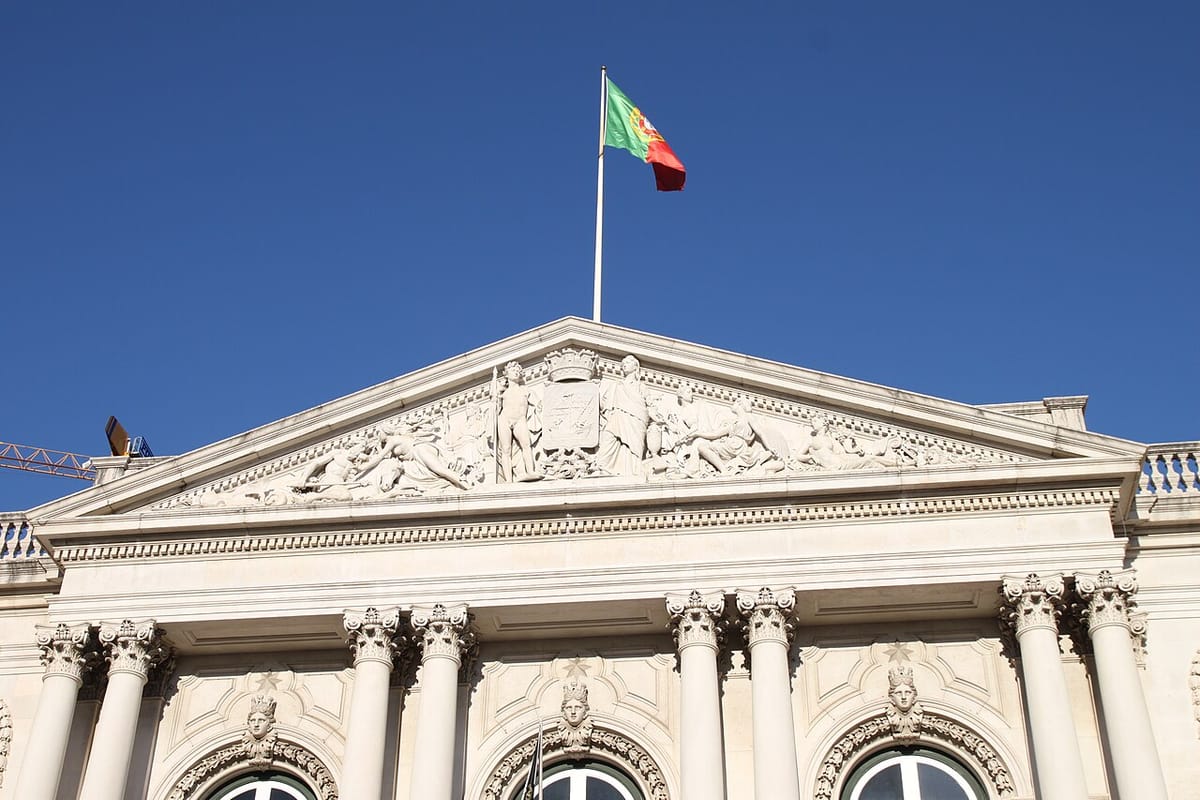
The law that decides which flags may fly on Portugal's public buildings was published in the Diário da República (the official gazette) on Monday 19 October, as Lei n.º 63/2026 (Law 63/2026). Its text sets two things that were not public when President António José Seguro signed it earlier this month: the fines, and the dates.
The dates
The law enters into force 30 days after publication. By our count, starting from the day after it appeared in the gazette, that is Wednesday 18 November.
A separate transitional article gives the public bodies it covers the same 30 days from publication to adapt to the new rules and "remove flags that are not permitted". In practice, any flag on a public building that is not on the law's list should come down by mid-November.
The fines
Raising a flag that is not permitted on a building covered by the law is a contraordenação (an administrative offence, dealt with by a fine rather than in the criminal courts). Article 5 sets the fines at:
- 200 to 2,000 euros where the breach is negligent;
- 400 to 4,000 euros where it is deliberate.
In fixing the amount, the authority must weigh how serious the breach was and how much the person is to blame, and also whether the flag was inside or outside the building and whether it flew on its own or alongside the national flag.
The fines come on top of other consequences. Public employees who break the rules face disciplinary proceedings, and administrative acts taken in breach of the law are invalid under the Código do Procedimento Administrativo (Code of Administrative Procedure). The Guarda Nacional Republicana (GNR, the National Republican Guard) and the Polícia de Segurança Pública (PSP, the Public Security Police) check compliance, each in its own territory. The law leaves the handling of fine cases to "the competent administrative authority" without naming it, and any fine can be challenged in court.
Which flags are allowed
On the buildings it covers, the law allows "exclusively":
- the national flag;
- the flag of the European Union;
- institutional and heraldic flags, such as those of state bodies, the autonomous regions, local councils, the armed forces and the security forces;
- the historic flags that preceded those, in the context of a historic commemoration;
- flags linked to institutional, educational or official recognition programmes run by public bodies;
- flags that symbolise international commitments made by the Portuguese state, if they are used in official initiatives, commemorations or campaigns promoted or recognised by public bodies, and are not party-political or electoral.
The last category was added by the PSD after the president's June veto, as we reported in September. How the GNR and the PSP read it will decide cases such as the rainbow flag that several councils raised on 17 May this year.
Where the law applies, and where it does not
The law covers buildings, monuments, premises, flagpoles, façades and interiors in official use by sovereign bodies, central government departments and agencies, the autonomous regions, local councils and other public bodies. That takes in town halls, ministries and the offices of public services, among others.
It does not apply to:
- private buildings, even when they are open to the public, so shops, cafés, clubs and private homes are outside it;
- cultural, sporting or associative events that involve no official representation of the state;
- diplomatic ceremonies governed by international protocol.
The law also asks for it to be applied with regard to the specific institutional setting and "with proportionality". In the Azores and Madeira it applies without prejudice to the regional governments' own powers.
Parliament approved the final text on 18 September. The president promulgated it on 9 October and Prime Minister Luís Montenegro countersigned it on 13 October.