The Right Rewrote the Flags Decree Before Wednesday's Vote, and the PSD Version Goes Further Than the CDS One
Antonio Jose Seguro sent the decree back in June without signing it. On Tuesday the CDS deleted the article banning ideological and associative flags, and the PSD tabled a separate text that keeps the ban and widens what counts as permitted.
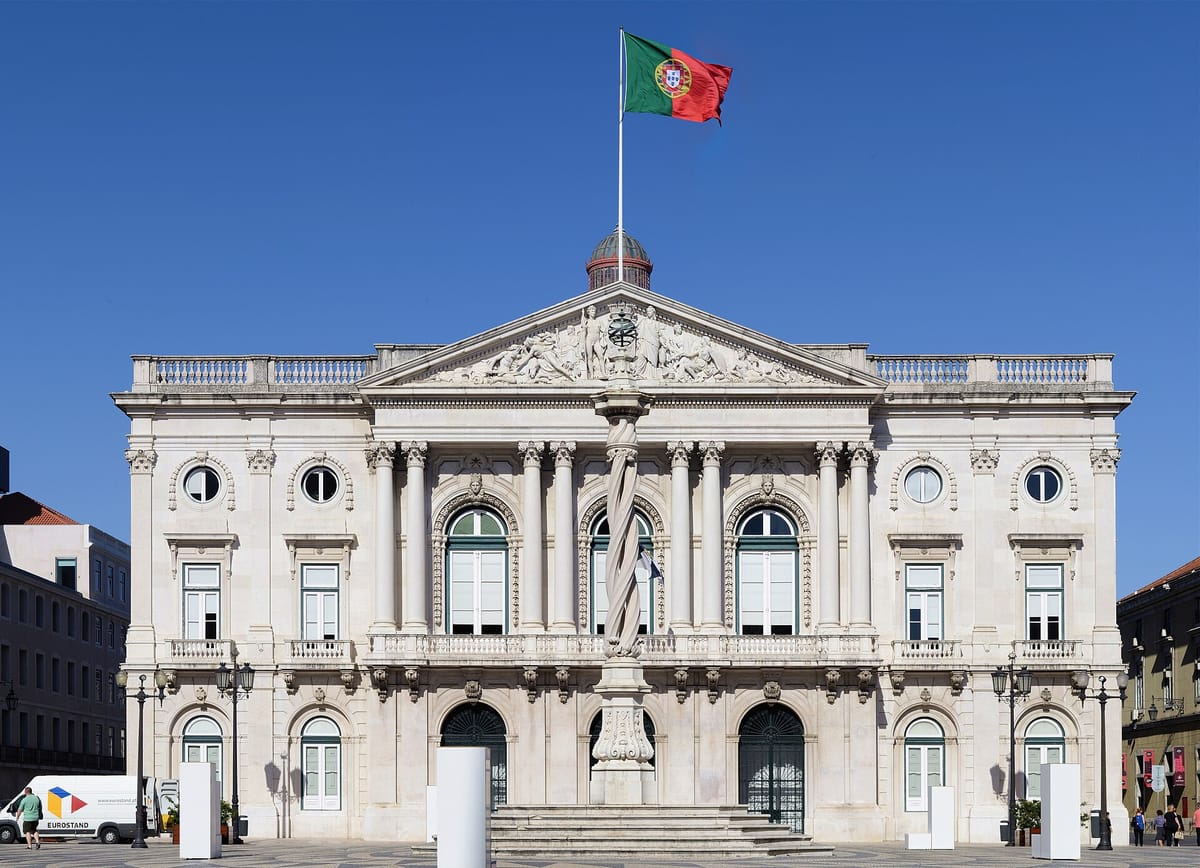
Parliament returns on Wednesday to the one decree President António José Seguro has refused to sign. It sets out which flags may be flown on public buildings, it passed in June with the votes of PSD, Chega and CDS-PP, and it came back from Belém on 10 June with a message rather than a signature. On Tuesday the two governing parties tabled their answers to that message, separately, and they are not the same answer.
Two different repairs
The CDS moved first. Its amendment, signed by the parliamentary leader Paulo Núncio and the deputy João Almeida, deletes article four of the decree outright. That was the prohibition: no display, placement or hoisting, in any public building or space, of flags outside the listed symbols, "namely of an ideological, party or associative nature, regardless of their legal nature". The same article barred flags "of foreign origin, save within official acts of a diplomatic or protocol nature".
The PSD then tabled its own text, autonomously. It keeps a prohibition in place and instead widens the list of permitted flags in article three, adding: "flags that symbolise international commitments assumed by the Portuguese State, provided that their use occurs within official initiatives, commemorations or campaigns promoted or recognised by public bodies and is not of a party-political or electoral nature." António Rodrigues, vice-president of the social democrat bench, told Lusa the party had taken into account "all the questions raised by the President of the Republic", and considers its version to go further than the CDS one.
What the veto actually said
On the face of the two texts, the PSD is the one tracking the message. Seguro's veto did not defend any particular flag. It objected that the decree failed to distinguish party-political display from humanitarian causes the Portuguese state has already signed up to, and it named instruments of international law that bind Portugal, the United Nations among them. "When the holder of a political office raises a flag that symbolises peace, human rights or the protection of the climate, he is not imposing on the state an orientation foreign to it," he wrote. He also objected that "ideological flag" and "associative flag" were defined nowhere in the text, leaving the law uncertain to apply.
Read against that, the CDS approach answers the second objection by removing the undefined categories along with the ban that used them. The PSD approach answers the first, by carving out the United Nations sort of commitment while leaving the rest of the prohibition standing. Neither text, on what is public so far, supplies a definition of the words the President said were missing.
The route they are not taking
They did not have to negotiate at all. Article 136 of the Constitution gives parliament a straightforward override: confirm the vote by an absolute majority of deputies in full exercise of office, and the President must promulgate within eight days. The two-thirds threshold in the same article applies to organic laws and to a short list of matters, external relations, the boundaries between public and private ownership of the means of production, and the regulation of electoral acts. Flags are not on it, and the majority that passed the decree in June is an absolute one.
Choosing to amend instead sends a new decree to Belém with a fresh twenty-day clock, and a President who can veto again. It is the slower route and the more deferential one, and it tells you something about how the right reads the first six months of this presidency: Seguro has used the hard power exactly once, and on this file.
The debate in June was mostly about the LGBTQIA+ flag, and the vote split the chamber cleanly: PSD, Chega and CDS-PP in favour, PS, PAN, Livre, BE and PCP against, Iniciativa Liberal abstaining. Wednesday's plenary reappraisal will show whether the two amendments are merged, whether one is dropped, and whether anything in either of them changes a vote.