Portugal Writes Grid Rules for Battery Storage, With the Toughest Duties Reserved for Large Sites
A new ordinance in force since 23 October sorts grid batteries into four tiers and sets what each must do, from frequency response at 500 kW to grid forming for the largest. Home-sized systems sit in the lowest tier, which is spared most duties.
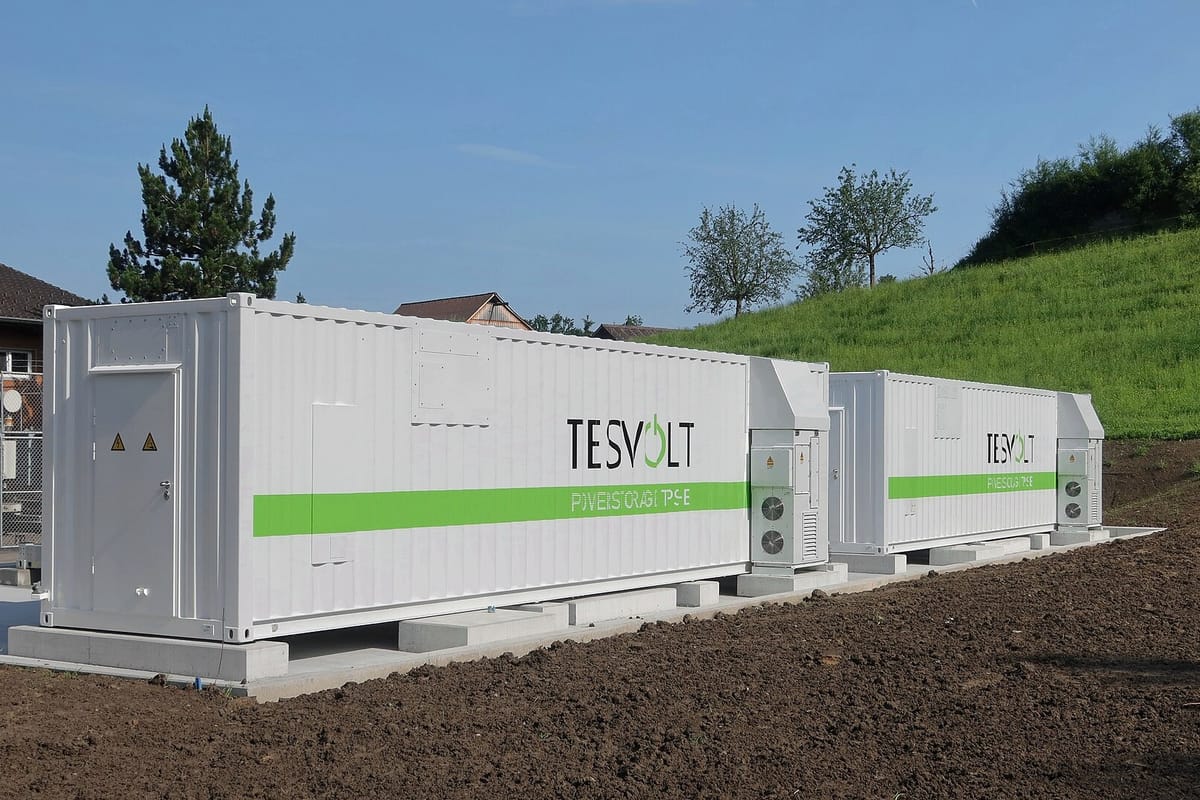
Portugal has published technical rules for connecting battery storage to the public electricity grid. Portaria n.º 464-A/2026/1, issued on 22 October in a supplement to the Diário da República and in force since 23 October, tells storage owners how their installations must behave on the grid, whether they stand alone or share a connection with a solar or wind plant. It applies to connection requests made from 23 October onwards.
Why now
The ordinance, drafted by the Directorate-General for Energy and Geology (DGEG), says it is getting ahead of a revision of the EU grid connection code for generators (Regulation 2016/631), which is still under way. Its preamble points to the expected growth in storage under the National Energy Storage Strategy and to two Recovery and Resilience Plan calls for grid flexibility and storage which, together, add up to more than 1 gigawatt of projects.
What it requires
Batteries are sorted into four tiers by the power they can push into the grid. Tier A runs from 0.8 kilowatts to under 1 megawatt; tier B from 1 to 10 megawatts; tier C from 10 to 45 megawatts; and tier D covers anything of 45 megawatts or more, or connected at 110 kilovolts or above. The duties grow with the tier:
- From 250 kVA of export capacity on the distribution network, the site needs real-time data links and remote control by the network operator.
- From 500 kW, a battery must switch automatically to supplying power when grid frequency falls, and disconnect itself automatically if frequency goes out of bounds.
- Above 1 MW, it must give the national system manager real-time readings and accept remote commands. For a battery attached to a consuming site, that applies once export exceeds 1 MVA.
- Tiers B to D must be technically able to sell balancing reserves and provide voltage and frequency support. Tier A is expressly exempt.
- Tiers C and D must offer "grid forming" operation with synthetic inertia: the inverters act as a voltage source and mimic the steadying inertia of conventional power stations.
Grid operators and the system manager may also send power instructions, to charge less or export less, when the network is congested or supply and demand are out of balance, and the battery must follow them. The act says owners are not obliged to hold back a reserve of charge for this. Storage must be metered separately from any solar or wind plant it shares a site with, so that energy under different payment schemes can be counted apart. The act sets no new fees.
What it means for households
The ordinance does not mention home batteries or self-consumption by name. By size, a typical home system of a few kilowatts would fall in tier A, and the act either exempts tier A or applies its heavier duties only from 250 kVA, 500 kW or 1 MW upwards. Grid forming applies to tier A only where a connection licence or tender says so. Existing installations are not caught unless they are significantly expanded, modernised or replaced. If you are planning a battery with solar panels, or through a renewable energy community, ask your installer whether any of these conditions appear in your connection terms with E-Redes; the act leaves the detail to the operator's connection agreement.
The rules bear chiefly on developers bidding for grid capacity, a process Portugal reshaped in September, and on the market for balancing services whose cost has quadrupled since 2023. Grid stability has been a public concern since the 2025 Iberian blackout, although the ordinance does not cite it.