SNS Patients Spent 650 Million Euros on Pharmacy Medicines From January to August, While Hospital Medicine Bills Reached 1,828 Million
INFARMED's August reports: patients paid 650.3 million euros for reimbursed medicines in pharmacies, 2.4 percent more than in 2025, while the SNS paid 1,338.5 million and hospitals spent 1,828.4 million. How to keep your own share down.
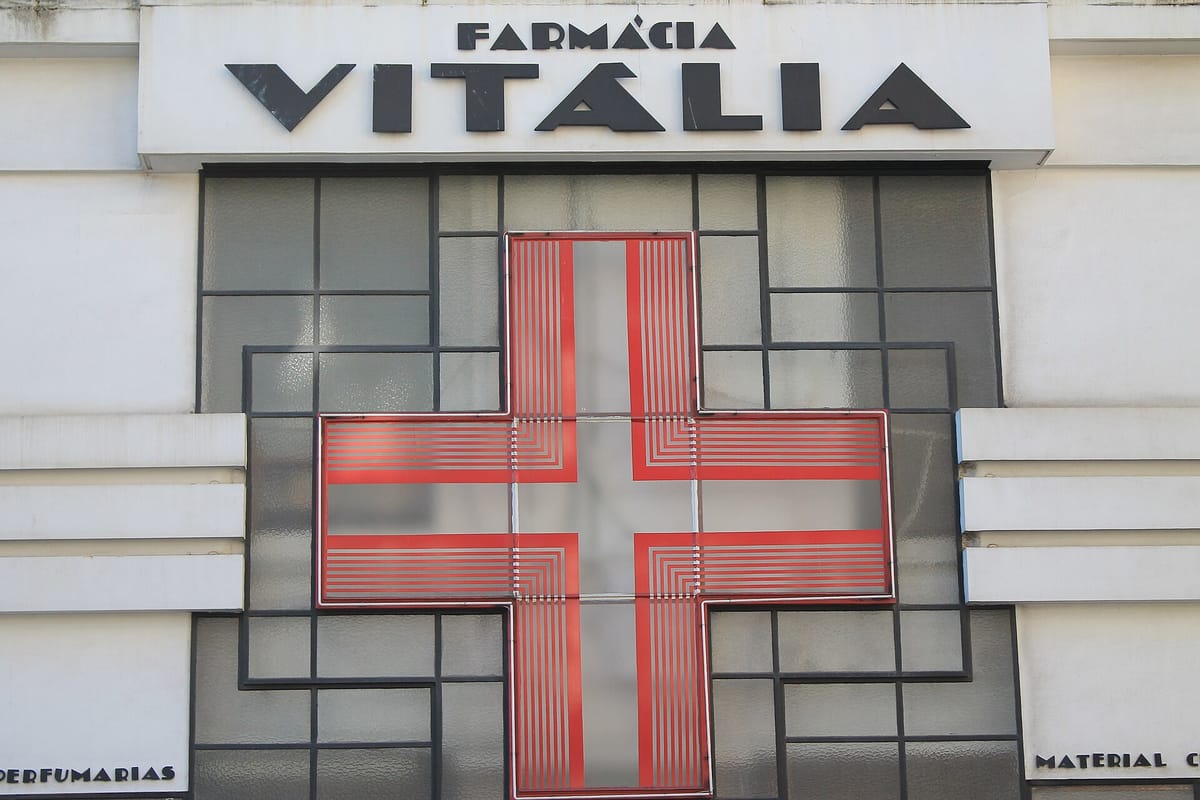
People using the SNS (Serviço Nacional de Saúde, the national health service) paid 650.3 million euros out of their own pockets for prescribed medicines at pharmacies between January and August 2026, according to the latest ambulatory medicines monitoring report from INFARMED (the National Authority of Medicines and Health Products). That is 15.3 million euros, or 2.4 percent, more than in the same months of 2025.
The state's share grew faster. The SNS paid 1,338.5 million euros towards medicines dispensed in pharmacies, up 98.1 million euros (7.9 percent). At retail prices, the medicines were worth 1,988.8 million euros, so patients covered roughly a third of the bill.
More packs, a steady charge per box
Pharmacies dispensed 138.2 million packs of SNS-reimbursed medicines in the eight months, 2.7 percent more than a year earlier. The average patient paid 4.71 euros per pack, one cent less than in 2025, while the SNS paid an average of 9.79 euros, up 47 cents.
Generics made up 50.6 percent of all units dispensed, down 0.6 percentage points. Where a generic exists, the share was 63.2 percent.
Diabetes medicines dominate the bill. Antidiabetics cost the SNS 344.9 million euros, a quarter of the total and 31.7 million euros more than a year earlier. The fastest-growing single medicine was semaglutide, up 54.5 percent to 49.1 million euros; dapagliflozin remained the most expensive, at 67.8 million euros.
Hospitals: 1,828 million euros
SNS health units spent 1,828.4 million euros on medicines in the same period, 83.3 million euros (4.8 percent) more than a year earlier, according to INFARMED's hospital report. Medicines handed to outpatients at hospital consultations accounted for 838 million euros, and day hospitals for 632.6 million euros.
Cancer medicines cost 650.4 million euros, 35.6 percent of hospital spending, with pembrolizumab the single largest item at 91.6 million euros. HIV medicines cost 172.9 million euros, and orphan medicines for rare diseases 378.8 million euros, up 15.5 percent. Vutrisiran, used for amyloidosis, showed the biggest jump: 43.3 million euros, almost four times its 2025 level.
INFARMED notes that the figures do not reflect all the payments the pharmaceutical industry makes back to the state under its agreement with the government and under individual funding contracts.
What it means for you
- Your share depends on the band. Under Decreto-Lei n.º 118/2026 (article 35), the state pays 90, 69, 37 or 15 percent of the price, depending on the medicine's band (escalão A, B, C or D). Where generics exist, that share is worked out on the group's reference price, and you pay any extra for a dearer brand.
- Ask for the cheapest equivalent. Under the medicines law (Decreto-Lei n.º 176/2006, article 120.º-A), the pharmacist must tell you which equivalent has the lowest price, and the pharmacy must stock at least three of the five cheapest and dispense the cheapest unless you choose otherwise.
- Low-income pensioners pay less. If your household income per person does not exceed 14 times the previous year's minimum monthly wage (or 14 times the IAS, the social support index, if higher), the state adds 5 points in band A and 15 points in bands B, C and D, and pays 95 percent on medicines priced at or below the fifth-lowest price in their group. You must prove your status with a document from the official services.
Our guide to medicine co-payments explains the bands and the special schemes for long-term conditions. Recipients of the Solidarity Supplement for Older People should also note that their free medicines now stop at the reference price.