Portugal Turns a Reserved Grid Connection Into Something You Can Split, Swap or Hand Back, Starting Today
A gazette supplement published on Monday sets out how to divide, merge, surrender or move a grid capacity reservation. It also obliges the network operators to publish, for the first time, how much capacity is free at every interconnection point.
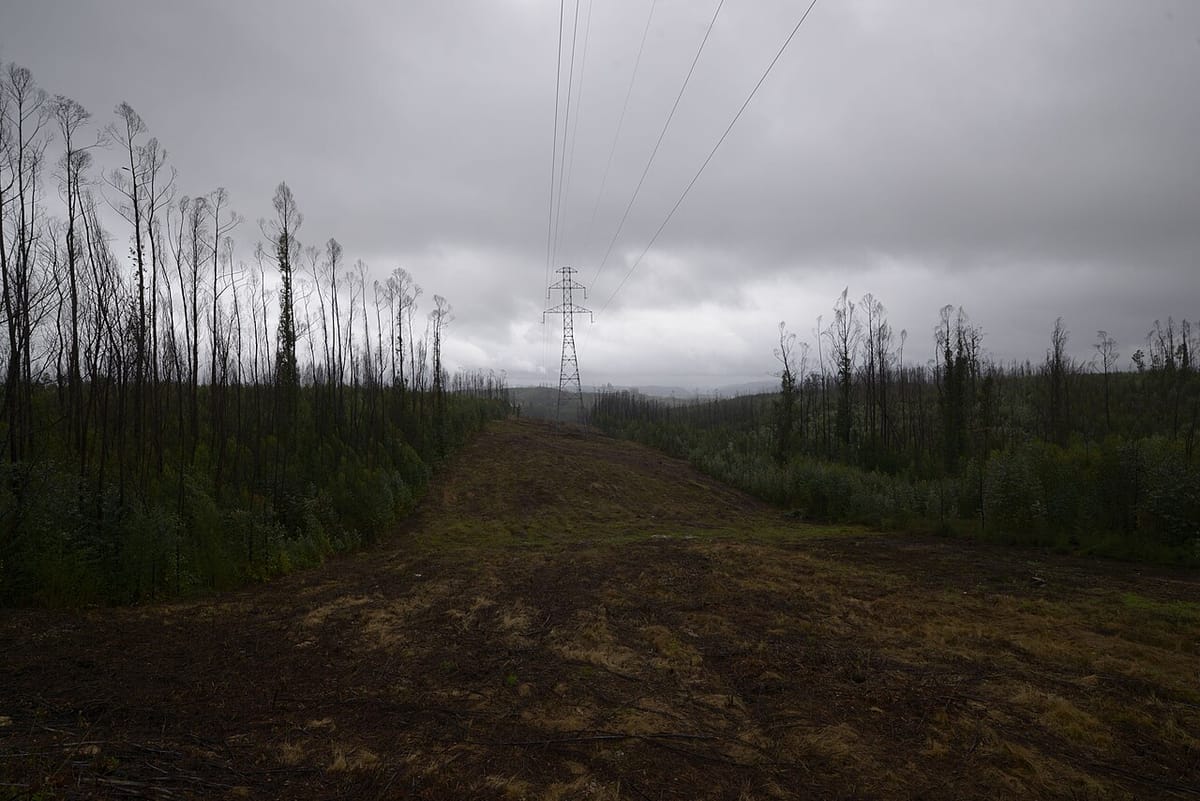
Portugal has spent three years arguing about who gets to connect a power station to the grid. From today the argument changes shape: a company that already holds a reservation can split it, merge it with another, swap the technology behind it, move where it plugs in, shrink it, or hand it back. Portaria n.º 433-A/2026/1, published on Monday in a supplement to the official gazette and signed by the Secretary of State for Energy, Jean Paulo Gil Barroca, on 18 September, came into force the day after publication.
The portaria is the rulebook for Decreto-Lei n.º 100/2026 of 22 May, which created what the government calls dynamic management of injection capacity in the public electricity grid. The object being managed is the TRC, the title reserving a slice of the grid's capacity to absorb power at a given interconnection point. Until this year a TRC was essentially frozen: you built what you had asked for, where you had asked for it, or you lost it.
Nine things you can now do with a reservation
The decree opened nine routes, and the portaria says how to walk each of them: splitting a title, aggregating several, surrendering capacity, swapping it, ceding it, changing the generating technology, hybridising, cutting the power partially, and changing the interconnection point. Every request runs through the DGEG electronic platform, with email as the fallback where no platform exists yet.
A split produces two or three autonomous titles, and where they connect to the national transmission grid each must carry at least 50 MVA. Aggregation requires the applicant to already hold one of the titles being merged, and written authority from the holders of the rest.
Ninety days with the grid operator
The timetable is the part developers will read first. DGEG checks completeness within 10 days, forwards the file to the grid operator within 5, and the operator has 90 days to issue a binding opinion. DGEG then decides within 10. All periods run in working days.
The operator must weigh network security and reliability, the location of the interconnection points, the technical viability of the proposed configuration, any reinforcements needed, and the efficient use of injection capacity. Where reinforcements are required, the opinion must quantify them: the capacity available before the works, the total expected afterwards, an execution timetable so the applicant can judge it against the project calendar, the technical reasoning, and an estimate of the costs falling on the applicant. DGEG must then put that to the applicant, who has 10 days to walk away.
A map of the grid, and a window to hand capacity back
Two provisions matter beyond the developers. Article 7 requires grid operators to publish on the DGEG platform, from the date the portaria takes effect, the injection capacity available and already awarded at every interconnection point, in MVA, naming the substation, the voltage level and the operator, and separating capacity that is already generating from capacity awarded but still idle. Portugal has never had that picture in public before, and the idle column is the one worth watching after a year in which data centres have been asking for more capacity than the grid can give them.
The second is a deadline. Surrender is decided within 30 days, and how much of the deposit comes back depends on whether the request arrives within 30 days of the portaria entering into force or after it. Holders sitting on capacity they will never build have until late October to give it up on the better terms.