Two Data Centres Beside the Old Pego Coal Plant Want More Grid Capacity Than They Were Given, and the Minister Says a Decision Could Land This Year
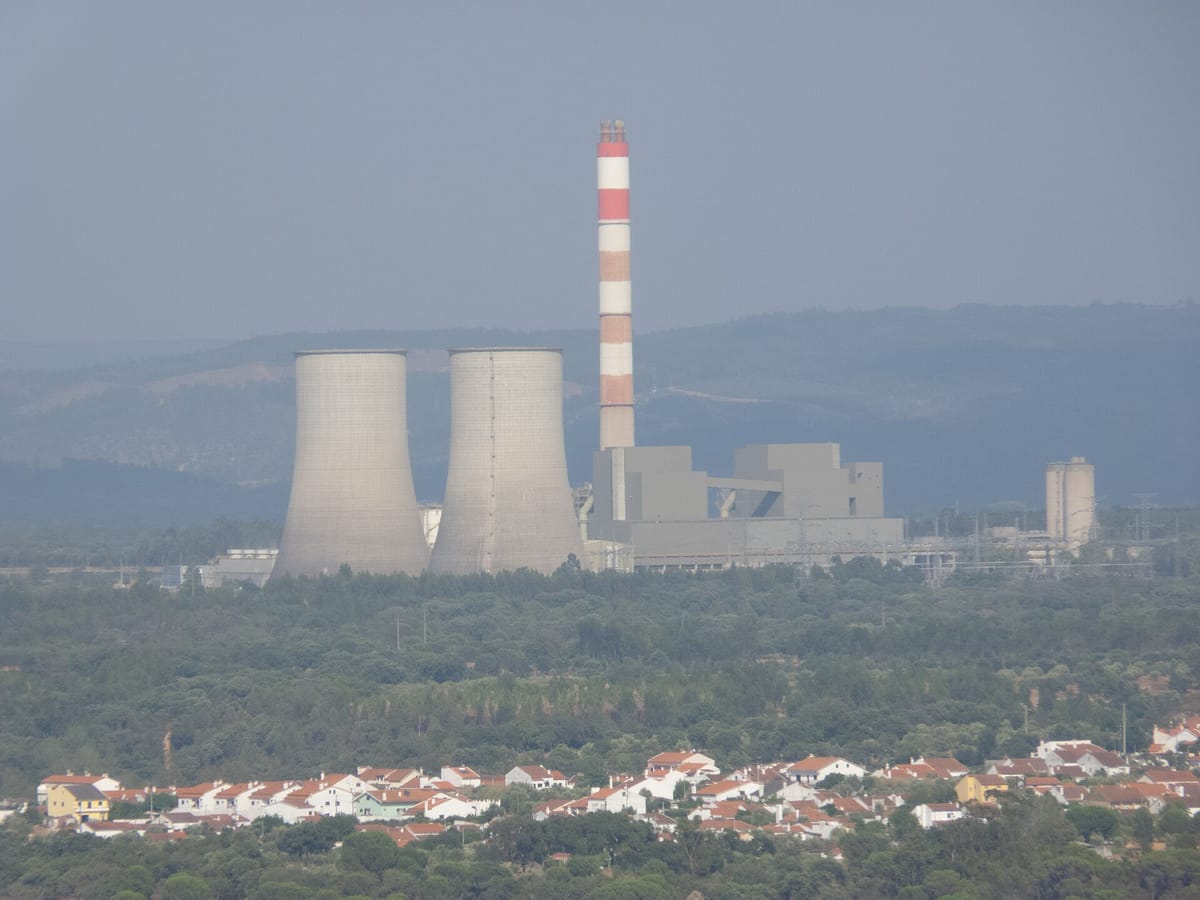
Energy, water and environmental impact are the three tests. Abrantes gets a fourth consideration of its own, because the coal plant that closed in 2021 left behind a connection sized for it.
The two data centres planned for Abrantes already hold authorisations to connect to Portugal's electricity grid. Their promoters have since gone back and asked for more capacity than they were granted, and the government expects to decide the requests before the end of the year.
Maria da Graça Carvalho, the Minister for the Environment and Energy, set that out on Monday at the Tagusvalley science and technology park in Abrantes, in the district of Santarém, at the end of a visit to the council. "The two that are planned here already have an authorisation to connect to the grid," she said, confirming that the promoters subsequently sought an increase in the capacity allocated to them. Asked when a decision might come, she said "soon", and pointed to the possibility of it landing this year.
Three tests, and one local circumstance
The minister said the assessment would weigh energy, water and environmental impact, in a context of heavy demand for grid connection capacity nationally. She added that the analysis would take account of what she called the "special situation of Abrantes", a council hit directly by the closure of the Pego coal-fired power station in 2021 and by the energy transition that followed.
Pego is the reason this particular corner of the Médio Tejo keeps attracting large electricity consumers. Shutting a coal plant leaves behind a high-voltage connection sized for it, and that spare capacity has already been through one public process: in July the state put 300 MW of it out to auction, restricted to renewable generation.
Carvalho listed four things Abrantes has together: grid access, water, industrial land, and technical and engineering knowledge. She described that combination as "scarce at a world level". The mayor, Manuel Jorge Valamatos, argued that the council can host generators and large consumers alike, and called the available capacity at the Pego injection point "an incredible potential for attraction".
The two projects
The first is promoted by EDC Port 1 on the former RPP Solar land near the old power station, with an announced investment of seven thousand million euros across three phases. The first phase is pencilled in to enter service in 2028. Abrantes council recognised the scheme as a Business Project of Municipal Importance in September 2025, and the announced power for phase one was 300 megawatts.
The second is promoted by Hyperion II Renewables Services, on land near the Alvega roundabout and Pego. The council gave a unanimous favourable opinion in May to its prior information request, filed with 200 megavolt-amperes of connection to the future Abrantes cutting station and operation targeted for 2029. That approval is the one we covered in August, when the two projects together looked capable of drawing many times the council's entire electricity consumption.
Crucially, the minister did not quantify the increases now under analysis, and the figures announced previously for either project do not necessarily correspond to what has been requested. In other words, the numbers in the public record are a floor, not a ceiling.
The questions being asked locally
The scale of both schemes has prompted questions in Abrantes about electricity and water consumption, environmental impact, how many jobs are actually created and what economic return the council sees. João Morgado, a PSD councillor, has put those points to the municipal executive. The environmental association Quercus has warned about the cumulative effects of siting two facilities of this size in the same place.