Portugal Summons EU Firefighting Aircraft as the Vouzela Blaze Burns Past 13,000 Hectares
Portugal triggered the EU Civil Protection Mechanism on Friday as a fire near Vouzela, in the Viseu district, grew past 13,000 hectares. Spain sent a Canadair and its Military Emergencies Unit, Italy two amphibious planes, and more than 1,300 firefighters battled fronts across the centre and north.
Portugal called in foreign firefighting aircraft on Friday as a wall of wildfires tore across the centre and north of the country, with a blaze near Vouzela, in the Viseu district, growing into the most dangerous of the summer so far. The government triggered the EU Civil Protection Mechanism, the bloc's mutual-aid system, and appealed to residents to stay clear of the fire lines as almost the entire mainland sat under maximum or very high fire risk.
Vouzela burns past 13,000 hectares
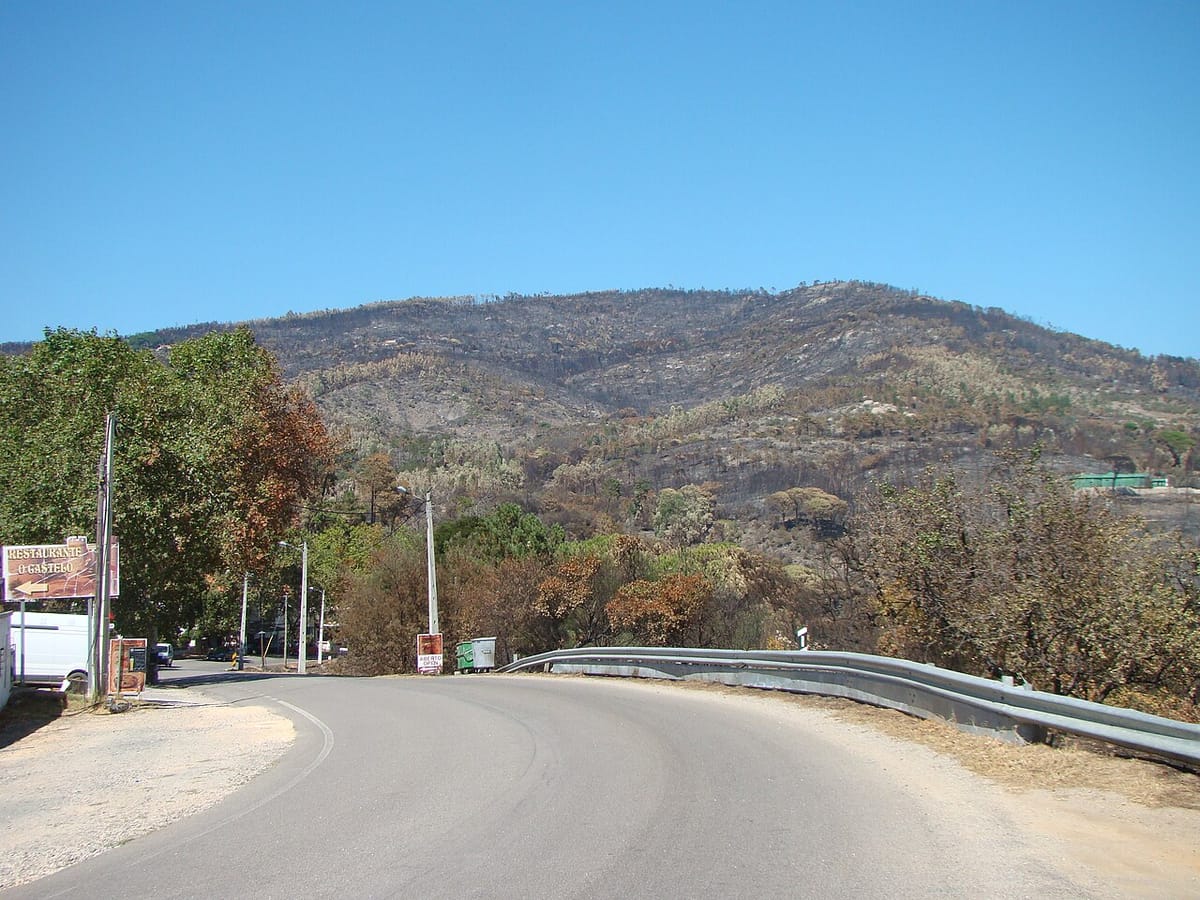
The Vouzela fire broke out in the early hours of Thursday and quickly jumped municipal boundaries, spreading from the Serra do Caramulo into Oliveira de Frades and Tondela, in the Viseu district, and across into Águeda, in neighbouring Aveiro. By Friday it had consumed more than 13,000 hectares of forest and scrub — an area larger than the city of Lisbon — and was still burning on several fronts. It forced the evacuation of Belazeima do Monte and pressed on a string of other villages along the range.
More than 1,300 firefighters, backed by hundreds of vehicles and a dozen or more water-bombing aircraft, were deployed against Vouzela and a second serious fire at Santo Tirso, further north. The Autoridade Nacional de Emergência e Proteção Civil (National Emergency and Civil Protection Authority) reported roughly 17 people injured across the various fronts, most of them lightly, including firefighters overcome by heat and smoke.
Europe sends aircraft and troops
With its own fleet stretched, Portugal asked for help through the EU Civil Protection Mechanism, activated preventively as the heatwave built. Spain despatched a Canadair amphibious aircraft and dispatched its Unidade Militar de Emergências (Military Emergencies Unit), whose troops reached Vouzela before dawn. Italy sent two amphibious planes, and three further aircraft were reported en route from partner states. Prime Minister Luís Montenegro said the scale of the risk justified calling on "our closest allies" and urged the public to "collaborate and respect" the instructions of the authorities.
The reinforcements arrived as the Direção-Geral da Saúde (Directorate-General for Health) held an orange heat alert, raising hospital contingency levels and warning of excess mortality among the elderly. The state of alert — the highest rung of civil-protection readiness — was in force across a swathe of inland districts, and the government signalled it could be extended into the coming week.
The same warning, every summer
The pattern is by now familiar: a prolonged heatwave with temperatures above 40°C, bone-dry vegetation and a handful of ignitions that outrun the ground crews within hours. Fire specialists again pointed to the underlying problem rather than the weather — the steady abandonment of farmland in the interior, which leaves fuel to accumulate unmanaged, and the difficulty of clearing undergrowth at the scale the terrain demands. Climate change lengthens and sharpens the season, but the combustible landscape is a policy failure as much as a meteorological one. For now, the immediate question is a simpler one, and it depends on the wind: whether the lines around Vouzela hold through the weekend. On the compensation side of the file, the natural-catastrophe declaration that opened the €10 million farm-recovery call sets out the 32 parishes across nine councils the despacho actually names, the 30 percent damage threshold, the 100 / 80 / 50 support scale that turns on whether you hold agricultural insurance, and the 17:00 deadline on 27 October.