Portugal Steps Up Sea-and-Land Patrols Off the Algarve After a Migrant Surge Overwhelms Ceuta
The Maritime Police and the Navy are running daily patrols along the Algarve coast after roughly 60,000 people crossed from Morocco into the Spanish enclave of Ceuta, though no mass arrivals have been reported in Portugal.
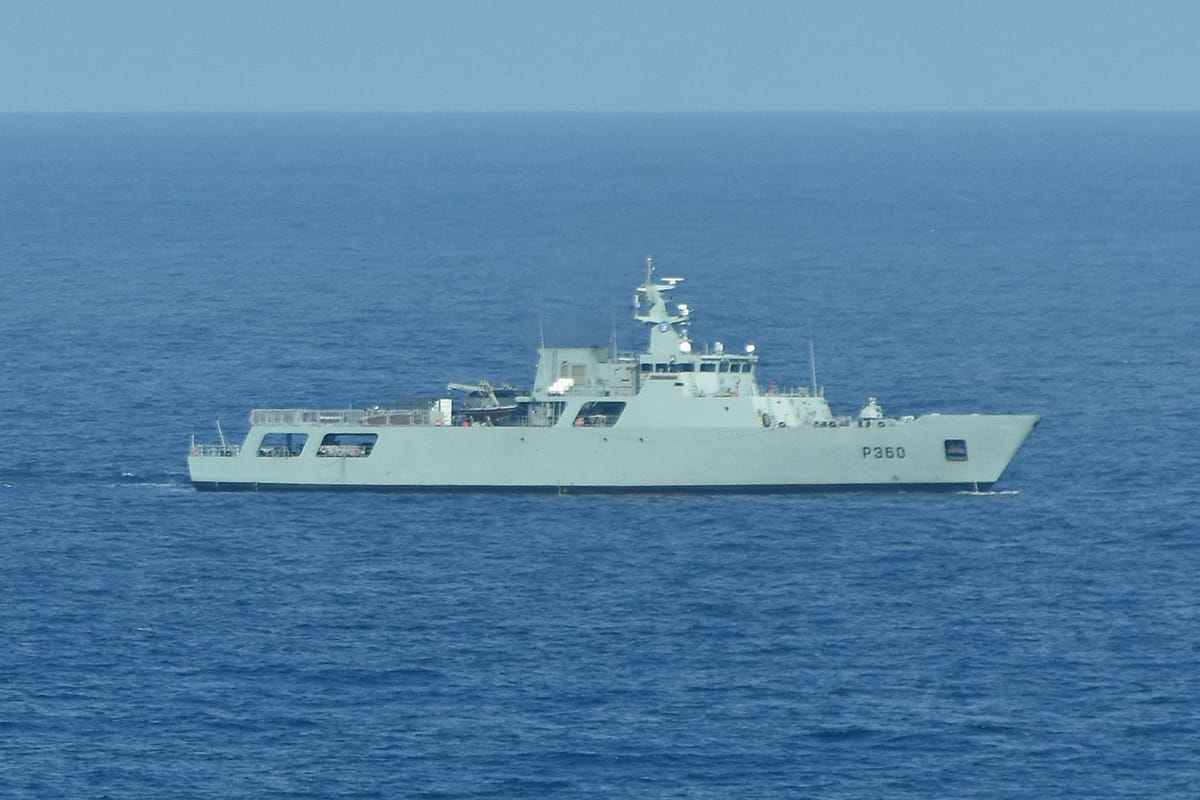
Portugal has reinforced surveillance of its southern coastline, with the Polícia Marítima (Maritime Police) and the Marinha Portuguesa (Portuguese Navy) mounting daily patrols by sea and land along the Algarve after a sudden migration crisis in the neighbouring Spanish enclave of Ceuta. The two forces are working alongside the Unidade de Controlo Costeiro e de Fronteiras (Coastal and Border Control Unit) of the GNR, the paramilitary national guard, in what the authorities describe as a precautionary reinforcement rather than a response to arrivals on Portuguese shores.
The trigger lies across the Strait of Gibraltar. Since Thursday, Ceuta — a Spanish city on the North African coast — has seen a mass influx of people crossing from Morocco, which local authorities put at roughly 60,000. Spanish figures indicated that by Friday evening at least 48,300 had voluntarily returned to Morocco. The human cost has been heavy: at least 57 people are reported to have died attempting to reach the enclave by swimming since the surge began.
Portuguese officials have been careful to stress that there has been no comparable movement toward the Algarve. The patrols are aimed at detecting any vessels that might be linked to irregular migration or other illicit activity along the coast, and at signalling that the maritime border is being watched. Sporadic landings of small boats on Algarve beaches have occurred in recent years, but on nothing like the scale seen in Ceuta.
Prime Minister Luís Montenegro addressed the crisis directly, rejecting calls to suspend Portugal's participation in the Schengen area of passport-free travel. Instead, he said, the priority is to reinforce the control mechanisms already provided for under the Pacto Europeu para as Migrações e o Asilo (European Pact for Migration and Asylum), and to strengthen surveillance of the country's southern maritime and land borders. He framed enhanced monitoring as the proportionate answer, in preference to the more drastic step of reimposing internal border checks with Spain.
The distinction matters. Reintroducing systematic checks at the land frontier — as Portugal did briefly during the pandemic — would disrupt the tens of thousands of daily crossings between the two countries and carry significant economic and political costs. By concentrating on maritime patrols and coastal watch, the government is trying to demonstrate vigilance without unwinding the open border that underpins cross-frontier commerce and tourism in the Algarve and the Alentejo.
For residents and visitors in the south, the immediate practical impact is limited: a more visible naval and police presence along the coast, but no change to travel or documentation requirements. The developments in Ceuta are being watched closely in Lisbon and Brussels alike, and further coordination at EU level is likely if pressure on Spain's southern border persists. For now, the Portuguese response remains one of reinforced watchfulness rather than emergency measures, and officials say the patrols will continue for as long as the situation across the strait remains volatile.