Portugal Records 961 New HIV Cases in 2025 and Hits the UN Testing and Treatment Targets, but More Than Half Are Still Diagnosed Late
Portugal recorded 961 new HIV infections in 2025, 39 percent fewer than a decade ago, and met the UNAIDS 95-95-95 targets. But 53 percent were diagnosed late. Where to get tested this European Testing Week, and how PrEP works in the SNS.
Portugal recorded 961 new HIV infections in 2025, and more than half (53 percent) were diagnosed late, according to the annual report Infeção por VIH em Portugal 2026 (HIV Infection in Portugal 2026), drawn up by the Direção-Geral da Saúde (DGS, Directorate-General of Health) and the Instituto Nacional de Saúde Doutor Ricardo Jorge (INSA, the national health institute). Lusa had early access to the report and its figures were carried by Notícias ao Minuto and Público. DGS and INSA present it online at 14:30 today, ahead of World AIDS Day on 1 December.
The report falls in the middle of the European Testing Week, which runs from 23 to 30 November: a good moment to get tested.
What the report found
- Fewer new cases. New HIV diagnoses fell 39 percent over the last decade and new AIDS cases 55 percent. There were no cases in children under 15 in 2025, and 175 new AIDS cases were diagnosed.
- Late diagnosis stays high. 53 percent of people were diagnosed late, especially women and people aged 50 or over; 63 percent had no symptoms when diagnosed.
- Who is affected. 59 percent of new diagnoses were in people born outside Portugal, but Portugal was the probable place of infection in 72 percent of cases where this was known. Rates were highest in Greater Lisbon, followed by the Setúbal Peninsula.
- The 95-95-95 targets. Of an estimated 51,386 people living with HIV in Portugal in 2024, 95 percent had been diagnosed. In 23 hospitals, 97.9 percent of patients seen in 2025 were on treatment and 96.1 percent of those had a suppressed viral load, which the report says meets the UNAIDS targets, with the caveat that the data do not cover every health unit.
- PrEP is growing. 8,834 people received PrEP in hospitals in 2025, up 15 percent, 1,466 of them for the first time. Community pharmacies dispensed 5,943 packs between July 2024 and December 2025.
What it means for you
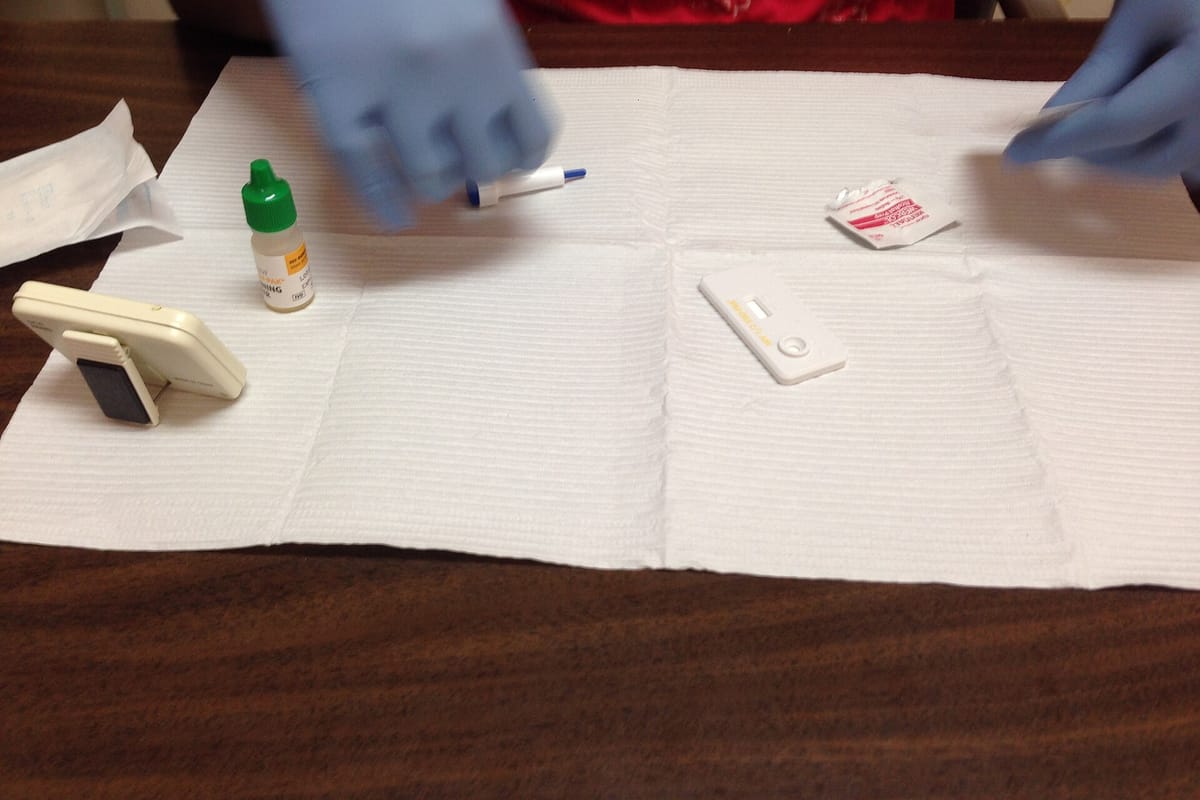
Where to test. According to SNS 24, you can be tested at your health centre with a doctor's request, at a Centro de Aconselhamento e Deteção Precoce (CAD, HIV counselling and early detection centre), through a non-governmental or community organisation, or at a pharmacy or clinical laboratory. DGS has published a list of testing sites for this week, with CADs from Braga and Bragança to Coimbra, Lisbon and Beja. A reactive result is not a diagnosis: you are referred to a hospital of your choice for a confirmation test. If you had a recent risk, you may need to repeat the test a few weeks later.
PrEP (pre-exposure prophylaxis, a daily or on-demand pill that prevents HIV) is free from SNS hospital pharmacies when prescribed at a hospital HIV clinic. It can also be prescribed in primary care or by community organisations for collection at an ordinary pharmacy, where the state pays 69 percent of the price for people aged 16 or over at increased risk. If you have had a possible exposure, post-exposure treatment (PPE) should start as soon as possible and no later than 72 hours: go to the emergency department of a hospital in the HIV referral network.
Immigrants. Under the health regulator ERS's supervision alert 6/2020, foreign residents have the same access to SNS care and medicines as other users, and people without residence papers are treated on the same terms as everyone else for communicable diseases that threaten public health, with AIDS given as an example. We set out more testing options in our October report on the 2024 figures and explained the revised PrEP rules on 9 October.