Portugal Proposes Adding 3,734 Hectares to the Serras de Aire e Candeeiros Park, and Contributions Are Due by Monday
The ICNF wants the park boundary to follow the whole of the arrife escarpment, bringing in land in Alcanena, Ourem and Torres Novas. Torres Novas council has been asking since 2019. The consultation window closes on 21 September.
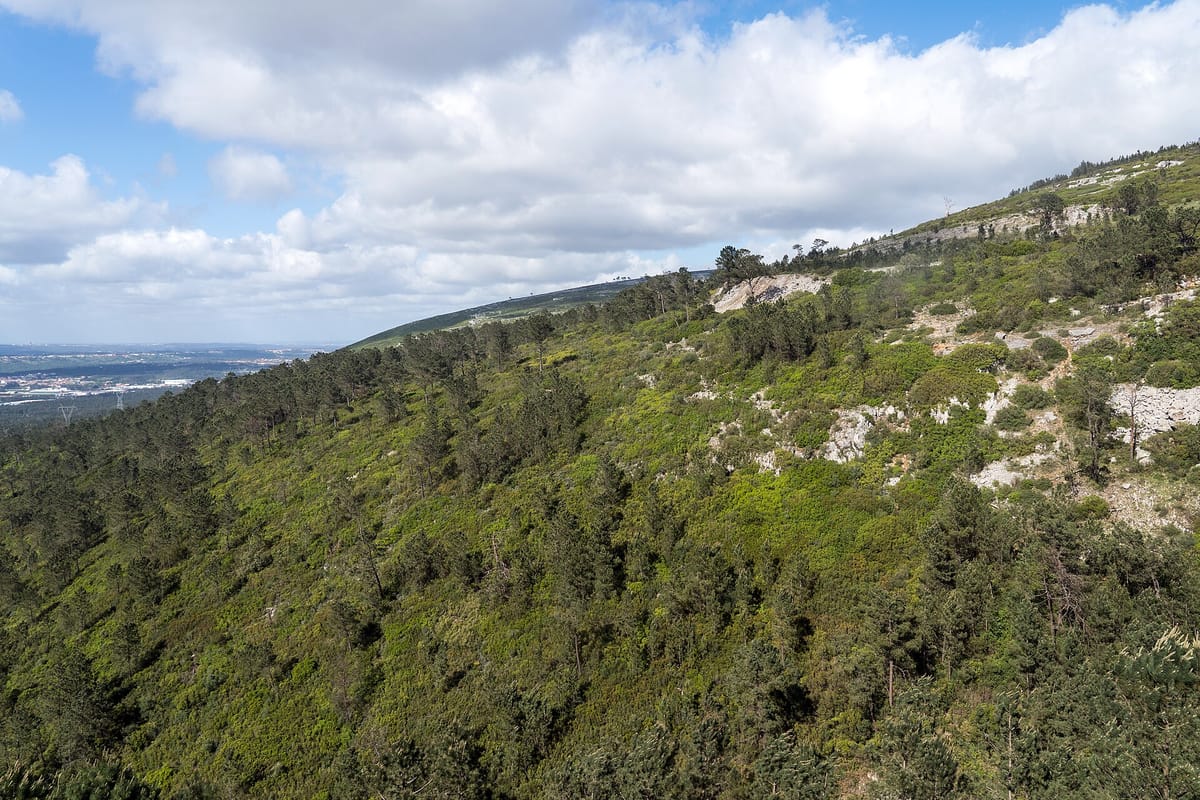
A proposal to add about 3,734 hectares to one of Portugal's oldest natural parks is in public consultation until Monday, and the land in question sits in three municipalities that are not currently inside it.
The Instituto da Conservação da Natureza e Florestas (Institute for Nature Conservation and Forests, or ICNF) has put the enlargement of the Parque Natural das Serras de Aire e Candeeiros (Serras de Aire e Candeeiros Natural Park, or PNSAC) out for comment on the Participa portal. The new area would fall in Alcanena, Ourém and Torres Novas, all in the district of Santarém, and contributions close on Monday 21 September.
What the park is now
The PNSAC was created in 1979 to protect what the founding text called the singularity of the karst landscape and its geological and geomorphological heritage. It is headquartered in Rio Maior, covers roughly 38,352 hectares, takes in territory from seven municipalities, and contains around two thirds of the Maciço Calcário Estremenho (Estremenho Limestone Massif).
Karst is the landscape limestone makes when water works on it: caves, sinkholes, bare rock pavements, streams that vanish underground. It is the reason the area has both a tourism industry built on show caves and a long-running quarrying industry built on the same stone.
The escarpment the boundary missed
The feature at the centre of the proposal is the arrife, the escarpment that marks the edge of the limestone massif where it has been thrust up over the softer ground beside it. The enlargement follows the arrife and the areas adjacent to it.
Torres Novas council has been pressing for this since 2019. Its argument, set out in the technical dossier the Lusa news agency has seen, is that the existing boundary did not take account of the full extent of the arrife thrust within the municipality, and that what was left out constitutes an exemplary part of the single structural unit that is the Estremenho Limestone Massif.
The PNSAC Strategic Council went further than the original municipal request. Rather than correcting the line in Torres Novas alone, it chose to extend the enlargement area to the whole of the arrife, bringing in the parish of Moitas Venda, in Alcanena, and the incised stream valleys of Ourém. If approved, the ICNF says, the change closes a gap that currently leaves a significant parcel of this geological unit outside the limits of the protected area.
What the dossier says it is protecting
The ICNF lists the geomorphological, tectonic and other geological, hydrological, ecological and cultural values associated with the park's arrifes, which the document calls one of the most notable examples of Portuguese geomorphological and geological heritage.
On the biological side, the stated targets are the perennial meadows and grasslands, the limestone pavements, the rock outcrops, the oak and holm-oak woods and the box (Buxus sempervirens), together with the fauna tied to those habitats, specifically birds of prey and cave-dwelling bats. On the geological side the aim is to safeguard geosites, caves and algares, the vertical shafts that open into the limestone.
The proposal also frames a positive objective alongside the protective one: promoting farming, forestry, urban and leisure practices that are consistent with nature conservation and with safeguarding the landscape, archaeological, architectural, historical and natural heritage. What that will mean in practice for a specific plot is not set by this consultation. A boundary change determines which land falls inside the protected area; the detail of what may be built, cleared or quarried there is carried by the park's management programme and the planning rules that apply to it.
How to take part, and why the timing is tight
The documents are on the Participa platform and interested parties can submit contributions until Monday. That is a short window by the standards of Portuguese environmental consultations, and it is the only formal opportunity to comment on the delimitation before it goes forward.
Anyone owning, farming or planning to build on land along the arrife in those three municipalities has an obvious reason to read the delimitation carefully. So does anyone on the other side of the argument. Our guide to taking part in a public consultation in Portugal sets out who may object, how the clock works and what reply the state owes you afterwards.
The proposal also arrives at an awkward moment institutionally. The ICNF is itself being restructured, with central control of environmental impact assessments moving to the institute under a redrawing of Portugal's environment agencies. And protected-area boundaries have been contested ground this year: the government spent August ruling out the declassification of the Sintra-Cascais Natural Park after a municipal planning document recommended scrapping its protected status.
The Serras de Aire e Candeeiros proposal runs the other way. It is a park asking to get bigger, and it has four days left to hear who objects.