The Rossio Tent Ruling Sends Portugal's 00:30 Protest Curfew to the Constitutional Court, Whether Prosecutors Agree or Not
Because a Lisbon judge refused to apply part of the 1974 protest law on constitutional grounds, prosecutors must appeal to the Constitutional Court. What the judges can decide, why one ruling would not scrap the 00:30 rule, and Monday's other developments.
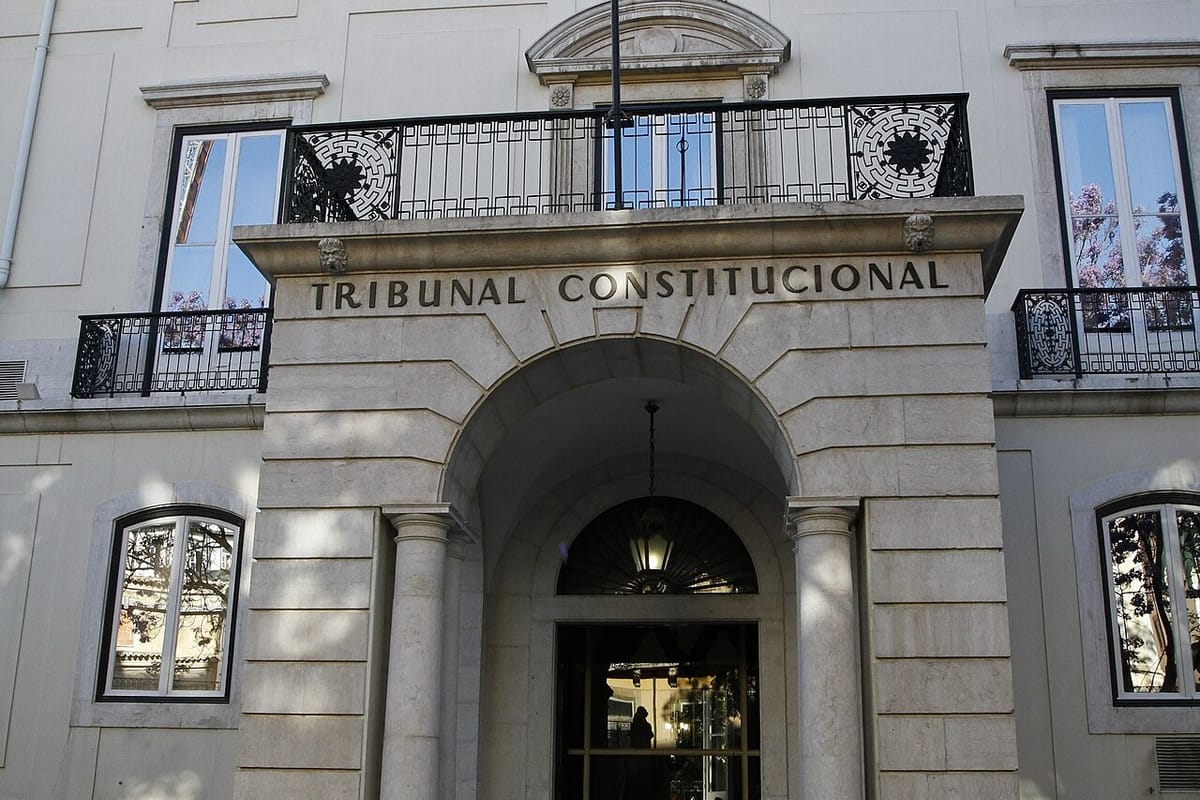
Sunday's ruling that let a housing protester keep her tent on Lisbon's Rossio overnight has a second consequence that reaches well beyond one square. Because the judge refused to apply part of the 1974 law on the right of assembly on constitutional grounds, the Ministério Público (Public Prosecution Service) is now required by the Constitution to take the question to the Tribunal Constitucional (Constitutional Court), ECO reported on Monday evening. The appeal is compulsory: it does not depend on whether prosecutors agree with the decision.
That is a turn from last week, when Prosecutor-General Amadeu Guerra said he saw no grounds to ask the Constitutional Court to review the law (our report). The question now reaches the court by a different door.
What the Lisbon judge actually refused to apply
Article 11 of Decreto-Lei n.º 406/74 says outdoor gatherings may not continue past 00:30. According to ECO, Judge Ana de Campos of the Lisbon Administrative Court refused to apply that article "in the interpretation according to which it sets an absolute and automatic time limit" on the fundamental right to protest. She did not strike the article down, and her ruling protects only Renata Cambra, the protester who brought the case, and one tent, until the final budget vote on 24 November (our report on the ruling).
Why the appeal is automatic
Article 280(3) of the Constitution makes an appeal "obligatory for the Ministério Público" whenever a court refuses to apply a rule contained in a legislative act. Article 72(3) of the Constitutional Court Law (Lei n.º 28/82) repeats the duty. Prosecutors may skip the appeal only where the decision follows settled Constitutional Court case law (article 72(4)), and ECO did not suggest that applies here. Article 75 sets a 10-day deadline to lodge it.
What the Constitutional Court will and will not decide
- Only the constitutional question. Article 280(6) of the Constitution limits these appeals to whether the rule is constitutional. The judges in the Palácio Ratton will not rehear the protest, the tent or the Christmas market arrangements, ECO notes.
- The effect is first limited to this case. Under article 80 of the Constitutional Court Law, the decision settles the constitutional point for this case. If the court finds against the lower court, the file goes back so the ruling can be reformed.
- A wider effect needs three cases. Article 281(3) of the Constitution lets the court declare a rule unconstitutional for everyone once it has judged it unconstitutional in three concrete cases. A single ruling would not take the 00:30 limit off the statute book.
No timetable has been given, and the reports we read did not say how the appeal affects Ms Cambra's tent while it is pending.
The rest of Monday
- Porto detainees: the prosecutor dropped fast-track summary trials for the seven people detained in Porto on Sunday and sent the case to ordinary proceedings to gather more evidence, their lawyer Ricardo Salazar told reporters, Observador reported. "There will not be a trial so soon," he said.
- The ministry and the PSP: the Ministry of Internal Administration said the ruling covers one individual situation and does not recognise a right to put tents in public space, Jornal de Negócios reported. Ms Cambra called that reading "absurd". The PSP said it had offered organisers a "symbolic" number of tents after 00:30, Notícias ao Minuto reported.
- Politics: Chega leader André Ventura called the ruling wrong and asked the Prime Minister and the President to speak, before the Council of State met at Belém, Observador reported.
For anyone who protests or plans to, the practical position tonight is unchanged: the 00:30 rule is still law, and only one person in Portugal holds a court order shielding a tent from it.