Prosecutor-General Denies Asking Parliament to Rewrite the 1974 Protest Law, and Again Rules Out a Constitutional Court Referral
Amadeu Guerra says he did not challenge Parliament to change the 1974 right of assembly law, opposes rewriting laws in reaction to events, and sees no grounds to send it to the Constitutional Court. What the law says on notice, the 00:30 limit and stopping protests.
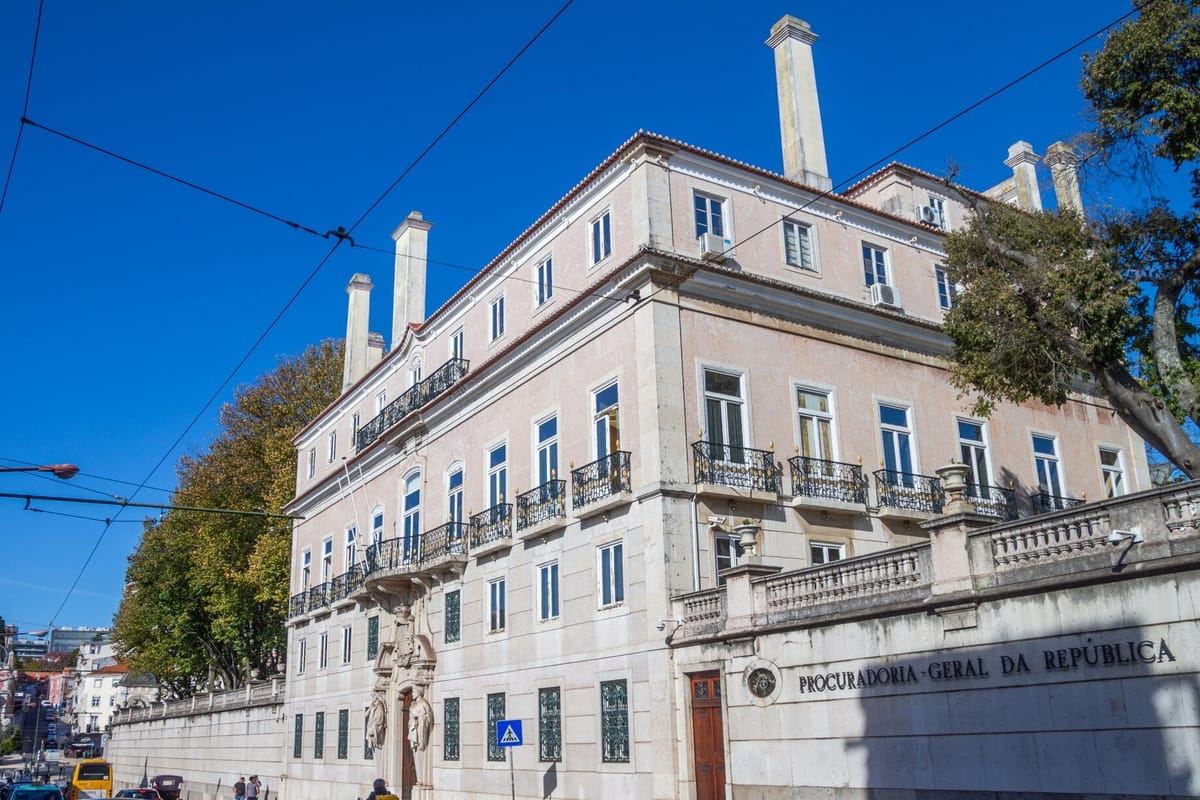
Portugal's Procurador-Geral da República (Prosecutor-General), Amadeu Guerra, said on Tuesday that he had not challenged Parliament to rewrite the 1974 law on the right of assembly. "Contrary to what the media are reporting, I did not challenge Parliament to do anything at all," he told journalists, RTP reported. He also repeated that he sees no grounds for the Procuradoria-Geral da República (PGR) to ask the Tribunal Constitucional (Constitutional Court) to review the law.
His remarks on Monday, made after a lecture at the Universidade Nova de Lisboa law faculty, had been reported by Lusa, RTP and ECO as a challenge to Parliament, and we reported them the same way.
What he said on each day
On Monday 26 October, according to Lusa via ECO, Guerra said: "Legislative changes cannot follow the flavour of specific events. We have to let this situation mature, and I am convinced that the competent body, which is Parliament, will mature it and think about it. [...] It is a competence of Parliament and Parliament should do it." He added that "for now" he did not see it as "evidently necessary" to ask the Constitutional Court to examine the law.
On Tuesday 27 October he put the stress on who decides, not on whether the law should change. "I am sure that Parliament will reflect, and several parties have already spoken about it, not at my request," he said, according to RTP and Lusa via Notícias ao Minuto. He said he is not in favour of changing this law, or any law, in response to particular events "at the whim of the moment". Changing the law is a matter for Parliament, not the PGR, he said.
What the 1974 law says
Decreto-Lei n.º 406/74 (Decree-Law 406/74), as amended in 2011, guarantees the right to meet peacefully in public places "independently of authorisations". Its main rules are:
- Notice: organisers tell the mayor of the municipality in writing at least two working days ahead. Three organisers sign the notice, and it gives the time, place and purpose, plus the route for a march (Articles 2 and 3).
- Objections: if the authorities raise no written objection within 24 hours, there is taken to be none (Article 3).
- Stopping a protest: the authorities may interrupt one only if it turns to acts contrary to the law or seriously disturbs public order. They must then write a report giving the reasons and hand a copy to the organisers (Article 5).
- Time limit: gatherings may not continue past 00:30 unless they are indoors or have the written consent of any residents (Article 11).
- Penalties: holding a protest in breach of the decree is qualified disobedience, and officials who unlawfully block a protest face criminal and disciplinary action (Article 15). Organisers can appeal to the ordinary courts within 15 days (Article 14).
Why it matters
The 00:30 limit is the rule at the centre of the overnight housing camps in Lisbon and Porto. The PSP broke them up by force early on Sunday, 25 October.
With the PGR declining to act, any change now depends on the parties. ECO reported that the PSD calls a revision premature until the IGAI inquiry reports. PAN says it will propose allowing protests after midnight. Chega has urged other parties to table changes, and Livre, the PCP and the BE see no need to touch the law. PS leader José Luís Carneiro said his party is open to talks if Parliament as a whole wants them, Lusa reported via Observador. Until the law changes, the 1974 rules apply as written.