Portugal Edges Up to 11th in the 2027 Climate Change Performance Index, but Earns Only Medium Marks in All Four Categories
Portugal is 11th of 64 countries plus the EU in the CCPI 2027, effectively eighth as the top three places stay empty. Emissions per person are falling, but transport, gas and oil, and missing funding drag it to "medium" in every category.
Portugal has moved up one place to 11th in the Climate Change Performance Index (CCPI) 2027, the annual ranking of 64 countries and the European Union published at the COP31 climate summit in Antalya, Türkiye. The index's own authors keep it among the "high performers", but behind the headline position Portugal earns only a "medium" rating in each of the four categories that make up the score: greenhouse gas emissions, renewable energy, energy use and climate policy.
The index is produced by two German organisations, the NGO Germanwatch and the NewClimate Institute, with national experts in each country. In Portugal the national assessment was contributed by the environmental association ZERO. Emissions count for 40 percent of the overall score and the other three categories for 20 percent each, according to the CCPI's methodology.
Eleventh is really eighth
As in earlier editions, the first three places are left empty because, the authors say, no country performs well enough in all categories to earn an overall "very high" rating. Denmark again tops the table in 4th place, followed by Lithuania, Luxembourg, the United Kingdom, Morocco, Chile and the Netherlands, so Portugal is in practice the eighth-best country, ZERO points out. Spain stays 14th, the EU as a bloc is 19th (up one place, with a "medium" rating), France is 20th and Germany 25th.
What Portugal did well
- Falling emissions per person: 4.81 tonnes of CO2 equivalent per head in 2025, after a five-year downward trend of 15.1 percent.
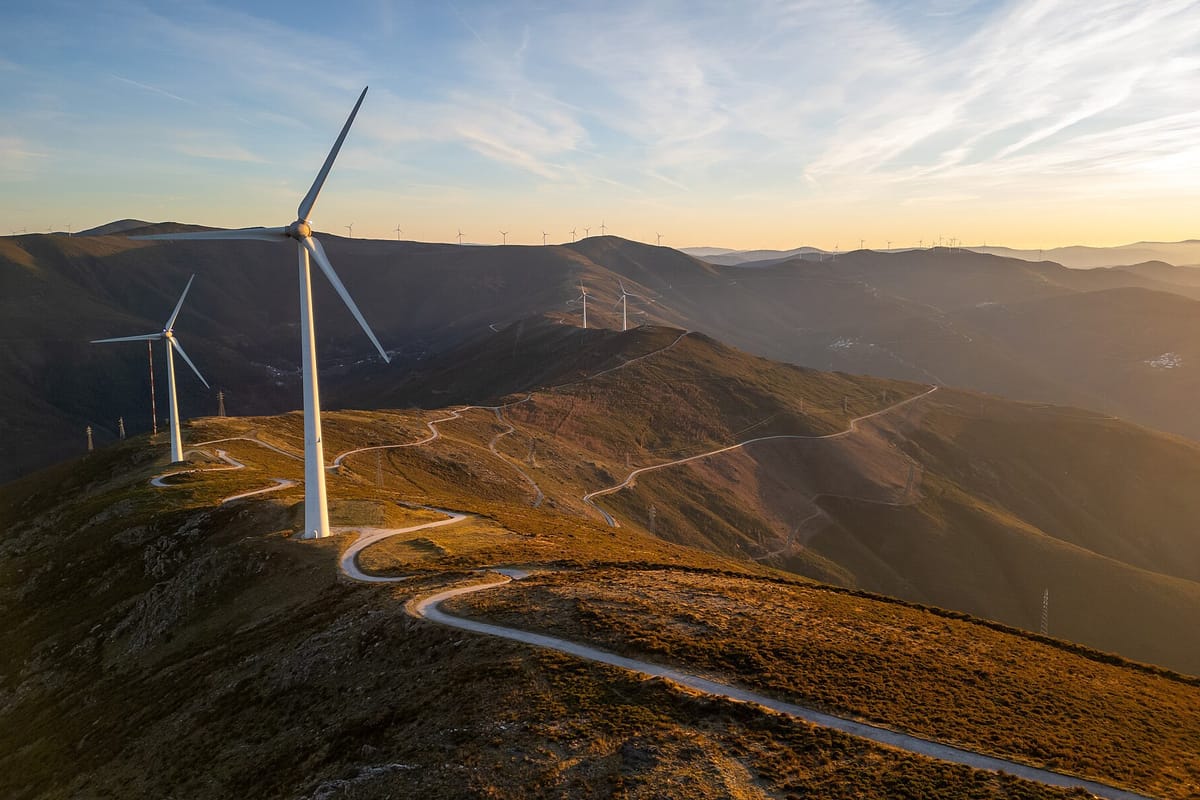
- Renewables: 32.46 percent of energy supply in 2024, rated "high" on that indicator. The country closed its last coal power plant in 2021.
- Targets on paper: the Climate Framework Law (Lei de Bases do Clima) sets climate neutrality by 2050, and the national energy and climate plan (PNEC) a 55 percent cut in emissions by 2030 against 2005.
Where it falls short
The country page says the targets lack the policies and funding to deliver them, and that the independent body meant to scrutinise climate policy, the Climate Action Council (Conselho para a Ação Climática), is still not operating. Transport produced 35.2 percent of national emissions in 2024, about 18.1 million tonnes, against a plan to cut the sector's emissions by 40 percent by 2030. Electric car uptake is rising, but heavy lorries are barely electrifying for lack of incentives.
The experts also criticise the absence of any plan to phase out gas and oil, fuel subsidies and tax breaks kept since the energy crisis, and free emission allowances for heavy industry. Waste made up 10.9 percent of emissions. ZERO adds that on the sub-indicator comparing emissions per person with a path well below 2°C of warming, Portugal is rated "low". The index also notes that land and forests were a net source of carbon in 2024 rather than a sink, a problem Brussels flagged this week (covered here on Tuesday).
What it means for you
The ranking changes no rule, but its two main demands point to where residents may feel future policy: a dated timetable to leave oil and gas, and faster cuts to transport emissions. ZERO's own priorities include better and more reliable public transport and less car dependence. Lead author Jan Burck of Germanwatch said that no country is doing enough to meet the Paris Agreement, Lusa reported via RTP.