Miranda Sarmento Reopens the Restaurant-VAT File at COFAP on Tuesday 13 May by Calling the 2016 Cut a €1 Billion 'Erro Crasso' — Carneiro Asks Montenegro on Saturday 16 May to Square the Finance-Minister Position Inside the Government
Miranda Sarmento told COFAP on Tuesday 13 May the 2016 cut of restaurant VAT from 23% to 13% was an 'erro crasso' costing €1 billion a year. AHRESP cites 50,000 sector jobs and €153M of dynamic revenue. Carneiro pressed Montenegro Saturday 16 May to clarify the Cabinet position.
The Imposto sobre o Valor Acrescentado (IVA) da Restauração file returned to the centre of the Portuguese fiscal-policy stage this week after Finance Minister Joaquim Miranda Sarmento told the parliamentary Comissão de Orçamento, Finanças e Administração Pública (COFAP) on Tuesday 13 May 2026 that the 2016 reduction of restaurant VAT from the standard rate of 23% to the intermediate rate of 13% was "um erro crasso de política orçamental e económica" — a measure he framed as "altamente populista" and that, on his Ministério das Finanças accounting, costs the State "mil milhões" — €1 billion in foregone tax revenue every year.
The minister's intervention reopened a debate that had been dormant since the 2016 cut took effect under the previous PS government and that the IMF's most recent Article IV cycle — the report whose conclusions the Government has been working through across the Spring — pushed back onto the table with the observation that intermediate-rate reductions on restaurant consumption "beneficiam frequentemente agregados familiares de rendimentos mais elevados" — they often benefit higher-income households.
Four days later, on Saturday 16 May, PS leader José Luís Carneiro closed the political loop with a direct challenge to Prime Minister Luís Montenegro: confirm whether the Government endorses its own Finance Minister's reading of the file, or distance the PSD-CDS coalition from the Sarmento position. The challenge sits inside the broader cost-of-living and labour-reform tape that the PS has been pressing on the Government across the second quarter — a tape that runs alongside the Trabalho XXI debate covered on Thursday and the fuel-tax exchange we tracked yesterday.
1. What Miranda Sarmento Said at COFAP on Tuesday 13 May
The setting was the COFAP parliamentary hearing on net public-spending control, requested by the PS group to examine the Government's implementation of the 2026 Orçamento do Estado. Inside that hearing, Livre deputy Patrícia Gonçalves put the question directly to the minister: does the Ministério das Finanças support a return of the restaurant rate to the standard 23%? PS deputy António Mendonça Mendes followed up with the parallel question of whether the Government would itself table a proposal in the Assembleia da República.
The Finance Minister's response, on the public record from the COFAP hearing transcript, was a layered statement of position. The economic and budgetary judgement was unambiguous: the 2016 cut, he argued, was a measure that the public-finance accounting cannot defend — €1 billion in annual revenue foregone, a tax break that flows disproportionately to higher-income households (the FMI / IMF point), and a fiscal posture that doubles the cost of an already-large package of indirect-tax exemptions on food, energy and other essentials. The political-arithmetic judgement was equally direct: the PSD-CDS coalition holds 90 + 6 = 96 seats in the 230-seat Assembleia da República, and an absolute majority — the threshold required to push a measure of this kind through against the opposition — sits at 116. The minister, therefore, framed the file as the parliament's to take forward, not the Government's to impose: "se algum partido apresentar uma proposta, votarei a favor" was the procedural ledger he placed on the table.
2. The €1 Billion Fiscal Cost and the IMF Anchor
The €1 billion figure Miranda Sarmento landed at COFAP is the Ministério das Finanças' running estimate of the revenue loss inside the State Budget tape from holding restaurant VAT at the 13% intermediate rate rather than the 23% standard rate. The figure is in the same order of magnitude as the foregone-revenue estimates published by the Conselho das Finanças Públicas (CFP) in its periodic budget-execution reports and aligns with the IMF's most recent Article IV staff report, whose conclusions on Portuguese indirect-tax policy criticised the cumulative effect of preferential VAT bands on the structural revenue base.
The IMF reading is that the cumulative cost of Portuguese VAT preferences — restaurant intermediate-rate, IVA zero on the essential-food basket (the 2023-2024 Acordo de Princípio measure that lifted VAT on 46 essential-food items to 0% before being unwound), the energy-bill reductions, the agricultural-inputs band — adds up to a significant share of the State's gross VAT collection, with the restaurant component sitting as the single largest item. The same Article IV report contains the headline observation that benefits from a restaurant VAT reduction accrue more heavily to higher-income households (because the marginal restaurant-consumption share is income-elastic) than to the lower-income deciles where the cost-of-living pressure is most acute.
3. AHRESP Pushes Back — The Sector-Employment and Revenue Tape
The Associação da Hotelaria, Restauração e Similares de Portugal (AHRESP) opened the sector-side rebuttal between Wednesday 14 and Friday 15 May. The association's argument rests on the comparative tape across the two regulatory regimes:
- 2012-2016 — restaurant VAT at the 23% standard rate. AHRESP's count, drawn from the INE labour-force series and the HORECA-channel statistics, registers nearly 30,000 jobs lost across the Hoteis-Restauração-Cafés (HORECA) channel, thousands of company closures, and a sectoral business-volume retreat to 1990s levels. The 2012-2016 tape sat on top of the broader troika-period macro contraction, but the AHRESP reading is that the VAT rate was a structural compounding factor inside an already-stressed sector.
- 2016-2018 — restaurant VAT cut to 13%. AHRESP's tally is that over 50,000 jobs were created across the two years following the cut, that the State collected over €153 million in additional cumulative tax revenue (the dynamic-base effect: more transactions at a lower rate generated higher absolute receipts than the static estimate suggested), and that the unemployment-insurance pay-out tape fell by approximately €18 million on the back of the sector's reabsorption of workers.
The association's reading of the prospective return to 23% is direct: "aumentar o IVA vai causar mais encerramentos" — a rate-restoration shock layered on top of the post-pandemic accumulated debt, the inflation-driven raw-materials cost lift, and the wage-rate pressure that the Government's parallel minimum-wage and family-allowance tracks have built into the sector's cost stack would, on the AHRESP reading, push another wave of small-and-medium restaurants into closure.
The sector-employment numbers are not trivial inside the Portuguese labour market. The HORECA channel employs roughly 10% of total Portuguese non-agricultural employment, with the sector heavily weighted toward small-and-medium enterprises and toward the lower-skill end of the wage distribution. A 10-percentage-point VAT step would, on the AHRESP arithmetic, transmit largely as a price increase to consumers (the demand-elasticity of restaurant consumption is relatively high, particularly for the lower-income deciles whose marginal restaurant visit is the first item cut when the household budget tightens) — which in turn compresses sector volume and triggers the employment retraction the association warns about.
4. The Political Arithmetic — 96 of 116
Miranda Sarmento's invocation of the 90+6=96 vs 116 arithmetic is the key procedural fact of the file. The 230-seat Assembleia da República's current composition, following the May 2025 early-election cycle, places PSD on 90 seats and CDS-PP on 6 seats — the 96-seat governing-coalition core. The opposition aggregate is the remaining 134 seats: Chega on 60, PS on 58, the smaller groups (BE, PCP, Livre, IL, PAN) on the balance.
The procedural reading is that a Government-tabled proposal to restore restaurant VAT to 23% would need either Chega support (which would push the total to 156 and clear the absolute-majority threshold), PS support (also above 116), or a coalition of the smaller groups (which the Livre intervention through Patrícia Gonçalves suggests at least one party may be open to). The minister's framing — se algum partido apresentar uma proposta, votarei a favor — explicitly delegates the initiative to the opposition benches.
The political reading is more layered. The PS, the originator of the 2016 cut, has built its post-2015 fiscal-policy brand around the same VAT reduction the FMI now criticises — meaning a PS proposal to reverse the 2016 measure would be a political U-turn the leadership is unlikely to take. Chega, on the populist-economic-policy spectrum, has been more critical of corporate-and-sector tax breaks than of consumer-facing rate cuts, leaving the party's posture on a restaurant-VAT restoration unclear. The smaller left-and-centre-left groups (BE, PCP, Livre) sit closer to the FMI position on the regressive distributional impact of intermediate-rate reductions, but the Livre Patrícia Gonçalves question — whether the Government would take the lead — is consistent with a posture that the political cost should fall on the governing coalition rather than on the parliamentary left.
5. The Carneiro Challenge to Montenegro on Saturday 16 May
PS leader José Luís Carneiro, speaking on Saturday 16 May 2026, pressed Prime Minister Luís Montenegro to clarify whether the Government's position is the position its Finance Minister articulated at COFAP. The challenge, as Carneiro framed it, is institutional: a Finance Minister's call for a measure of this fiscal weight requires the Prime Minister to confirm or distance the broader Cabinet — to leave the position dangling between Cabinet-collective-responsibility and a personal Sarmento posture is, in the PS reading, an evasion of the political accountability that comes with the file.
The PS position itself, as Carneiro presented it through the Saturday-16-May exchange, is that the Government's priority "devia ser responder ao aumento do custo de vida" — should be to respond to the rising cost of living, not to add to the indirect-tax burden on a category of consumer spending that disproportionately affects the lower-and-middle-income deciles. The framing places the file alongside the parallel PS challenges across this week: the fuel-tax exchange covered on Thursday, the Trabalho XXI labour-reform debate covered on Friday, and the broader cost-of-living narrative the PS opposition has been pressing across the second quarter.
6. What Foreign Residents and Visitors Should Read From the File
The restaurant VAT debate is a file that lands directly on the household-consumption pattern of every resident of Portugal, including the foreign-resident base that the post-pandemic migration tape has lifted to a record level. Three implications matter.
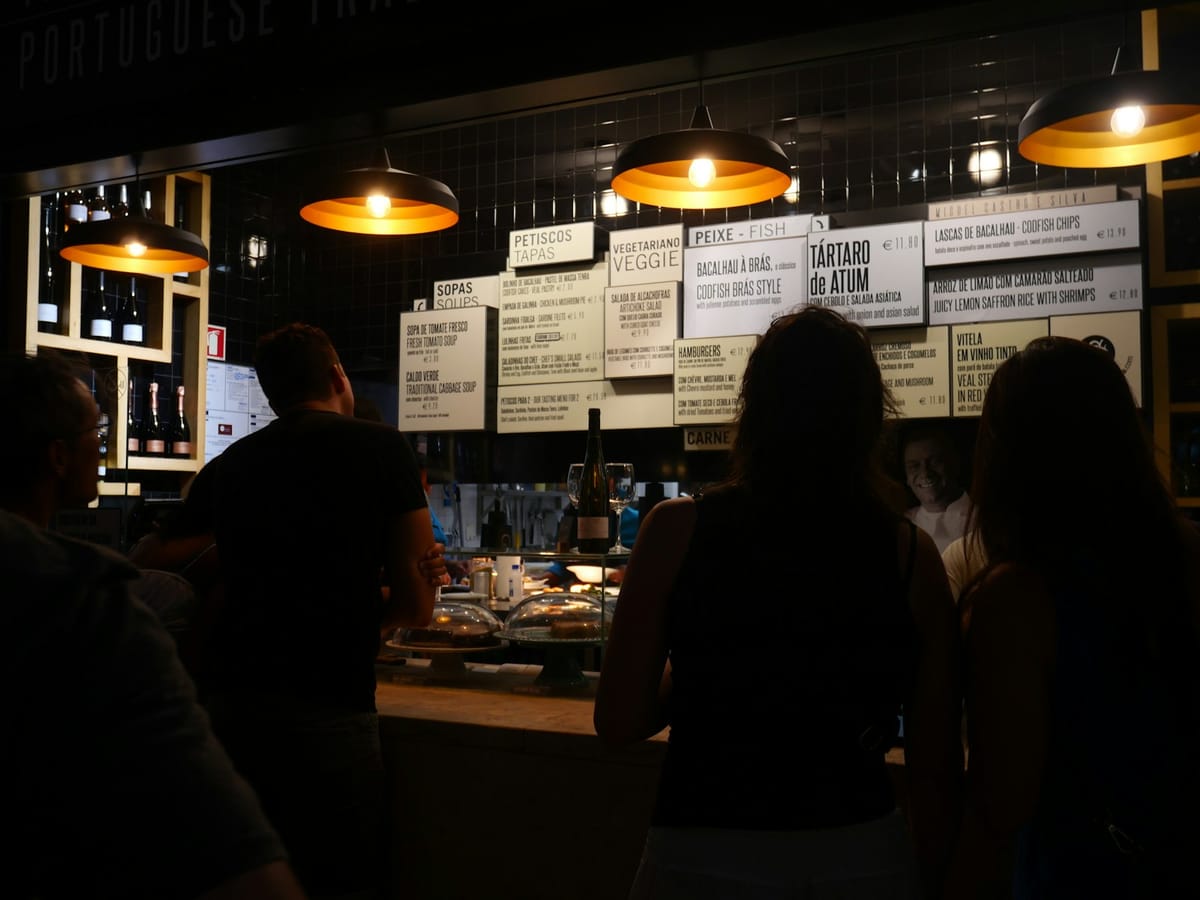
Price-level register. A 10-percentage-point rate step from 13% to 23% transmits, in significant part, to menu prices. The pass-through is not 1-for-1 — restaurants absorb part of the rate change through margin compression, particularly at the higher-end of the sector where price-elasticity is lower and at the volume-driven mass-market end where price-anchored value perception matters most. A reasonable working estimate is that a 10-percentage-point VAT lift would translate into a 5-to-8 percentage-point menu-price increase within the first two years of implementation, with the higher-end segment absorbing more and the volume segment passing through more.
Cost-of-living register. Restaurant consumption is a meaningful share of Portuguese household budgets, particularly in urban areas (Lisboa and Porto, where the share of meals taken outside the household is higher than the national average) and inside the foreign-resident community, where eating-out frequency is typically above the Portuguese-household average. A VAT restoration would lift the effective cost-of-living tape by a measurable margin, with the impact concentrated in the metropolitan demographic and in the expat-foreign-resident demographic that the platform serves.
Sector-employment register. The AHRESP-flagged employment risk — sector contraction, small-and-medium restaurant closures, retraction of HORECA hiring — would land particularly hard on the immigrant-worker base that staffs much of the Portuguese hospitality industry (the sector employs a disproportionate share of the country's Brazilian, South-Asian and African-Lusophone immigrant communities, where the labour-market entry pathway through hospitality is well-established). A wave of sector closures would translate into job losses inside the same community of foreign residents the file affects on the consumer side.
7. What Happens Next
The procedural state-of-play sits between the COFAP hearing and the Carneiro-to-Montenegro Saturday challenge. The Government has not tabled a proposal; the opposition parties (PS, Chega, BE, PCP, Livre, IL) have not tabled a proposal either. The file's next probable steps:
- The Prime Minister's clarification. Montenegro will, at some point in the coming week, have to address the Carneiro challenge — either confirming the Government supports the Sarmento position (in which case the political cost falls on the PSD-CDS coalition) or distancing the broader Cabinet from the Finance Minister's reading (in which case the Cabinet-collective-responsibility framing becomes the political issue).
- The Orçamento do Estado 2027 (OE2027) cycle. The next operational moment at which the Government could embed a VAT change into the legislative tape is the OE2027 cycle, with the proposed budget typically tabled in mid-October and voted in the late-November / early-December window. The May-2026 COFAP exchange is the early signal of the Ministério das Finanças' preference; the question is whether it lands in the OE2027 proposal or sits as a structural-reform talking point.
- The opposition's initiative-or-not. The Livre party's COFAP question and the broader IMF-aligned distributional argument may push one of the parliamentary groups to test a proposal — likely with the calculated political objective of forcing the governing coalition to vote against (and own the political consequences of) keeping the status quo, rather than with a serious expectation of passing.
The restaurant VAT file is, in short, the most operationally consequential indirect-tax debate currently live inside the Portuguese fiscal-policy ecosystem — and the one whose resolution will most directly affect the every-day cost-of-living register of residents across the country.
Source whitelist compliance: ECO (eco.sapo.pt) — Tier 2 — for the Tuesday 13 May 2026 COFAP parliamentary hearing reporting on Miranda Sarmento's "erro crasso" and "medida altamente populista" framing, the €1 billion fiscal-cost figure, the 90+6=96 vs 116 majority arithmetic, the Patrícia Gonçalves (Livre) and António Mendonça Mendes (PS) deputies' interventions, and the Saturday 16 May 2026 José Luís Carneiro challenge to Luís Montenegro. Jornal de Negócios (jornaldenegocios.pt) — Tier 2 — for parallel coverage of the Sarmento-FMI alignment on the "erro crasso" assessment. Observador (observador.pt) — Tier 2 — for the AHRESP and broader sector-association response to the Finance Minister's COFAP intervention. Executive Digest (executivedigest.sapo.pt) — Tier 2 — for AHRESP's reading that VAT at 13% generated over 50,000 jobs in two years, over €153 million in additional State revenue and ~€18 million in saved unemployment-insurance pay-outs, and that the 2012-2016 23%-rate baseline cost nearly 30,000 HORECA jobs. International Monetary Fund (imf.org) — Tier 1 — for the Article IV staff-report observation on distributional effects of intermediate-rate VAT reductions. Conselho das Finanças Públicas (cfp.pt) — Tier 1 institutional — for the structural-revenue and budget-execution context. Assembleia da República (parlamento.pt) — Tier 1 — for the COFAP commission framework and the 230-seat composition. Portugal Post not consulted (blacklisted, DMCA risk per sources/BLACKLIST.md). On the Mundial 2026, Selecção Nacional, IPAM, AHRESP / FHORESP hospitality-perimeter and broadcast-economy side of the file, our 9 June read on the IPAM Mundial 2026 economic-impact prediction model pencilling Portugal's pickup at €378M (group-stage exit) through €945M (title win) across four scenarios, with domestic consumption carrying 26%, food service 15%, advertising-and-media 14% and digital-channel components lifted to a structural 23% block ahead of Roberto Martínez's 17 June DR Congo opener at the Arrowhead sets the latest reference. On the IVA, CIVA, fuel-sector fraud, missing-trader, ENSE, entrepôt aduaneiro, AT enforcement and SME capital-markets simplification side of the file, our 12 June read on the Council of Ministers reworking the CIVA liquidation regime on combustíveis — VAT shifts upstream to the entrepôt aduaneiro entry gateway to choke out the missing-trader fuel-sector fraud architecture, with the same 11 June vote wrapping an SME capital-markets simplification package transposing the EU Listing Act sets the latest reference. On the Lei de Política Criminal, DGRSP prison-work, fogos florestais prevention and Assembleia da República criminal-policy-mandate side of the file, our 12 June read on the Assembleia da República greenlighting the Lei de Política Criminal 2026-2028 with the DGRSP prison-crew forest-cleaning mandate, the PSP/GNR pat-down powers in zonas de criminalidade de impacto social, and the priority-crime list headed by arson, organised crime and corruption on the PSD-Chega-IL-CDS yes-block sets the latest reference. On the retirement-age architecture, Pensão de Velhice, Fator de Sustentabilidade, Lei 110/2009 contributory-regime code, Concertação Social and Chega Reforma-65 demand side of the file, our 15 June read on Chega pinning the Reforma-65 demand on a written compromisso from PM Luís Montenegro — calendarised reduction of the Idade Normal de Acesso à Pensão de Velhice to 65, or alternatively a 40-year carreira contributiva, framed as Chega's non-negotiable condition across the Concertação Social calendar and the OE2027 cycle sets the latest reference. On the FIFA World Cup 2026, Mundial 2026, IPAM economic-impact read, Sport TV / SIC broadcast and Portuguese sports-economy side of the file, our 17 June read on IPAM reckoning the FIFA World Cup 2026 could spread €378M to €945M across the Portuguese economy as the national team opens against DR Congo tonight at 18:00 WEST — 26% consumption, 15% food service, 14% advertising and 10% OTT carve the read sets the latest reference. On the Portuguese polling, Intercampus / Medialivre barometer, PS-Chega-AD voting-intention triangle and prime-minister preference side of the file, our 19 June read on Intercampus tagging PS at 24.3% ahead of Chega's 20.3% as the AD coalition drops 3.4 points to 19.5% — Medialivre's June barometer reads José Luís Carneiro at 33.8% on the prime-minister preference cut against Montenegro and Ventura sets the latest reference. On the PRR Social Security reform, Prestação Social Única, Rendimento Social de Inserção, Código das Prestações Sociais, Maria do Rosário Palma Ramalho and 31 August 2026 milestone side of the file, our 19 June read on Maria do Rosário Palma Ramalho pulling the Código das Prestações Sociais from the PRR reform track — the €5.193 billion final tranche now pivots on the 13-benefit Prestação Social Única alone sets the latest reference. On the Prestação Social Única, welfare-access, residency-rule and immigration-politics side of the file, our read on PSD and CDS moving to double the non-EU residency bar to two years for the new Prestação Social Única sets the latest reference. On the relocation, customs and household-move side of the file, our practical guide to moving your household goods to Portugal and the transfer-of-residence customs relief sets the latest reference. On the self-build, construction-licensing and property-tax side of the file, our guide to building your own home in Portugal sets the latest reference. In dining and dealmaking, American Express's move to buy TheFork is now before Portugal's competition regulator. On the EU-funds absorption side of the file, Portugal's move to bill recoverable VAT to EU funds shows how far the state will go to lift a stalled Portugal 2030 before the year-end deadline.