Maria do Rosário Palma Ramalho Pulls the Código das Prestações Sociais From the PRR Reform Track — €5.193 Billion Final Tranche Now Pivots on the 13-Benefit Prestação Social Única Alone
The Ministry of Labour has dropped the Código das Prestações Sociais from the PRR's Social Security milestone, leaving the Prestação Social Única as the sole gate to the €5.193 billion final tranche — Palma Ramalho cited a 63-month RSI duration before parliament on Friday.
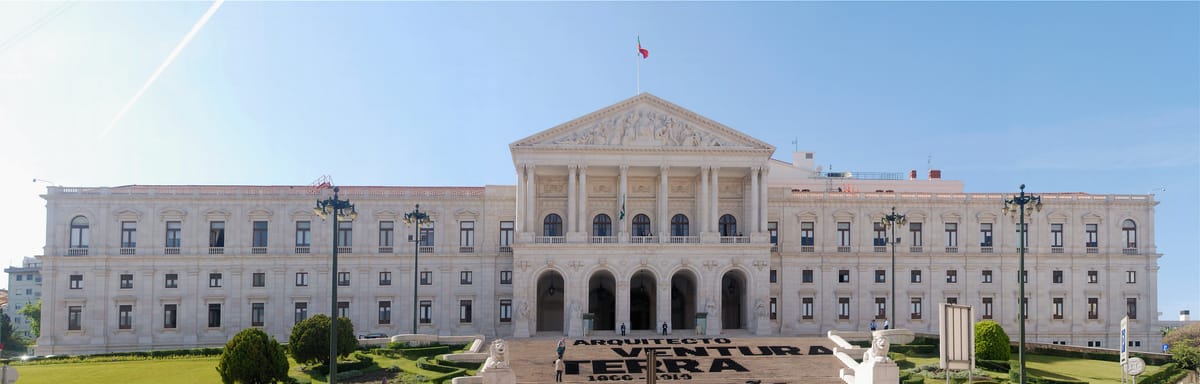
The Ministério do Trabalho, Solidariedade e Segurança Social (Ministry of Labour, Solidarity and Social Security) has reprogrammed Portugal's Plano de Recuperação e Resiliência (Recovery and Resilience Plan — PRR) to drop the long-promised Código das Prestações Sociais (Social Benefits Code) from the Social Security reform milestone, leaving the implementation of the Prestação Social Única (Single Social Benefit — PSU) as the sole remaining qualifying gate to the €5.193 billion final tranche of the European Commission-funded plan. Maria do Rosário Palma Ramalho — the minister steering the reform — used a Friday 19 June 2026 hearing of the parliamentary Comissão de Trabalho, Segurança Social e Inclusão (Labour, Social Security and Inclusion Committee) to defend the move as a procedural simplification, while the Partido Socialista (Socialist Party — PS) confirmed it will vote against the underlying PSU diploma.
The reprogramming
The reprogramming strips the formal obligation to legislate a consolidated Código das Prestações Sociais from the list of PRR Social Security commitments that Lisbon must close before Brussels signs off the last tranche. The Código would have rebuilt the legal architecture of the entire non-contributory benefits universe — Rendimento Social de Inserção, Complemento Solidário para Idosos, Prestação Social para a Inclusão and the rest of the welfare-state scaffold — into a single, coherent legislative instrument. The Ministry's reprogramming note, as ECO reported on Friday, does not clarify whether the Código survives as a future Government priority outside the PRR perimeter or has been quietly shelved.
What remains in the PRR perimeter is the PSU itself. With the Código out, the entire Social Security-side conditionality on the €5.193 billion tranche now rides on the single legislative instrument the Council of Ministers approved on 29 May 2026 — and which the Government must steer through the Assembleia da República (Assembly of the Republic) ahead of the 31 August 2026 milestone cutoff the PRR's final-mile push has been racing toward since Recuperar Portugal flagged the deadline mid-June.
What the PSU actually does
The PSU consolidates 13 non-contributory social benefits into one delivery channel, with a unified means test, a single application form via the Segurança Social Direta portal and a single recipient bank account. The legislative architecture pairs the consolidation with an activation requirement — the Council of Ministers' 29 May approval included up to 15 hours per week of trabalho social (social work or community service) attached to certain bands of the new benefit, a clause the Government has framed as a springboard out of long-term welfare dependency rather than a punitive condition.
The reform's rationale runs through three statistics the Minister put before the Committee on Friday. The 2025 OECD social-protection report ranks Portugal at the lowest effectiveness of social transfers in poverty reduction across the entire European Union — the headline figure Palma Ramalho cited to justify the rebuild. The average duration of an active Rendimento Social de Inserção (Social Insertion Income — RSI) claim has lengthened from 52 months in April 2020 to 63 months in April 2026, on the Ministry's internal data tape. And only 8% of the roughly 90,000 RSI beneficiaries currently in payment transition into formal employment or self-sufficient income from year to year — the structural exit failure the activation clause is designed to address.
The fraud and deprivation overlay
Layered onto the activation argument is a fraud-and-error overlay the Ministry has been quietly running for months. Internal Segurança Social audits have identified €159 million in improper payments inside the legacy benefits stack, with a portion of that envelope attributed to outright fraud — duplicated claims across overlapping benefit tracks, undeclared earnings inside means-tested bands and identity-overlap detection failures across the 13 separate benefit systems the PSU now consolidates. A single delivery channel with a unified means test, in the Ministry's reading, closes most of the duplicate-claim attack surface that the legacy fragmentation kept open.
The poverty backdrop reads heavier than the fraud line. More than 2 million people in Portugal remain in poverty after social transfers — meaning the existing benefit system reduces the headcount but fails to clear it — and approximately 450,000 are flagged as living in material and social deprivation on the Eurostat-compatible composite indicator. The PSU's stated objective is to lift transfer effectiveness toward the EU median; the OECD's 2025 read leaves substantial room before Portugal reaches that benchmark.
The PS opposition and the political arithmetic
The Partido Socialista, the largest opposition party and the political home of the Recovery and Resilience Plan when it was negotiated with Brussels under the António Costa governments, has announced it will vote against the PSU diploma. The PS objection runs on the activation clause — the 15-hour-per-week trabalho social requirement reads, in PS framing, as conditionality that risks pushing vulnerable claimants into precarious low-quality social-work placements while doing little to address the structural drivers of long-term welfare dependency.
The political arithmetic on the floor of the Assembleia da República runs through Chega and the smaller right-wing benches. The PSU diploma needs either Chega's vote or PS abstention to pass — and the same Chega cohort that sank the Trabalho XXI labour reform on Friday's generalidade vote holds the casting position on the welfare reform as well. The Government has not yet published the floor calendar for the PSU first reading, and the 31 August PRR milestone leaves limited room for procedural reruns if the diploma is rejected on first vote.
The tranche stakes
The €5.193 billion final-tranche stake is the largest single Brussels disbursement still outstanding on Portugal's PRR cycle. Missing the 31 August milestone would not automatically forfeit the money — the European Commission's PRR framework allows milestone slippage with revised timetables — but it would push the tranche into a renegotiation window that risks reduced amounts under the Commission's tighter mid-cycle review framework. The reprogramming itself is a reflection of that pressure: by stripping the Código das Prestações Sociais from the milestone, the Government has narrowed the gate to a single legislative instrument that the PSU can — at least in principle — clear before the deadline.
What the reprogramming does not solve is the political problem that any reform passing on a thin majority will face a constitutional review request from the opposition. The Tribunal Constitucional (Constitutional Court), whose new president João Carlos Loureiro took office on 15 June 2026, would on past form take roughly 60 to 90 days on a Front-loaded fiscalização preventiva (preventive constitutional review) — a window that could itself run past the 31 August PRR cutoff if the PSU diploma is referred. Bringing the Código back inside the perimeter at any future date would require a fresh PRR reprogramming on Brussels's side, and the Ministry's silence on the Código's future suggests that battle has been deferred indefinitely.
Sources: ECO, 19 June 2026; ECO, Palma Ramalho parliamentary hearing; ECO, Council of Ministers PSU approval 29 May 2026; PÚBLICO, PSU 15-hour social-work clause. On the minimum-income and social-support side of the file, our guide to the Rendimento Social de Inserção (RSI) walks through who qualifies and how much it pays. On how the state is now finding money inside the benefits system, the 76.5 million euros Social Security says database cross-matching saved it in eight months covers the Instituto de Informatica's cross-checks against health, justice and finance records and against other European countries, the 159 million euros of undue payments logged between January 2024 and June 2025, the distinction the government itself draws between an undue payment and a fraud, and the 15 September proof-of-life deadline for pensioners abroad. For households at the bottom of this, the energy discount the state grants without anyone applying for it is our guide to the tarifa social de energia: the 33.8 percent electricity discount, the 6,272.64 euro income line with its uplift for every household member without income, and the 6.9 kVA contracted-power condition that quietly disqualifies people who would otherwise qualify.