MEO and Thales Bid to Turn Two Portuguese Teleports Into Ground Stations for the EU's Answer to Starlink
MEO and Thales have bid, via the Portuguese Space Agency, to supply satellite gateways for IRIS², the EU's €10.6 billion sovereign constellation and rival to Starlink. Their pitch leans on MEO's teleports at Alfouvar in Sintra and Santa Maria in the Azores, with more antennas planned.
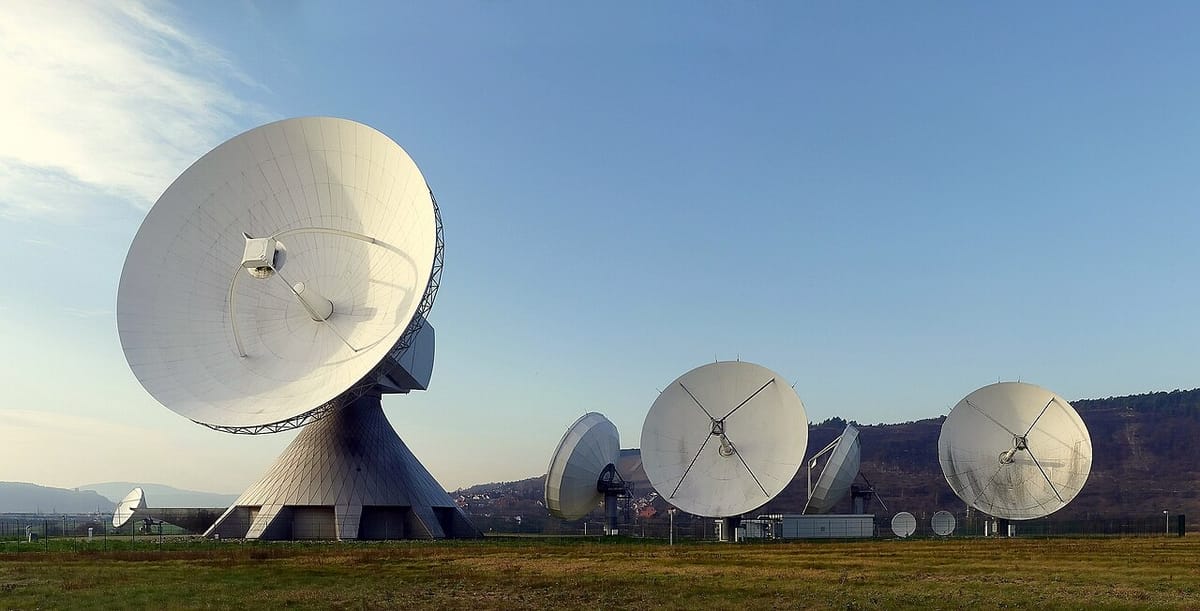
The Portuguese telecoms operator MEO (Altice Portugal) and the French defence-technology group Thales have submitted a joint bid to plug two Portuguese ground stations into IRIS², the European Union's planned secure-satellite network billed as the bloc's sovereign answer to Starlink. The candidacy, routed through PT Space (the Portuguese Space Agency), would see the pair supply satellite gateways — the ground infrastructure that links orbiting satellites to terrestrial networks.
Portugal's pitch rests on infrastructure MEO already owns:
- Two teleports — Alfouvar, in Sintra on the mainland, as the primary site, and Santa Maria in the Azores as backup.
- Alfouvar already fields more than 60 antennas across 12 hectares, with plans to add 12 to 25 more for IRIS².
- The operator is pursuing formal certification of the centre by the end of 2026.
IRIS² — formally the Infraestrutura para a Resiliência, a Interconectividade e a Segurança por Satélite (Infrastructure for Resilience, Interconnectivity and Security by Satellite) — is a roughly €10.6 billion programme to build a constellation of around 290 satellites across low, medium and geostationary orbits. It is designed as a dual-use network: secure communications for EU defence, border control and crisis management, alongside commercial services for aviation, maritime and connected devices. Brussels frames it explicitly as a strategic-sovereignty alternative to relying on private operators such as Elon Musk's Starlink.
The constellation is being delivered by the SpaceRISE consortium, led by the European operators SES, Eutelsat and Hispasat and including Thales Alenia Space, Airbus Defence and Space, OHB, Telespazio, Deutsche Telekom and Orange. Initial services are slated for 2029, with full operational capability targeted for 2030. Momentum is building among member states: Poland committed €656 million in July, and Norway and Iceland joined earlier in the year.
For Portugal, a gateway role would deepen a space sector that has been on a steady climb. A government-commissioned study found the industry added €2.4 billion to the economy over five years, and Portuguese players have been busy: CEiiA has paired with Telespazio to federate Iberian satellite constellations, while Vodafone Portugal is turning to AST SpaceMobile to beam signal directly to phones.
What This Means for Portugal
- Strategic positioning: Hosting IRIS² gateways would put Portuguese soil at the heart of Europe's secure-communications backbone, with the Azores' mid-Atlantic location a genuine geographic asset.
- Skilled jobs: Building and certifying new antenna arrays draws engineering and operations work to Sintra and Santa Maria.
- Resilient connectivity: A sovereign EU constellation promises secure links for emergency services — useful in a country prone to wildfires, storms and grid failures.
The award is far from settled, and Portugal is one bidder among many. But by leaning on teleports it already runs, MEO is making a credible case that Europe's satellite future should route through Sintra and the Azores. On the space and connectivity side of the file, the Alfouvar teleport's bid to join the EU's IRIS² network sets out how a Sintra ground station is angling for a role in Europe's secure-satellite constellation.