Markets, Business & Tech Briefing: The PSI Sets a New 52-Week High, the CMVM Takes Vista Alegre Off the Lisbon Market, Fitch Says the Budget Room Is Not Unlimited
📋 In This Edition
- The PSI Went Through Its 52-Week High and Closed at the Very Top of Its Own Range
- Fifteen of Sixteen Rose, and the Two EDP Names Led Again
- The Fed Raised Rates on Wednesday by a Vote of 12 to 0, and Europe Bought It on Thursday
- Oil Fell a Second Day Because a Saudi Pipeline Is Coming Back
- Ten-Year Yields Eased Again and Portugal's Spread Over the Bund Tightened to 37 Basis Points
- The Euro Lost Half a Cent Against the Dollar, and the Euribor's Two Ends Moved Apart
- The CMVM Took Vista Alegre Off Euronext Lisbon on Thursday, With Immediate Effect
- Fitch Says Portugal Has More Fiscal Room and That the Room Is Not Unlimited
- The State Put Its Guarantee Behind 221.86 Million Euros of Angolan Borrowing for Two Portuguese Builders
- A Porto Fund Sits on the Board of a Cybersecurity Company Now Valued at 1.7 Billion Euros
- Also: the Bank of England Held at 3.75 Percent and a Student-Housing Portfolio Changed Hands
- Friday
This newsletter has spent a week measuring the distance between the PSI and the top of its own 52-week range: 26 points short a week ago, ten points short on Wednesday. On Thursday the distance went to zero and then negative. The index finished at the highest level Euronext has printed for it in a year, and it finished there because the American central bank did on Wednesday exactly what it had told the market it would do, and because a pipeline in Saudi Arabia is coming back online.
The PSI Went Through Its 52-Week High and Closed at the Very Top of Its Own Range
The PSI closed at 9,671.11 points, up 130.45 points or 1.37 percent from Wednesday's 9,540.66. That is the third consecutive session of gains and, on ECO's count, the best single session in more than two and a half months.
The shape of the day is worth reading off the tape. The index opened at 9,537.41, three points below Wednesday's close, and made its low of 9,534.92 at 08:01, in the first minute of trading. From there it went up and did not come back: the session high of 9,671.11 was set at 16:35, which is the close itself. A day whose high and whose last price are the same number is a day nobody wanted to sell into.
The 52-week range Euronext publishes at the bottom of the quote page now reads 7,671.74 to 9,671.11. The top of that range is Thursday's close, which is what it means to say the index made a new 52-week high: the old ceiling of 9,550.72, the one we have been counting down to all week, was taken out during the afternoon and then used as a floor. Measured against the bottom of the same range, the PSI is 26.06 percent above its 52-week low, arithmetic recomputed here from Euronext's own two figures. TradingEconomics, tracking the index separately, puts it 3.93 percent higher over the past month and 25.17 percent higher than a year ago.
Fifteen of Sixteen Rose, and the Two EDP Names Led Again
Fifteen of the sixteen constituents closed higher. The one that did not was Teixeira Duarte, down a fifth of a percent.
| Company | Close (EUR) | Thursday |
|---|---|---|
| EDP Renováveis | 12.79 | +2.16% |
| EDP | 4.852 | +2.15% |
| NOS | 5.51 | +1.85% |
| Mota-Engil | 5.00 | +1.59% |
| REN | 3.565 | +1.42% |
| BCP | 1.203 | +1.31% |
| The Navigator Company | 3.272 | +1.18% |
| CTT Correios de Portugal | 6.43 | +1.10% |
| Ibersol | 10.30 | +0.98% |
| Semapa | 20.90 | +0.97% |
| Sonae | 2.105 | +0.96% |
| Jerónimo Martins | 18.06 | +0.95% |
| Altri | 4.725 | +0.85% |
| Galp Energia | 22.05 | +0.78% |
| Corticeira Amorim | 7.05 | +0.57% |
| Teixeira Duarte | 0.4825 | -0.21% |
Closing prices and session moves are Euronext's own, taken from the Lisbon equities list and stamped between 16:35 and 16:38 WEST. Every one of the sixteen was checked here against Wednesday's published close and the percentages reconcile. Jornal de Negócios and ECO independently report the same index close and the same fifteen up, one down split, so three sources agree on the tape.
The leadership repeats Wednesday's, which is the point. The two EDP names took the top two places for a second day running, both above 2 percent, and the next three were NOS, Mota-Engil and REN. Four of those five are regulated networks, long-dated renewables or a telecom, which is to say assets whose value is a stream of future cash discounted back to today. Cut the discount rate and they are worth more. Yields have now fallen for two consecutive sessions, and these are the names that noticed first.
Mota-Engil closed at exactly 5.00 euros. Galp, which fell on Wednesday when crude fell, rose 0.78 percent on Thursday even as crude fell again, so the mechanical oil-to-Galp link that looked so tidy 24 hours ago did not hold for a second day. BCP added 1.31 percent to 1.203 euros, extending the run that took it to an eleven-year high earlier in the week.
Around Lisbon the continent was green but by less. On TradingEconomics contract-for-difference pricing, Germany's benchmark rose 0.70 percent to 25,717, Spain's 0.98 percent to 19,829, France's 0.33 percent to 8,168, the euro-area blue-chip index 0.84 percent to 6,325 and Britain's 1.19 percent to 10,816. ECO's own summary puts the Stoxx 600 up about 0.9 percent and the gains from Madrid to Frankfurt in a 0.6 to 1.2 percent band, which agrees on direction and on order of magnitude. Lisbon's 1.37 percent beat all of them. That is the third consecutive session in which the PSI has outperformed the main European exchanges.
The Fed Raised Rates on Wednesday by a Vote of 12 to 0, and Europe Bought It on Thursday
Yesterday's briefing carried the expectation: 25 basis points, more than 90 percent of the market convinced, the first increase since July 2023. The Federal Open Market Committee delivered exactly that on Wednesday afternoon, and the statement is worth reading rather than summarising, because it is unusually short and unusually blunt.
The Committee approved the statement by a vote of 12 to 0 and raised the target range for the federal funds rate by a quarter point, to 3-3/4 to 4 percent. "Economic activity is expanding at a solid pace," it says. "While uncertainty remains elevated owing, in part, to geopolitical developments, domestic spending has been resilient. Productivity growth is strong, and capital investment is robust. Job gains have kept pace with the workforce, and the unemployment rate has changed little." Then four sentences that carry the whole decision: "Inflation remains elevated. Today's policy action will support a timelier return to the Committee's 2 percent goal. The Committee will deliver price stability." Those are the Fed's words, taken from its own release of 16 September, not a paraphrase.
Wall Street did not like it on the day. American indices closed Wednesday lower, with the Dow Jones down more than 1 percent. The reversal came on Thursday, and it came in Europe first. By the time ECO logged the American open at 14:39 Lisbon time, the S&P 500 was up 1.05 percent at 7,631.44, the Dow 0.82 percent at 51,882.53 and the Nasdaq 1.54 percent at 26,377.86. The reading that settled overnight is that a central bank raising rates into an energy shock, unanimously, and saying in plain words that it will deliver price stability, is a central bank that has removed a source of uncertainty rather than added one. Investors now put the probability of a further increase at the October meeting at almost 53 percent, according to Reuters figures carried by ECO.
The other American number of the day pointed the same way. Initial jobless claims fell from 206,000 to 196,000 in the latest week, the lowest reading since July, with the four-week average down to 203,250. Over the past year claims have mostly stayed inside a historically low 200,000 to 230,000 band, and the labour market has held up despite the higher pump prices that have squeezed companies and households since the confrontation with Iran began on 28 February.
Oil Fell a Second Day Because a Saudi Pipeline Is Coming Back
Brent fell 2.02 percent to 103.69 dollars a barrel and West Texas Intermediate fell 1.30 percent to 101.10, on TradingEconomics contract-for-difference pricing stamped 17 September. European natural gas edged up 0.78 percent to 2.91 dollars per million British thermal units.
The reason is specific rather than atmospheric. Reports that Saudi Arabia intends to restore roughly half the capacity of its East-West pipeline within days, and to have it running fully within six weeks, took the supply premium out of the front of the curve for a second consecutive session. Brent has now given back two consecutive sessions, after closing at 108.25 dollars on Tuesday and 105.61 on Wednesday.
Two days do not undo the year. Brent is still 13.92 percent higher than a month ago and 53.75 percent higher than a year ago; WTI is up 20.27 percent on the month and 59.82 percent on the year. Natural gas is 4.95 percent above where it stood a month ago and, unusually in this company, 0.87 percent below its level of a year ago. The Bank of England, publishing on Thursday, put the scale of the move in its own terms: spot Brent and UK wholesale gas had risen 36 percent and 78 percent respectively since its July report, with Brent at 106 dollars and UK gas at 207 pence a therm at the close on 14 September. What changed this week is the last tick, and the last tick is what sets the inflation expectation the bond market trades off.
Ten-Year Yields Eased Again and Portugal's Spread Over the Bund Tightened to 37 Basis Points
Every ten-year yield we follow fell for a second consecutive session. On TradingEconomics country pages stamped 17 September: Portugal 3.85 percent, down 0.03 points on the day; Germany 3.48, down 0.03; Spain 3.95, down 0.02; Italy 4.35, down 0.03; France 4.45, down 0.02; Greece 4.25, down 0.03; and the United States 4.95, down 0.08, the largest fall of the seven and the clearest sign of how Wednesday's decision was digested overnight.
Portugal's spread over the German Bund is therefore 37 basis points, in from 38 on Wednesday and 39 on Tuesday. Recomputed here from those seven levels, Portugal now borrows ten-year money 10 basis points inside Spain, 40 inside Greece, 50 inside Italy and 60 inside France. Only Germany pays less among the countries on this list.
The longer view is less comfortable and belongs in the same paragraph. Portugal's ten-year yield is 0.23 points higher than it was a month ago and 0.72 points higher than a year ago. Two good days have not reversed a month in which the energy shock pushed the whole European curve up; they have taken the edge off it.
The Euro Lost Half a Cent Against the Dollar, and the Euribor's Two Ends Moved Apart
The European Central Bank's daily reference rate put the euro at 1.1481 dollars on Thursday, against 1.1537 on Wednesday. That is a fall of 0.49 percent in a single day, recomputed here, and the largest daily move in the pair in either direction since the start of September, checked against the ECB's own 90-day series. Against the pound the euro was steadier at 0.85830, up 0.10 percent from 0.85740. Set beside the 1.1592 of Friday 11 September, the euro has lost 0.96 percent against the dollar over four sessions.
This is the Fed decision showing up in the currency, and it is the cleanest expression of it anywhere on the day's screens. One central bank raised rates on Wednesday. The other did not.
On the Euribor, the most recent complete fixing available to us is Wednesday 16 September, because euribor-rates.eu publishes with a 24-hour delay and Thursday's fixing will appear on Friday. Yesterday's briefing carried no Euribor at all for that reason, so these numbers are new here. The twelve-month rate fixed at 3.374 percent, up 4.8 basis points on the day, and the six-month at 2.973 percent, up 2.7. The one-week rose 2.0 basis points to 2.311 percent. But the three-month fell 2.1 basis points to 2.661 percent and the one-month fell 1.0 to 2.450 percent.
That divergence is the interesting part, and it is the mirror image of the equity story above. The short end, which tracks what the ECB is doing now, eased slightly. The long end, which tracks what the market thinks the ECB will have to do about energy-driven inflation, went up again. Portuguese households on variable-rate mortgages are repriced off the six- and twelve-month fixings, and both of those went the wrong way. We wrote on Monday about the sharpest one-day rise since March; Wednesday's move is smaller but in the same direction.
One comparison is worth making because both halves of it are this week's. Portugal placed 1,000 million euros of twelve-month Treasury bills on Wednesday at 3.103 percent. On the same day, banks lending each other unsecured twelve-month money fixed at 3.374 percent. The 27 basis points between those two numbers is roughly what the market currently charges for the difference between lending to the Portuguese Republic for a year and lending to a euro-area bank for a year.
The CMVM Took Vista Alegre Off Euronext Lisbon on Thursday, With Immediate Effect
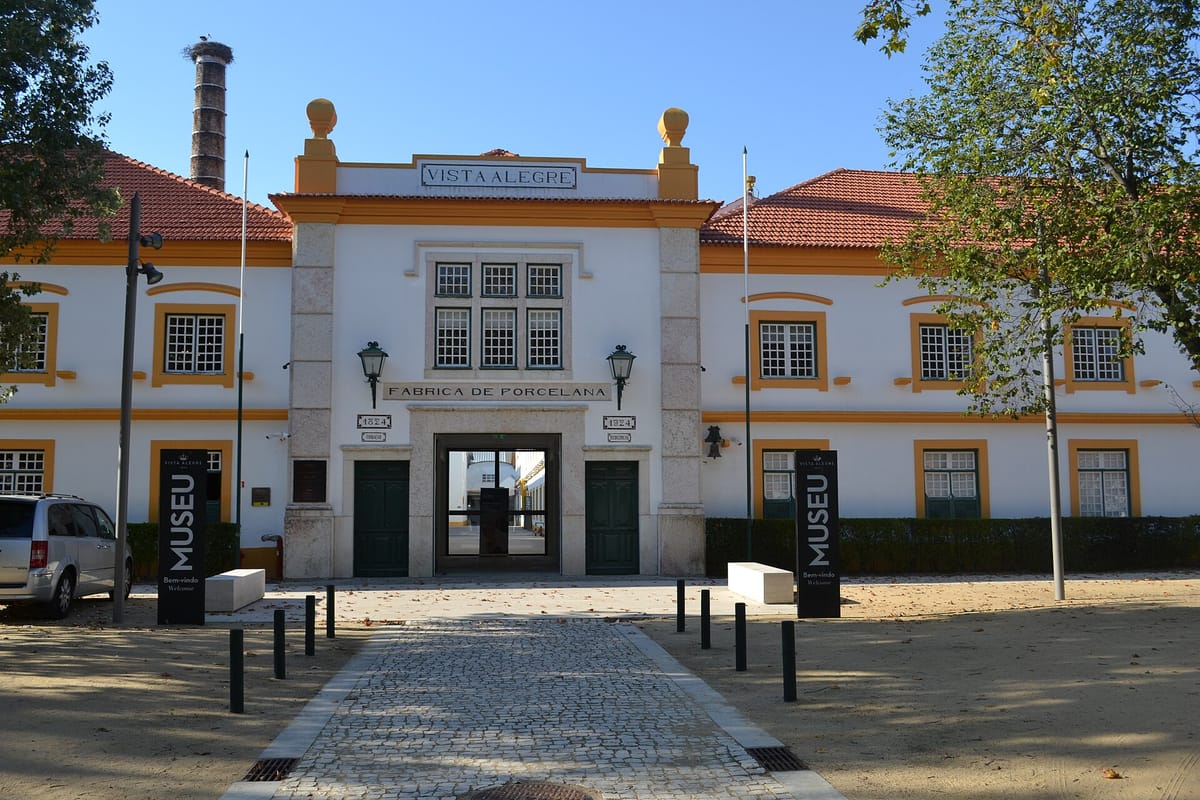
The Comissão do Mercado de Valores Mobiliários (Securities Market Commission), Portugal's market regulator, approved the voluntary exclusion of Vista Alegre Atlantis from the regulated Euronext Lisbon market on Thursday. Publication of the decision, the regulator says in its own deliberation, carries "the immediate exclusion from trading on a regulated market of the company's shares and of the securities conferring the right to subscribe for or acquire them". There is no transition period. As of Thursday the shares are gone.
The condition attached is the one that matters to anyone still holding stock. Under article 251.º-F(3) of the Código dos Valores Mobiliários (Securities Code), Visabeira Indústria has bound itself to buy the shares held, at the date of the general meeting, by every VAA shareholder who did not vote in favour of the exclusion. The consideration is available from now and for three months, at 1.07 euros a share. Euronext's own Lisbon equities list shows VAA last trading at exactly 1.07 euros, at 13:44 WEST on Thursday, which is what a price does when a cash floor is about to be placed under it.
None of the underlying numbers are new to readers here. We covered the 1.07 euro exit price, the 5.24 percent free float and the Cristiano Ronaldo shareholding when Visabeira tabled the proposal in early May, and again when shareholders approved it at the end of May. What is new is that the file is now closed by the regulator rather than merely agreed among the owners.
The case the shareholders made, in the note they sent the CMVM, was a cost-benefit one and is unusually candid: with the free float "progressively more residual", and with the company meeting its financing needs through alternatives to equity issuance, notably a five-year retail bond placed in 2024, the signatories saw "no particular benefit to the company, its shareholders and other stakeholders in maintaining the trading of VAA shares on a regulated market". Visabeira and the shareholders acting with it held 87.76 percent.
It is worth noting what is leaving. Vista Alegre closed the first half of 2026 with 4.3 million euros of profit, almost 19 percent more than a year earlier. This is not a company being taken private because it is failing. It is a company concluding that a 5.24 percent float does not justify the cost of a listing, and the effect is that the Lisbon market is one name smaller than it was on Wednesday.
Fitch Says Portugal Has More Fiscal Room and That the Room Is Not Unlimited
Fitch Ratings held a webinar with journalists on Thursday to explain the reasoning behind its recent upgrade of Portugal to A+, which we covered on 4 September. The framing it chose is the one the government will be quoted against for the rest of the autumn.
Utku Bora Geyikci, Fitch's associate director for sovereigns, said Portugal has more budget flexibility than its past public accounts would have allowed for dealing with the rise in the cost of living, but that the margin "is not unlimited". Budget outturns, he said, "have consistently exceeded expectations and debt has continued to decline". On the design of any new measures, his test was that they be "compatible with the preservation of a prudent fiscal policy" and with maintaining "the downward trajectory of the debt, which has been fundamental to the upward revisions". He credited the upgrade to the falling debt-to-GDP ratio, helped by strong growth, and added that growth alone was not the reason: "Portugal has also generated a significant and sustained primary surplus in recent years, which has helped contain financing needs."
Julien Grandjean, Fitch's director of financial institutions, was more cautious on what comes next, saying it "may take some time to raise the rating further above A", even though Portugal is among the countries that "have most surprised". On the banks he made a point worth keeping: there is no automatic link between the sovereign rating and bank ratings, which will depend on each institution's own asset quality, profitability, capital and shareholder support, though improving public finances and investor confidence can benefit the sector indirectly over time.
The timing is not accidental. The Council of Ministers was due on Thursday to approve a cut in IRS, the personal income tax, together with support against fuel prices and a bonus for pensioners, with the prime minister speaking to the country afterwards and an urgent parliamentary debate on the cost of living, requested by the Socialists, set for Friday. Luís Montenegro said on Thursday morning that the income tax cut would not compromise "budget balance", with the Finance Ministry expecting to end the year with a zero balance, and said he believes the country is "on the way to a fourth consecutive surplus". Fitch's sentence and the prime minister's sentence are not in conflict. They are the same claim seen from two sides of a table.
The State Put Its Guarantee Behind 221.86 Million Euros of Angolan Borrowing for Two Portuguese Builders
Joint orders from the Finance Ministry and the Ministry of Economy and Territorial Cohesion, published in the Diário da República on Thursday and reported by ECO, approve state guarantees on two loans to the Angolan state for public works to be carried out by Mota-Engil and the Grupo Alberto Couto Alves. The credits total 233.5 million euros and come from Caixa Geral de Depósitos and Abanca Portugal.
The larger of the two covers the rehabilitation of the infrastructure of the Nova Vida urbanisation in Luanda: earthworks and paving, water supply, storm and waste water drainage, and the remodelling and expansion of a treatment plant. It was awarded to Mota-Engil Engenharia e Construções África at an initial value of 228 million dollars. Caixa is lending Angola 208.39 million euros against it, 95 percent guaranteed by the Portuguese state, over 15 years.
The second covers 65.8 kilometres of the Estrada Nacional 354 between Cuima and Cusse, crossing the provinces of Huambo and Huíla, and is the work of AngolACA Construções, the Angolan arm of the Portuguese Grupo ACA. Abanca is lending 25.14 million euros, again 95 percent guaranteed, over 17 years.
The two guarantees together come to 221.86 million euros, were granted under the Portugal-Angola Convention, and run for 17 years plus 120 days. The Portuguese state will collect a commission of 30.89 million euros, already built into the financings, and Banco Português de Fomento, acting as the export credit agency, takes a management fee equal to 3 percent of the guarantee commission. The orders describe the instrument as official export-credit support, covering the credit risk attached to exporting Portuguese goods and services and backing the internationalisation of Portuguese business.
This is the part of Mota-Engil's African order book that does not appear as a share-price headline, unlike the Bogotá contract that lifted the stock 5.4 percent on 8 September. The company builds, an Angolan ministry pays, and the Portuguese taxpayer stands behind 95 percent of the money for as long as fifteen years. It is a legitimate and long-standing instrument. It is also a contingent liability, and the day it was signed is the day to say so.
A Porto Fund Sits on the Board of a Cybersecurity Company Now Valued at 1.7 Billion Euros
33N Ventures, the Porto-based venture capital firm founded by the former Sonae executives Carlos Alberto Silva and Carlos Moreira da Silva, took part in a 270 million euro funding round for the Italian cybersecurity company Exein, which closed at a valuation of 1.7 billion euros. On 33N's own account that makes Exein the most valuable European cybersecurity start-up of the past decade.
The Portuguese fund is not a passenger here. It led Exein's Series B in 2024, and says the valuation has multiplied roughly thirtyfold since, while annual recurring revenue quadrupled in the first half of 2026 against the same period last year. It did not lead this round, but says it secured "a substantial allocation" on the strength of the relationship built since the Series B, and is now one of the company's largest institutional investors with a seat on the board. Carlos Alberto Silva, managing partner and board member, called Exein the category leader in device security with "practically unlimited" scalability.
What Exein sells is worth understanding, because it is the same regulatory wave Portuguese firms are living through. Its software protects more than two billion devices worldwide, and 33N's thesis is that artificial intelligence is migrating onto the devices themselves, into robots, drones and autonomous vehicles, creating a new attack surface. The fund puts the device-security market at roughly 60 billion dollars today and 426 billion by 2034, driven in part by the European Cyber Resilience Act, which makes device-level security mandatory. Those projections are 33N's, offered in support of an investment it has just made, and should be read as such.
The round was led by Headline, with Sofina, Goldman Sachs, the European Investment Bank, KfW Capital, T.Capital (the investment arm of Deutsche Telekom) and existing investors alongside. A Portuguese fund with a board seat at a company of that size, and at that stage, is a rarer thing than a Portuguese start-up raising money.
Also: the Bank of England Held at 3.75 Percent and a Student-Housing Portfolio Changed Hands
The Bank of England's Monetary Policy Committee voted 6 to 3 on Thursday to keep Bank Rate at 3.75 percent, with three members preferring an increase to 4 percent. Its summary is a useful description of the same shock Portugal is living through: protracted conflict in the Middle East has pushed crude and refined energy prices up further, UK consumer price inflation rose to 3.1 percent in August and is likely to rise further over coming quarters, and while there has been little evidence so far of material second-round effects in prices and wages, "the risk of such effects, against which policy needs to lean, is greater the longer higher energy prices persist or are more volatile". The Committee judges the risks to the inflation outlook tilted to the upside, more so than in July. Separately, and unanimously, it voted to run its stock of gilts held for monetary policy purposes down to zero, at an annual average pace of 46 billion pounds by the end of 2034, through annual sales of 20 billion pounds alongside maturing bonds. The next decision is due on 5 November.
In Portuguese dealmaking, the law firm PLMJ advised Nido Living on the sale of Nido Lisbon and Nido Asprela Porto, the companies holding its purpose-built student accommodation assets, to the Ardian Rockfield European Student Accommodation Fund. No price was disclosed. The mandate was run by PLMJ's corporate and M&A team under partner Tomás Almeida Ribeiro. Student housing in Lisbon and Porto has been one of the steadier destinations for international capital through a year in which very little else in Portuguese real estate has traded at scale.
Friday
The PSI goes into Friday sitting on the top of its own 52-week range, which means the question is no longer how far the ceiling is but whether the index can hold above it for a second close. Two things will decide it, and neither is Portuguese: whether Brent extends a third session of losses as the Saudi pipeline comes back, and whether Thursday's rally on Wall Street survives a full session rather than an opening hour. At home, the prime minister speaks to the country on Thursday night with the IRS cut and the fuel supports in hand, and the Socialists' urgent debate on the cost of living reaches the floor of parliament on Friday, which is where Fitch's sentence about the margin not being unlimited will get its first political test. Thursday's Euribor fixing publishes on Friday morning.