Fitch Lifts Portugal to A+, and the Upgrade Came Straight From the Model With No Committee Override
The agency moved the long-term ratings up a notch on Friday evening and reset the outlook to Stable from Positive. Its own regression model produced the higher score and the committee applied no adjustment. Debt is forecast at 87 percent of GDP this year.
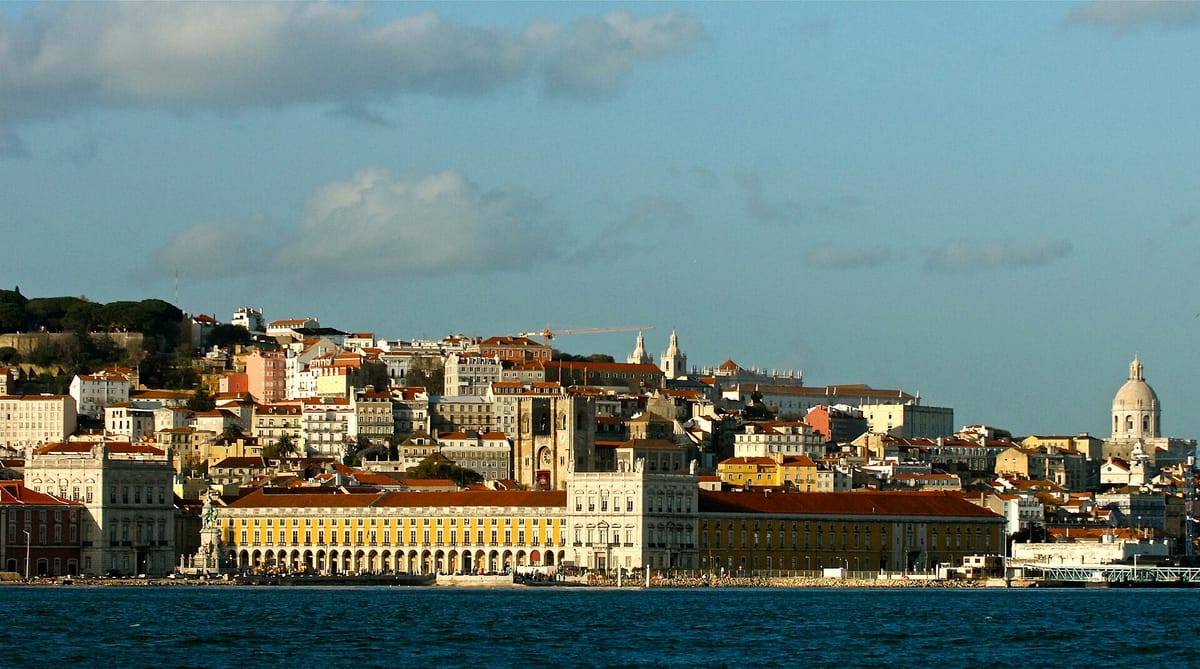
Fitch Ratings upgraded Portugal on Friday evening, moving the Long-Term Issuer Default Ratings to 'A+' from 'A' and setting the Outlooks at Stable. The rating action commentary is stamped Frankfurt am Main, 4 September 2026, and was released at 5:03 PM New York time, after the Lisbon market had closed.
The one-sentence reason, in the agency's own words, is "Portugal's strengthened public finances, including a projected path of declining government debt and fiscal balances that are considerably stronger than peers, underpinned by a strong political commitment to fiscal prudence."
Stable is a step down from where the outlook was
Several wire reports on Friday night described the outlook as unchanged. It is not. Fitch's last review, on 6 March, left the rating at 'A' and lifted the Outlook from Stable to Positive. A Positive Outlook is a statement that an upgrade is more likely than not over the following twelve to twenty-four months. Friday's action delivered that upgrade and reset the Outlook to Stable at the higher level, which is the ordinary mechanics of a rating cycle rather than a signal of caution.
The practical reading: Portugal has banked the upgrade the March outlook was pointing at, and Fitch is not currently telling the market to expect another one soon.
The numbers the committee worked from
The commentary sets out forecasts across four areas, and in almost every one it also gives the median for the 'A' peer group, which is the comparison that actually moves a sovereign rating.
- Debt. General government debt is forecast to fall to 87.0 percent of GDP in 2026 from 89.7 percent in 2025, and to 82.9 percent by 2028, supported by continued primary surpluses and moderate nominal growth. The forecast 'A' median is 59.5 percent, so Portugal remains well above its peer group even on the improving path.
- Budget balance. Fitch expects a general government surplus of 0.1 percent of GDP in 2026, narrowing from 0.7 percent in 2025. The forecast 'A' median is a deficit of 3.0 percent. For 2027 and 2028 it pencils in an average deficit of about 0.4 percent, still stronger than the peer median.
- Growth. GDP growth of 2.1 percent in 2026, after 1.9 percent in 2025, against a forecast 'A' median of 2.0 percent, then 1.9 percent in both 2027 and 2028 as public investment steps down with the fading of the Recovery and Resilience Plan and only partly recovers through Portugal 2030.
- External position. The current account surplus is expected to narrow to 0.2 percent of GDP in 2026 from 1.2 percent in 2025, then recover to around 0.5 percent in 2027 and 2028. The net international investment position improved to minus 48.4 percent of GDP in the second quarter of 2026 and net external debt fell to 33.9 percent on the Bank of Portugal definition, but the investment position is still weaker than the 2025 'A' median of minus 10.4 percent.
The surplus side of that is not new. Eurostat's spring accounts already ranked Portugal among the European Union's small handful of budget surpluses, and it is the persistence of that position across changes of government, rather than any single year's number, that the commentary keeps returning to.
The deterioration in the 2026 balance is attributed to storm-related emergency support and reconstruction, tax relief and housing measures in the 2026 budget, a peak in investment under the loan component of the recovery plan, and higher wage and pension spending. Working the other way are rising social contributions from continued employment growth and what the commentary calls the sizeable dividend distribution from Caixa Geral de Depósitos.
Two medium-term pressures are named without being priced in: population ageing with declining net migration, and the NATO target of 5 percent of GDP by 2035. Against the first, Fitch sets the Social Security Financial Stabilisation Fund, which held assets worth 13.9 percent of GDP at the end of 2025.
The model produced the upgrade, and the committee left it alone
The most technically interesting paragraph is near the bottom, in the section on the Sovereign Rating Model and the Qualitative Overlay. Fitch's proprietary model, a multiple regression across eighteen variables using three-year centred averages including one year of forecasts, scored Portugal at a level equivalent to 'A+', up from 'A' at the last review. The commentary then states that the sovereign rating committee did not adjust the model output to arrive at the final rating.
That is worth spelling out. Fitch's framework allows a committee to notch a sovereign up or down from the model score to capture things the regression cannot see. On Friday it did not use that discretion. The upgrade is the arithmetic of Portugal's own data, not a judgement call layered on top of it.
The committee did apply discretion in one other place. Portugal's Country Ceiling, the constraint on how high a private issuer in the country can be rated, was affirmed at 'AAA', four notches above the sovereign. Fitch's Country Ceiling Model produced an uplift of three notches; the committee added a fourth under its Long-Term Institutional Characteristics pillar, on eurozone membership and reserve currency status, and recorded that it views the risk of capital or exchange controls inside the euro area as exceptionally low.
The warning attached to the upgrade is about housing
One section of the commentary is not congratulatory. Under the heading "House Prices Rising Rapidly", Fitch writes that rapid house price growth "has not yet translated into material near-term macro-financial risks, but it may increase housing market vulnerabilities and is adding to affordability pressures."
The supporting figure is stark. Residential prices in Portugal were around 99 percent above their fourth-quarter 2019 level in the first quarter of 2026. Across the euro area as a whole the same measure was 31 percent. Fitch reads the pressure as largely structural, driven by supply constraints and by demand linked to years of high immigration, which is why it does not expect a sharp near-term correction, and it credits tighter macroprudential lending standards and a sound banking sector with containing the financial risk. It says nothing about the affordability problem itself, which is not what a sovereign rating measures.
Readers who follow the price series will recognise the shape of it: Portuguese house prices decelerated for the first time in nearly two years in the first quarter, after a 17.6 percent rise across 2025. Deceleration from that level is not a fall.
What the government said, and what it can fairly claim
The Ministério das Finanças (Ministry of Finance) issued a note to newsrooms on Friday night. Joaquim Miranda Sarmento, Minister of State and Finance, called the upgrade "another great victory for Portugal, particularly when this improvement happens in a geopolitical and economic context still marked by uncertainty and instability", and said the government intends to hold the course on budget balance and debt reduction while pursuing reforms to productivity and competitiveness.
The ministry made three factual claims alongside that. First, this is Fitch's second upgrade of Portugal since April 2024. Second, counting the two moves by Standard and Poor's in February and August 2025, it is the fourth rating upgrade the country has recorded in two years. Third, Portugal now holds the same rating as France, Belgium, Estonia, Lithuania, Slovenia and Malta, and only six euro area countries are currently rated higher. The first two are checkable and correct on the agencies' own records; the third is the ministry's own count across agencies and scales, and is presented here as its claim rather than as our finding.
The ministry also noted, accurately, that Fitch's 87 percent debt forecast for the end of 2026 is more optimistic than the government's own. Portugal's public debt ticked back up to 92.9 percent of GDP in the second quarter on the Maastricht measure, and a single bond maturing in July took 8.3 billion euros off the long-term stock. The annual figure Fitch is forecasting is a year-end number, not a quarterly one, and the two are not in conflict.
What it changes for borrowing costs
Less than the headline suggests, because the market moved first. Fitch notes that spreads to German Bunds remain below 40 basis points, and that the pass-through of higher euro area yields into Portugal's interest bill stays gradual because so much of the debt is fixed-rate and almost all of it is denominated in euros. A rating agency confirming what the bond market already priced does not usually reprice anything.
Where it can matter is in the mandates of investors who buy by rating band rather than by yield, and in the cost of capital for Portuguese issuers who sit below the sovereign. That is a slow effect, and it will not show up in a single auction.
Two reviews remain this year. DBRS Morningstar is scheduled for 13 November and Moody's for 20 November. Standard and Poor's held Portugal at A+ with a Positive Outlook in August while cutting its 2026 growth call to 1.7 percent, which is a materially more cautious growth view than the 2.1 percent Fitch published on Friday. The two agencies now agree on the letter and disagree on the economy behind it.
One disclosure worth reading
At the foot of the commentary, in the solicitation status block, Fitch records Portugal's Long-Term Issuer Default Rating, its local currency ratings, its short-term ratings, its Country Ceiling and a list of individual bond lines as unsolicited. In plain terms, the agency states that this particular set of ratings was not assigned at the request of the issuer. It does not make the rating less real, and Fitch confirms it had rated entity participation and access to management. It does mean the upgrade Portugal celebrated on Friday night is, on Fitch's own record, an assessment the country did not commission.
The full commentary, the sensitivity thresholds in both directions, and the rating actions table are published on the agency's website under the title "Fitch Upgrades Portugal to 'A+'; Outlook Stable". The named analysts are Utku Bora Geyikci as primary, Greg Kiss as secondary, and Douglas Winslow as committee chairperson. For context on how Portugal got here, our March piece on the previous Fitch move to A with a Positive Outlook sets out the same framework one notch lower down. Update: on 2 October 2026 Scope raised Portugal's sovereign rating to A+ with a stable outlook, the third agency to rate the country at that level. Update: Eurostat put Portugal's public debt at 92.5 percent of GDP at the end of June while the government ran one of only five budget surpluses in the EU in the second quarter (October 2026).