Madeira's Trail Fee Climbs to 7.50 Euros for Non-Residents in April 2027, and Pico Ruivo and Rabaçal Will Cost 15 to 18 Euros
From 1 April 2027 visitors will pay 7.50 euros instead of 4.50 to walk Madeira's classified trails, 15 to 18 euros for the busiest routes and 75 for the island crossing. Madeira residents stay exempt; mainland residents pay. The full list.
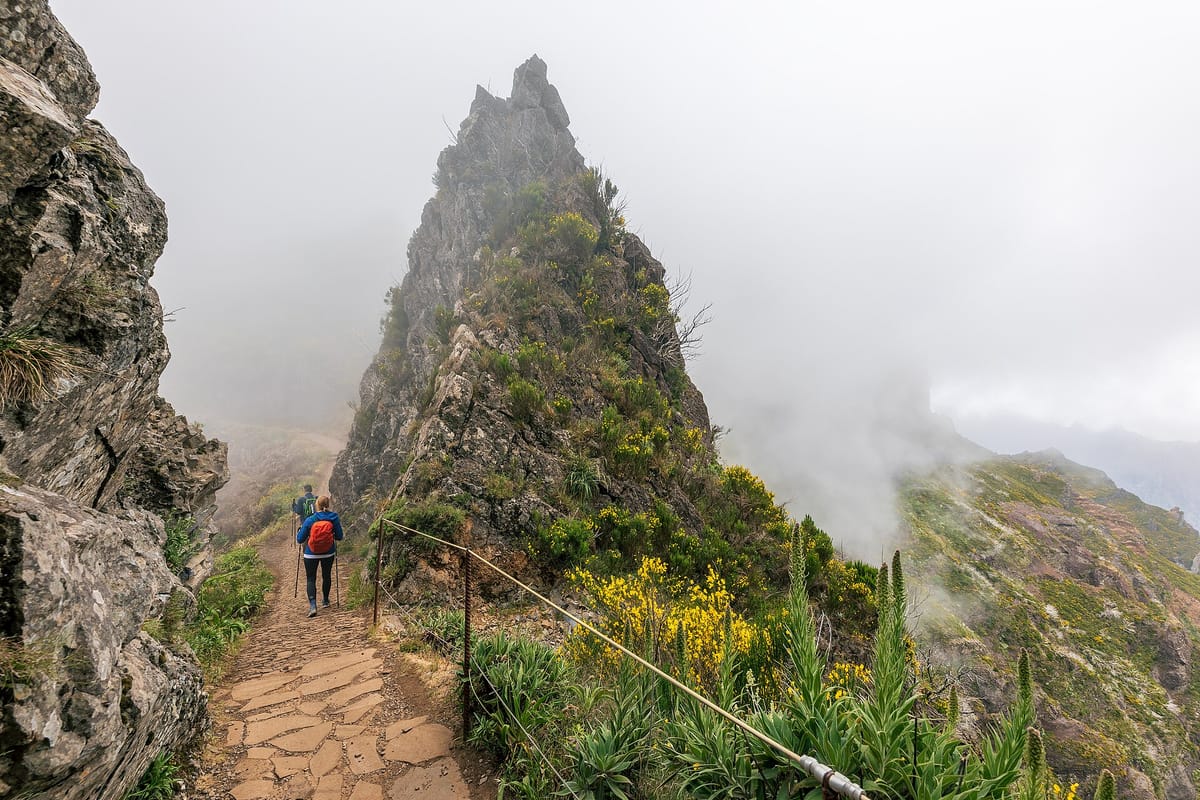
Walking Madeira's best-known trails will cost visitors more from 1 April 2027. The regional government's department of tourism, environment and culture (Secretaria Regional de Turismo, Ambiente e Cultura) said on Tuesday that the standard fee for its classified walking routes will rise from 4.50 euros to 7.50 euros a person, with up to 18 euros for the busiest routes, according to Lusa, as reported by Notícias ao Minuto (in Portuguese).
People who live in Madeira stay exempt. Everyone else over 12 pays, and that includes residents of mainland Portugal and the Azores.
The new fees
The amounts are set in a joint order (portaria) of the regional tourism and finance departments. According to the government's note:
- Standard fee for any classified trail: 7.50 euros, up from 4.50 euros. The same 7.50 euros applies to the Vereda do Areeiro (PR1) as far as the Pedra Rija viewpoint.
- Vereda do Pico Ruivo, Vereda da Ponta de São Lourenço, Levada do Caldeirão Verde and Vereda dos Balcões: 15 euros each.
- The full Vereda do Areeiro, with the routes to Pico Ruivo and Encumeada: 18 euros, up from 10.50 euros.
- The Rabaçal network of about 40 km, which includes the Levada das 25 Fontes and the Levada do Risco: 18 euros. The Fanal circuit will also cost 18 euros once it is finished, during 2027.
- Travessia da Madeira, the long-distance crossing of the island: 75 euros.
- Combined passes: 20 euros for a day (now 9 euros), 45 euros for three consecutive days (now 22.50 euros) and 105 euros for seven (now 52.50 euros).
The current amounts come from the fees page of the Instituto das Florestas e Conservação da Natureza (IFCN, the Institute of Forests and Nature Conservation), which manages the routes. Tour companies with an IFCN agreement keep a separate, lower price table.
The order also brings in fees at sea. Divers will pay 12.50 euros a person a day for each wreck site created by sinking a vessel, and the same for scuba diving in the region's marine protected areas (8.50 euros through an operator with an IFCN agreement). The department says the extension is meant to make users contribute to the cost of managing and monitoring these areas.
Why the rise
The department says the new fees will pay for more investment and better upkeep of the trails, protect the ecosystems and spread visitors more evenly. It plans to spend 2.8 million euros over the next year on new routes and repairs to the existing network, including work on the Rabaçal trails, the restoration of the Ninho da Manta viewpoint and a new long-distance (Grande Rota) route. The full PR1 reopened this spring after the 2024 wildfire.
What stays the same
According to the IFCN, every walker must book a time slot on the SIMplifica portal before setting out, including people who pay nothing. Madeira residents prove their status with a resident card, which they can get on the portal, and their citizen card. Children aged 12 and under do not pay, and neither do people with a disability of 60 percent or more and one companion.
If you are planning a trip
- Walks before 1 April 2027 are charged at today's rates.
- If you plan several routes, compare the combined passes with the single fees, and check which routes a pass covers: today's passes do not include the PR1, and the note does not say whether the new ones will.
- Book only on SIMplifica, the official portal; slots close when a trail reaches its capacity.
For other walking across the country, see our guide to hiking in Portugal.