Lisbon's Law Faculty Opens a Dedicated AIMA Channel to Fast-Track Residence Permits for Foreign Students and Staff
The Faculty of Law of the University of Lisbon has opened a dedicated channel, under a protocol with AIMA, to help its international students, lecturers and researchers obtain and renew residence permits — covering about 30% of its foreign students for now.
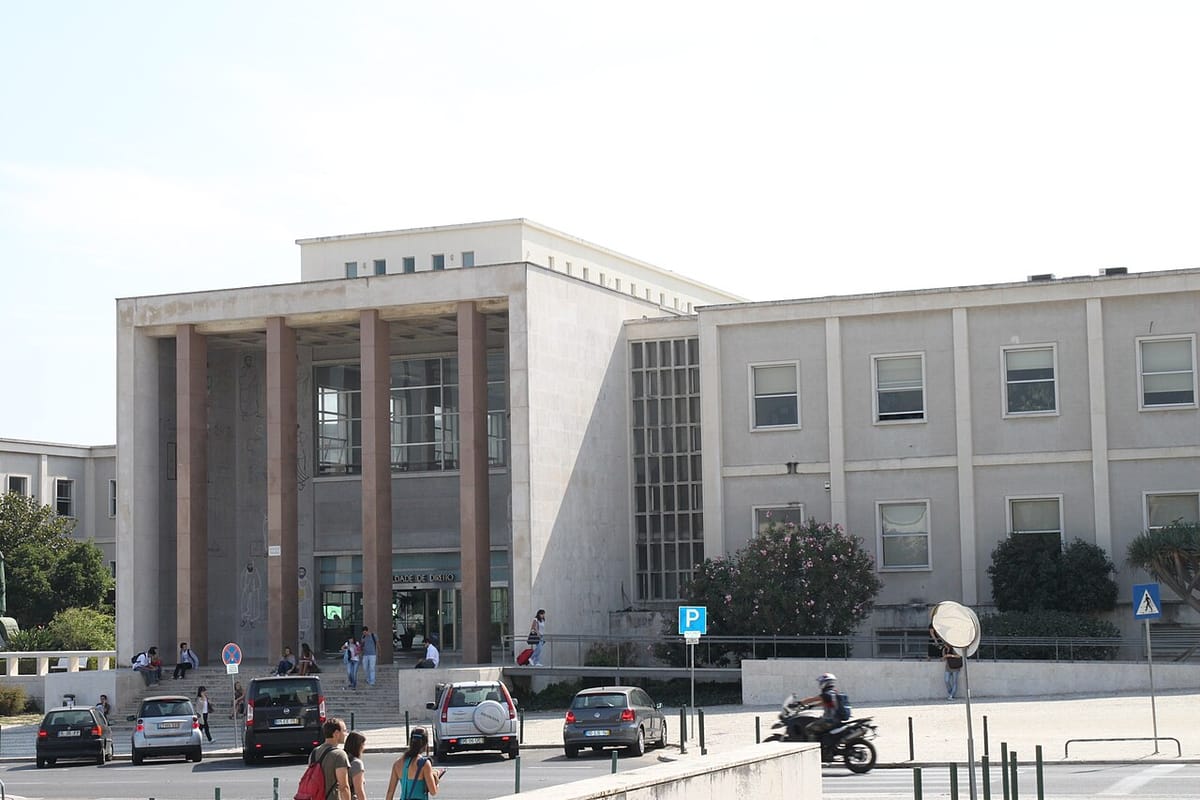
One of Portugal's oldest and largest law schools has opened its own express lane into the immigration system. The Faculty of Law of the University of Lisbon (Faculdade de Direito da Universidade de Lisboa, FDUL) announced on Friday that it has set up a dedicated channel to help its international students, teaching staff and researchers obtain and renew their residence permits, working directly with AIMA (Agência para a Integração, Migrações e Asilo, the Agency for Integration, Migration and Asylum) under a cooperation protocol between the two institutions.
The aim, in the Faculty's own words, is to "reduce the constraints associated with regularising one's stay in Portugal" — a plain acknowledgement of how difficult the process has become. Rather than leaving each foreign student to navigate AIMA alone, the channel provides a single set of contact points, standardised paperwork and dedicated scheduling arrangements. The Faculty will help assemble and check each file through an online platform before the applicant ever reaches the counter, so that cases arrive "properly prepared" (devidamente instruídos) for the in-person appointment where originals are presented and the mandatory face-to-face steps are completed.
Crucially, the scheme covers both first-time applications and renewals, and it is open across the academic community: students on bachelor's (licenciatura), master's (mestrado), doctoral (doutoramento) and non-degree courses, alongside lecturers and researchers on mobility programmes or under contract with the Faculty. For now, the protocol is expected to cover around 30% of FDUL's international students, a figure the Faculty has cited since the agreement was first reported in July. It is being rolled out gradually, starting with a group of students nominated by the Brazilian and African student associations before being "progressively consolidated over the coming academic year."
Catarina Salgado, the Faculty's deputy director, framed the channel as part of a broader internationalisation strategy — one that "passes also through projecting the institution abroad, reinforcing academic and scientific cooperation networks, and creating conditions to welcome and integrate those who choose our Faculty to study, teach or research." The message to prospective foreign students is that the paperwork will no longer be an afterthought left to chance.
The context is an immigration authority still straining under demand. AIMA was created to clear the vast backlog left by the abolished SEF border service, and its appointment bottlenecks are a running source of anxiety for foreigners trying to secure or keep their legal status. Only this week the agency was in the news for telling EU nationals to renew old paper cards online, and last week for a record 55,000 family-reunification bookings that lawyers say rarely end in an actual residence card. Against that background, an institution guaranteeing its members a smoother path is significant.
The practical caveats matter, though. This is one faculty at one university, reaching a minority of its own foreign students at the outset, and it operationalises a protocol first signed in July rather than announcing a new nationwide rule. It does not change AIMA's fees or the legal requirements, and no firm start date has been given beyond "the coming academic year." Still, for the many foreign residents who arrive in Portugal to study, it is a template worth watching: if a university-level agreement can genuinely shorten the queue, other institutions — and the record numbers now entering Portuguese higher education — will be asking why they cannot have one too. On what a Portuguese degree is actually worth in the labour market, our read on the EDULOG study putting numbers on Portuguese graduate outcomes: what the final mark is worth in salary, why the institution barely matters, and the fields where half the graduates are overqualified sets the latest reference.