Humberto Delgado Departures Border-Control Wait Swells Past One Hour on Saturday 16 May After IT Failure — Schengen-Exit Passengers Hit Worst Six Weeks Into the EU EES 100% Rollout and Eight Days After Ryanair's September Demand
Lisbon's Humberto Delgado departures border-control wait swelled past 60 minutes on Saturday 16 May after a PSP-confirmed IT failure. ANA advised non-Schengen passengers to arrive earlier. Six weeks into the EU EES 100% rollout, eight days after Ryanair demanded September suspension.
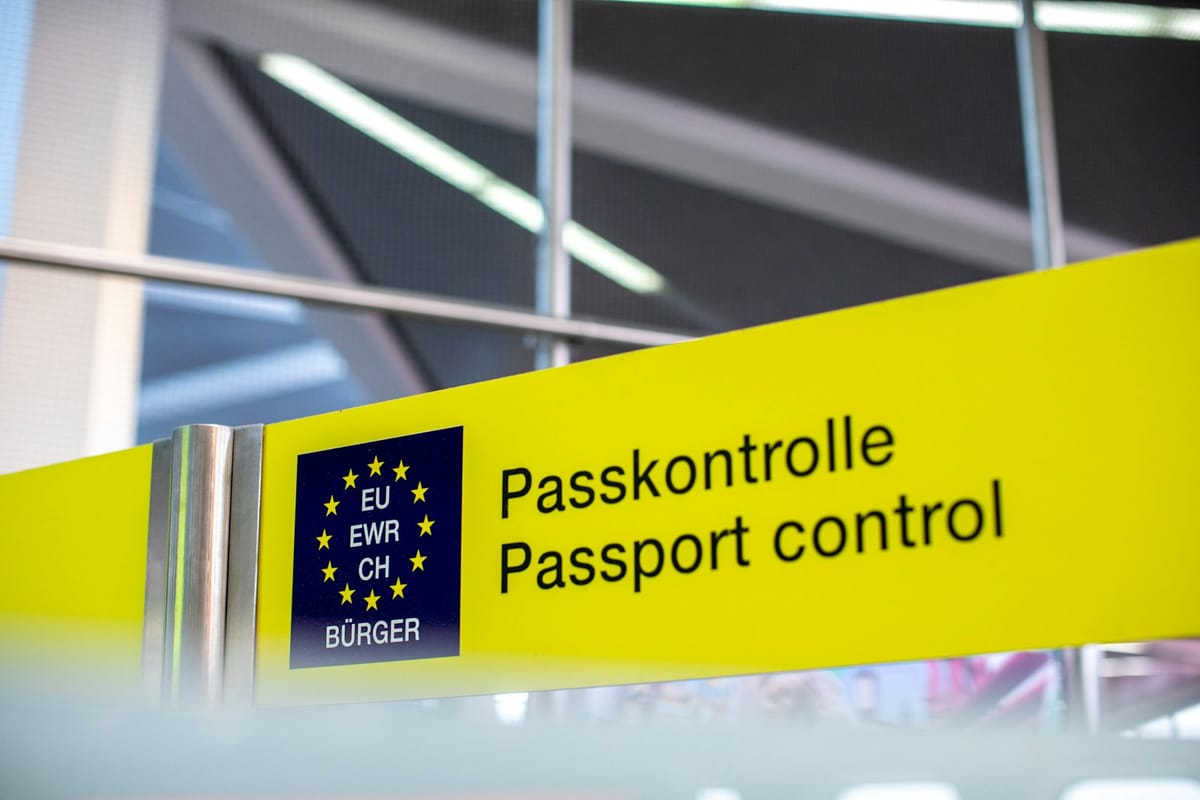
Border control at the Aeroporto Humberto Delgado in Lisboa saw departures wait times swell beyond one hour on the early-afternoon of Saturday 16 May 2026 after a Polícia de Segurança Pública-confirmed "dificuldades técnicas/informáticas" knocked the departures-side processing tape out of normal cadence. The disruption was scoped to the departures hall — arrivals continued to operate "dentro dos parâmetros de referência" — and concentrated on passengers travelling to destinations outside the Espaço Schengen, the cohort that has to pass through the full passport-and-biometric tape rather than the lighter intra-Schengen identity check.
ANA — Aeroportos de Portugal, the airport operator, confirmed the disruption in a public statement during the afternoon, noting that "a situação está a melhorar, mas ainda se mantêm constrangimentos" and advising non-Schengen-bound passengers to arrive earlier than the standard pre-departure window to absorb the extra processing time. The PSP spokesperson Sérgio Soares placed the operational reading on the public record: "tempos de espera estão acima dos parâmetros de referência".
The Saturday-afternoon event sits inside a broader operational stress-test that the European Union's Entry/Exit System (EES) — the biometric border-control regime that requires non-EU short-stay travellers to register photograph, fingerprints and biographical data at automated kiosks before passing the passport-control desk — has been imposing on Portuguese aviation infrastructure since the system's full 100% activation on 10 April 2026, just over six weeks ago. Portuguese airports have been at the receiving end of multiple comparable disruption events across the April-May window, including the widely-reported 11 April 2026 chaos at Lisboa and at Faro and the 8 May 2026 Ryanair demand that the European Commission and Portuguese authorities suspend the EES until September to absorb the summer travel peak.
1. What Happened at Humberto Delgado on Saturday 16 May
The event began in the late-morning of Saturday 16 May and persisted through the early-afternoon. The Aeroporto Humberto Delgado handles roughly 33 million passengers a year on the latest INE / ANA series — by some margin the largest single passenger gateway on the Iberian Peninsula and the third-largest in the European low-cost-carrier perimeter after Madrid-Barajas and Barcelona-El Prat. The Schengen-exit perimeter — flights to the United Kingdom, the United States, Brazil, the broader Lusophone Africa cohort (Cabo Verde, Angola, Moçambique, São Tomé) and the wider non-Schengen destination set — accounts for a meaningful share of departure volume, particularly on the weekend tape where leisure flows compress into narrow check-in windows.
The PSP-attributed cause — "dificuldades técnicas/informáticas" — points to the IT infrastructure that underpins the border-control desks, the EES kiosks and the parallel passport-stamping system. The PSP did not, on the Saturday-16-May record, attribute the disruption specifically to the EES rollout, but the operational interaction matters: a failure on the kiosk side that pushes EES-required passengers back into the manual passport-control line at the police desks compounds the queue dynamics that the EES architecture was designed to relieve.
ANA's framing — "a situação está a melhorar, mas ainda se mantêm constrangimentos" — placed the resolution timetable in the near-term but kept the operational warning live for the rest of the weekend's peak departure flows.
2. The Entry/Exit System (EES) — What It Is and Why It Stresses Throughput
The Entry/Exit System (EES), regulated by EU Regulation 2017/2226 and operationally delivered by the EU's eu-LISA agency, replaces the pre-EES manual passport-stamping regime for non-EU short-stay travellers with an automated biometric-registration tape that captures, at first entry: a facial photograph, four fingerprints, the passport biographical data and the entry-and-exit timestamps. The data sits inside a centralised EU database that allows border authorities across the Schengen perimeter to enforce the 90-day-in-any-180-day short-stay residency rule with operational precision rather than the imprecise stamp-counting tape that pre-dated the system.
The European Commission's design-stage processing target was roughly 70 seconds per passenger at the EES kiosk for the first-entry registration, with subsequent re-entries running closer to the standard passport-control cadence of 15-20 seconds. The first-entry processing time is the binding throughput constraint: every non-EU passenger who has not previously been registered through EES has to be put through the 70-second cycle, and at peak departure windows the cumulative effect on queue length is significant.
The system's full 100% activation across the Schengen perimeter was originally calendared for late-2024 but slipped through repeated delays before reaching the 10 April 2026 Schengen-wide full implementation milestone. Portugal opted for the full implementation on the same date; Belgium, France and the Netherlands — three of the busiest non-Iberian Schengen entry-and-exit points — opted to delay or partially suspend implementation during the spring 2026 window to absorb the summer peak with a lighter operational stack.
3. The 11 April 2026 Chaos at Lisboa and Faro — The Six-Week-Earlier Precedent
The most consequential prior disruption event sat on 11 April 2026, the day after the EES 100% activation. Reporting from CNN Portugal's Carlos Enes placed the operational tape on the public record:
- Lisboa: departures-side queues extended back into the Duty Free retail area, wait times exceeded one hour at peak international-flight windows.
- Faro: at least 40 passengers missed flights on the Friday-evening peak due to border-control delays — an operational outcome that the Algarve gateway, whose summer-tourism volumes lean heavily on UK and Irish low-cost carriers, cannot sustain inside the summer peak without a redesign.
- Operational response: the Sistema de Segurança Interna (SSI) and the PSP at Lisboa, Porto and Faro temporarily suspended biometric collection at peak hours while maintaining the passport-control function — a partial-EES posture that traded the central operational logic of the system (the biometric registration) against the immediate throughput requirement.
- Industry response: airline and airport associations called for "maior flexibilidade com efeito imediato" and for the operational authority to suspend the EES during periods of excessive wait — the demand that would crystallise three weeks later into Ryanair's September-suspension call.
The 11 April reading was unflattering for the Portuguese aviation system: the operational architecture that was supposed to deliver a 70-second-per-passenger processing tape was, in practice, producing the kind of one-hour-plus waits the system was designed to eliminate.
4. Ryanair's 8 May 2026 September-Suspension Demand
On Thursday 8 May 2026, Ryanair's Operations Director Neal McMahon wrote to the European Commission and to the relevant national authorities of 29 EES-affected countries — including Portugal and Spain — demanding that the EES rollout be suspended until September 2026 to absorb the summer-travel peak without the operational risk of the April-11-style disruptions.
McMahon's argument, on the public record: "passageiros estão a ser forçados a enfrentar filas excessivas no controlo de passaportes e, nalguns casos, a perder voos" — passengers are being forced to face excessive queues at passport control and, in some cases, to miss flights. The Ryanair Operations Director framed the wait times against the airline's own product: a one-hour border-control wait approaches the duration of a typical Ryanair flight (the airline's average short-haul sector is approximately 1 hour 15 minutes), meaning that the EES-induced wait is, on the consumer-experience tape, a parallel duration to the flight itself.
Ryanair's argument has found support in the operational decisions of several EES-affected countries. Greece opted to delay implementation to absorb the summer peak; Belgium, France and the Netherlands opted for partial-suspension or delayed full activation. The Portuguese position — full 100% implementation from 10 April, sustained through the May-and-June operational stress — is at the more aggressive end of the EES adoption spectrum across the Schengen perimeter.
5. The 2025 Pre-Reactivation Pause and the Decision to Restart in January 2026
The Portuguese EES file has its own complicated history. The 2025 disruption events at Portuguese airports — a parallel set of throughput problems during the system's earlier partial-implementation phase — led the Government to temporarily suspend EES enforcement for non-EU short-stay travellers during the second half of 2025. The system was reactivated at the start of 2026 and reached full 100% implementation on 10 April.
The reactivation decision sat inside the broader Schengen-wide commitment to full EES coverage that the European Commission has been pressing across the Member State perimeter. Portugal's posture, on the public Government messaging, has been that the long-run operational benefit of a properly-functioning EES (the precise 90/180 short-stay enforcement, the elimination of stamp-passport ambiguity, the deeper integration with the upcoming European Travel Information and Authorisation System / ETIAS visa-waiver-pre-clearance regime) justifies the short-term throughput cost. The opposing view — articulated by Ryanair, by the airline-and-airport associations and increasingly by the affected member-state airports — is that the system's design-stage processing-time assumptions were too optimistic, that the infrastructure deployment is uneven across the airport perimeter, and that the summer-2026 peak will require operational flexibility that the current full-implementation posture does not allow.
6. What Foreign Residents Travelling Should Read From the File
The Saturday-16-May Humberto Delgado event is the latest in a sequence that the foreign-resident base — and particularly the UK, US, Brazilian and Lusophone-African passport holders who form a meaningful share of the Portugal-residing expat cohort — needs to fold into the practical travel-planning tape across the summer of 2026.
The practical operational reading. For non-Schengen departures from Lisboa, Porto and Faro across May, June, July and August 2026, the safe planning posture is to arrive at the airport at least 3 hours before scheduled departure rather than the standard 2-hour pre-departure window for international flights. For non-EU passport holders who have not yet been registered through EES (the first-entry 70-second cycle is the binding constraint), the additional time absorption is particularly important.
The Schengen-internal exemption. Passengers travelling to other Schengen destinations (Spain, France, Germany, the Netherlands, the broader Schengen perimeter) are not affected by EES and continue to pass through the standard intra-Schengen identity-check tape. The disruptions are scoped to the non-Schengen perimeter; intra-Schengen flows continue to operate at normal cadence.
The residence-card register. Foreign residents holding a Título de Residência issued by the Agência para a Integração, Migrações e Asilo (AIMA) — including the D7, D8, Golden Visa, family-reunification and CRUE-derived residence permits — are not subject to EES on the same tape as short-stay visitors. The EES applies to short-stay (90/180-rule) visitors, not to long-stay residents. Residents should travel with both the Título de Residência and the passport to support the manual residence-check fallback if needed.
The return-from-summer-trip read. The reverse-tape — non-EU residents returning to Portugal from non-Schengen trips — is also affected by EES processing at arrival, though the Saturday 16 May incident was scoped to departures specifically. Arrivals-side disruption events have been less frequent across the April-and-May tape, but the operational risk is symmetric.
7. What Happens Next
The Portuguese aviation-and-border-control infrastructure stress-test runs through the May-June-July-August summer-peak window. The operational variables to track:
- The IT-infrastructure resolution. The Saturday-16-May incident was IT-attributable, suggesting that the underlying systems-architecture stability is the immediate variable to fix. ANA and the PSP / SSI will need to confirm root-cause resolution before the system is re-credentialed as reliable.
- The EES suspension question. Whether the Portuguese Government follows the Greek, Belgian, French and Dutch examples and partial-suspends EES enforcement across the summer peak will be the dominant policy-and-operational decision of the next four-to-six weeks. The Ryanair-led airline pressure, the AHRESP-tourism-sector reading of the operational impact on Algarve summer flows, and the European Commission's posture on Member State implementation flexibility will all feed into the call.
- The ETIAS pre-clearance overlay. The next-generation European Travel Information and Authorisation System (ETIAS), the visa-waiver-pre-clearance regime that requires non-EU short-stay travellers from visa-waiver countries to obtain an online travel authorisation before departure, is calendared for implementation across the second half of 2026. ETIAS adds a parallel pre-arrival processing layer; its interaction with the operationally-strained EES architecture will shape the summer-2027-and-beyond throughput tape.
For now, the safe operational read for any non-Schengen departure from Portuguese airports — and particularly for the Lisboa and Faro gateways — is to plan for the disruption rather than against it.
Source whitelist compliance: PÚBLICO (publico.pt) — Tier 2 — for the Saturday 16 May 2026 reporting on the Humberto Delgado departures-side IT failure, the >60-minute wait times, the ANA statement on the disruption-and-recovery framing, and the PSP spokesperson Sérgio Soares statement on the parameters-above-reference reading. Diário de Notícias (dn.pt) — Tier 2 — for the Ryanair Operations Director Neal McMahon's 8 May 2026 demand for September suspension of the EES across 29 affected countries, including the comparison of one-hour border-control waits to Ryanair's average 1-hour-15-minute short-haul sector and the Greek-and-Spanish-government parallel demands. CNN Portugal (cnnportugal.iol.pt) — Tier 2 — for the Carlos Enes reporting on the 11 April 2026 chaos at Lisboa and Faro, including the Duty-Free area queue tail, the 40-passengers-missed-flights tape at Faro, the PSP / SSI temporary peak-hour biometric-suspension at Lisboa, Porto and Faro, and the airline-and-airport-association demand for operational flexibility. RTP (rtp.pt) and TVI (tvi.iol.pt) — Tier 2 — for parallel corroborating reporting on the Saturday 16 May event. European Commission (ec.europa.eu) and eu-LISA — Tier 1 institutional — for the EES regulatory framework under EU Regulation 2017/2226, the 70-second-per-passenger first-entry processing-time design-stage assumption, and the parallel ETIAS architecture. ANA — Aeroportos de Portugal (ana.pt) — Tier 1 corporate-and-operational — for the airport-operator statements and the Humberto Delgado passenger-volume tape. INE (ine.pt) — Tier 1 — for the parallel airport-passenger statistics referenced in the Q1 2026 tourism reporting covered yesterday. Polícia de Segurança Pública (psp.pt) and Sistema de Segurança Interna — Tier 1 institutional — for the border-control operational tape. Agência para a Integração, Migrações e Asilo / AIMA (aima.gov.pt) — Tier 1 institutional — for the residence-permit framework and the EES-residency-exemption tape. Portugal Post not consulted (blacklisted, DMCA risk per sources/BLACKLIST.md). On the hospitality side of the file, our 2 June read on AHP's 2026 Balanço Páscoa e Perspetivas Verão survey — the mercado nacional dropping 10 points to 68% of the top-three markets tape, Brasil falling to 12%, the UK holding 95% in the Algarve and 50% of hoteleiros pricing in worse occupation, with Booking at 99% and own-website distribution down 8 points sets the latest reference. On the Lisbon-airport capacity, aviation-infrastructure and APA-licensing side of the file, our 7 June read on ANA filing the Estudo de Impacto Ambiental with APA for the Humberto Delgado capacity stretch from 38 to 40 movements per hour, works pencilled to start in early 2027, a second EIA to 42 movements already queued and the broader expansion sitting in parallel — not sequence — with the €8.5 billion Alcochete Aeroporto Luís de Camões greenfield sets the latest reference. On the Subsídio Social de Mobilidade, Mecanismo de Continuidade Territorial, Açores / Madeira air-travel and residency-tier subsidy side of the file, our 14 June architectural read on Lei 23/2026 rebuilding the Subsídio Social de Mobilidade around a residency-tier matrix, a pre-authorisation cap routed through the new DSCT and a €185M-2026 envelope — how the Mecanismo de Continuidade Territorial reroutes Açores and Madeira air travel sets the latest reference. On the EU261, air passenger rights, Regulation 261/2004 revision, TAP / Ryanair / easyJet, ANAC, cabin-baggage rule and EU Parliament-Council trilogue side of the file, our 16 June read on Brussels inking the EU261 air passenger rights overhaul after 12 years of deadlock — the €250/€400/€600 compensation grid holds at the 3-hour threshold, cabin-baggage carve-out, 96-hour claim window and the mid-2027 applicability timeline reshape the TAP / Ryanair / easyJet operating read sets the latest reference. On the PSP, Polícia de Segurança Pública, Luís Neves, Ministério da Administração Interna, esquadra closure, airport border-control, EES and Rato torture-probe side of the file, our 17 June read on Luís Neves rebuffing the super-esquadra model at Wednesday's parliamentary debate — the PSP reorganisation frees roughly 500 agents for street patrol and 360 airport reinforcements hit the tarmac from 3 July as the Rato torture probe accelerates the closure roadmap sets the latest reference. On the EasyJet Faro base, Algarve aviation capacity, ANA-Vinci Faro Airport throughput and Turismo do Algarve / regional-tourism side of the file, our 18 June read on EasyJet notching five years at the Faro base with a +3% summer capacity lift to 1.7 million seats across 18 routes — €8 billion Algarve economic print since the 2021 launch frames the five-aircraft step-up sets the latest reference. On the borders, immigration and airport-control side of the file, our read on Frontex basing its new Iberian border command in Lisbon sets the latest reference. On the TAP, aviation and Lisbon-airport side of the file, our read on the TAP sale narrowing to Air France-KLM and Lufthansa ahead of July's binding bids sets the latest reference. On the drones, airspace-rules and visitor-tech side of the file, our guide to flying a drone legally in Portugal sets the latest reference. On the Azores air-connectivity and travel side of the file, Austrian Airlines' new Vienna–Ponta Delgada link sets the latest reference. On the flights, airports and passenger-rights side of the file, our guide to your air passenger rights flying to and from Portugal sets the latest reference. On the tourism side of the file, the latest signs that tourism growth is cooling breaks down the INE data showing overnight stays barely rising while prices climb. On the travel-documents side of the file, why the old paper identity card no longer works for travel explains the EU deadline that retired the paper Bilhete de Identidade and what to carry instead. On the aviation-and-climate side of the ledger, Portugal's €2 carbon charge on air travel has quietly raised more than €266 million for the Environmental Fund since 2021. On the paperwork a minor needs at the border, when a child needs written permission to leave Portugal sets out Article 31(4) of Lei n.º 23/2007, the three situations in which no document is required at all, what Article 23 of Decreto-Lei n.º 83/2000 says the authorisation must contain, and the one-year ceiling on how long it lasts.