EasyJet Notches Five Years at the Faro Base With a +3% Summer Capacity Lift to 1.7 Million Seats Across 18 Routes — €8 Billion Algarve Economic Print Since the 2021 Launch Frames the Five-Aircraft Step-Up
EasyJet has marked the fifth anniversary of its Faro Airport base with a 3% summer capacity lift to 1.7 million seats, 18 routes and five Airbus A320 family aircraft on the ramp. The carrier has counted €8 billion of regional economic contribution since the 2021 launch.
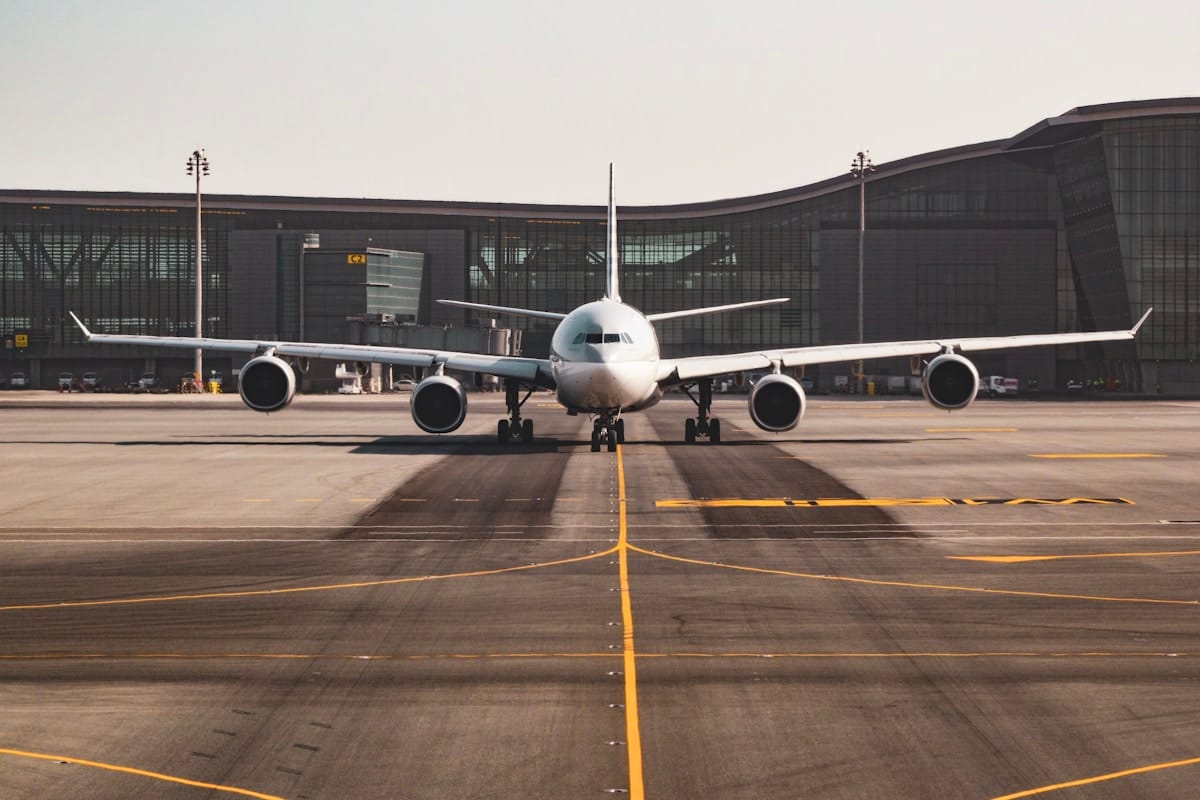
EasyJet has stamped the fifth anniversary of its Faro Airport base with a step-up that the Algarve region's tourism plumbing has been waiting on: a +3% summer capacity lift, an 18-route network out of the Aeroporto de Faro (Faro Airport, IATA code FAO), five Airbus A320 family aircraft stationed on the ramp, and a five-year cumulative economic-contribution print of €8 billion that the carrier and Turismo do Algarve (Algarve Tourism Board) joined in the Wednesday 17 June 2026 release. The five-year frame counts the regional GDP add-on, the direct staff payroll, the supplier-chain spend, and the visitor-side hotel, restaurant, retail and transport revenue that the routes have lifted into the Algarve economy since the base opened on 25 March 2021.
The headline numbers — 1.7 million seats, 18 routes, five aircraft
The 2026 summer programme runs from 28 March through 25 October across 1.7 million booked seats — a 3% lift on the 1.65 million summer 2025 baseline and the highest single-summer capacity EasyJet has scheduled out of Faro since the base launched. The 18-route network covers nine UK origin airports (London Gatwick, London Luton, London Stansted, Manchester, Bristol, Edinburgh, Glasgow, Liverpool and Belfast International), four Northern European points (Amsterdam Schiphol, Paris Charles de Gaulle, Berlin Brandenburg and Zürich), three Swiss/Italian routes (Geneva, Milan Malpensa and Naples), Madrid Barajas and Dublin. The five aircraft on the ramp are Airbus A320neo and A321neo airframes in the carrier's orange livery, two of them moved in for the season from the Manchester base.
The €8 billion regional print
The €8 billion cumulative regional contribution since 2021 — published in a study Turismo do Algarve commissioned from the consultancy IPDT (Instituto de Planeamento e Desenvolvimento do Turismo, the Tourism Planning and Development Institute) and disclosed by the carrier on Wednesday — breaks down across three layers. The direct layer counts EasyJet's payroll for the 220 Faro-based pilots, cabin crew, engineering and ramp staff at roughly €18 million per year. The indirect layer counts the supplier-chain spend at Faro — Menzies Aviation ground handling, the SEF (Serviço de Estrangeiros e Fronteiras, the Foreigners and Borders Service) border-control charges, the ANA Aeroportos terminal-and-runway fees, and the regional fuelling-and-catering contracts — at roughly €120 million per year. The induced layer captures the visitor-side spend the route network has unlocked: at an average €1,420 visitor spend per trip booked through the EasyJet network, and roughly 1.45 million inbound passengers each summer year, the multiplier lands the visitor-spend layer at €2.06 billion in 2025 alone. The five-year cumulative sum — €18m + €120m direct/indirect annualised x 5 plus the visitor-spend layer compounded across the five summers — clears €8 billion.
The Faro base in the EasyJet network
The Faro base is one of seven Continental-European bases EasyJet has opened in the post-pandemic recovery cycle. It sits alongside the carrier's longstanding northern-Mediterranean bases at Lyon, Nice and Milan, and the more recent Madeira (Funchal) launch in March 2025. Faro currently represents 8.4% of EasyJet's continental-European departing capacity and 1.9% of group-wide ASK (Available Seat Kilometres) — a share the 2026 lift brings to roughly 8.7% and 2.0%. The Faro hub-and-spoke pattern is distinct from the carrier's UK-base model: where Luton, Gatwick and Manchester anchor large-scale 16-to-22 aircraft fleets, Faro runs a leaner five-aircraft pattern tuned to the summer-heavy Algarve tourism demand curve.
The Algarve tourism context
The Algarve recorded 23.4 million overnight stays in 2025, a 4.6% lift on the 2024 baseline, and the EasyJet network has tracked above the regional average — its inbound-passenger volume from the nine UK origins rose 7.1% year-on-year in summer 2025. The seven UK markets together represented 63% of the Algarve's foreign-visitor mix in 2025 according to INE (Instituto Nacional de Estatística, the National Statistics Institute) data — a concentration that makes EasyJet, alongside Ryanair (which serves Faro through point-to-point routes without a base), Jet2.com and TUI Airways, the structural air-traffic backbone of the regional tourism economy.
What the +3% lift adds in practice
The 3% capacity lift translates to roughly 50,000 additional seats across the seven-month summer programme. Most of the lift is delivered by three frequency upgrades: London Gatwick adds a fifth daily rotation (from four), Manchester adds a second daily (from one-plus-three-on-Saturdays), and Bristol adds a Tuesday-and-Thursday second daily on top of the standard weekend pattern. The route network itself is unchanged from summer 2025 — the lift is a deepening of existing frequencies rather than a fresh route launch. A fresh route is, however, signposted for the winter 2026-27 programme: Brussels Zaventem is expected to open in late October on a three-weekly rotation, sources at the carrier indicated.
The ANA Aeroportos and Vinci-side read
Faro Airport is operated by ANA Aeroportos de Portugal under the Vinci Airports concession that runs through 2052. The terminal handled 9.4 million passengers in 2025, a 5.2% lift on the 2024 baseline, and remains Portugal's third-busiest airport behind Lisbon (33.7 million) and Porto (16.1 million). The 2026 summer capacity injection from EasyJet and the parallel +6% lifts notched by Ryanair and Jet2 from their own Faro programmes mean ANA is projecting a 2026 full-year throughput at 9.95 million — 0.45 million seats below the 10.4 million terminal-capacity ceiling currently certified.
The Aeroporto de Faro Master Plan 2030 — published by ANA-Vinci in October 2025 — provides for a €350 million terminal-expansion programme to lift the certified capacity to 16 million annual passengers by 2030. The first phase, a new Pier C with eight additional contact stands and a 12,000 m² check-in extension, broke ground in February 2026 and is expected to enter operation in summer 2028. The EasyJet five-year anniversary announcement carries an implicit projection: if the carrier extends its Faro footprint to seven aircraft by 2030, as the company's continental-European base growth plan indicates, the Faro share of group capacity rises to ~11% and the regional contribution clears €2.5 billion per single summer year.
The competitive grid in Faro 2026
Faro's summer 2026 capacity grid is dominated by Ryanair (38% of seats, point-to-point with no base), EasyJet (16% of seats, basing 5 aircraft), TUI Airways (11%), Jet2.com (10%), Wizz Air UK (5%), British Airways (4%), TAP Air Portugal (3.5%), and the long tail of Lufthansa, KLM, Air France, Swiss, Vueling, Brussels Airlines, Norwegian, SAS, Aer Lingus and Transavia together making up the residual 12.5%. The EasyJet base-share against the point-to-point Ryanair share is the key competitive read: EasyJet's basing structure gives it an early-morning departure advantage that the Ryanair point-to-point model cannot match without a similar basing decision — a decision the Irish carrier has resisted at Faro to date.
Algarve regional-government and Turismo do Algarve frame
The Algarve Regional Coordination and Development Commission (CCDR Algarve) noted in its Wednesday statement that the 1.7 million EasyJet summer seats translate to an estimated 14,200 indirect-employment FTEs (full-time equivalents) across the hotel, restaurant, retail and transport sectors of the Algarve municipalities. Turismo do Algarve president André Gomes characterised the five-year EasyJet anniversary as 'a structural commitment that crosses the political cycle and the market cycle' and signalled that the regional tourism board is in conversation with the carrier on a Faro-direct route to Berlin Brandenburg in addition to the current connection via the Gatwick and Manchester hubs.
What this means for the Algarve summer
The +3% lift gives the Algarve hospitality plumbing a sixth consecutive summer of capacity expansion. Hotel-rate data from Travel BI (the INE-housed tourism business intelligence platform) shows an average August 2026 forward-booking ADR (Average Daily Rate) of €178 for a four-star Algarve room — a 6.4% lift on the August 2025 actual of €167. The deeper EasyJet frequency reduces the air-fare reach risk on shoulder-season demand and is one of the structural reasons the regional ADR has held its lift despite the broader European cost-of-living squeeze. For Algarve operators, the read at the five-year mark is unambiguous: the EasyJet base is no longer a launch experiment but a fixed structural feature of the regional tourism plumbing, and one whose 2026 capacity decision lands meaningfully on revenue. On the tourism, cruise and port-economy side of the file, the Port of Lisbon's record cruise June sets the latest reference. On the tourism side of the file, the latest signs that tourism growth is cooling breaks down the INE data showing overnight stays barely rising while prices climb.