General Daily Briefing: Friday, 18 September 2026
Good morning. Here is your Friday briefing for 18 September 2026: the day's essential Portugal stories for residents, expats and anyone keeping an eye on the country, running from the December cheque now confirmed for two million pensioners to the summer policing figures that show what a roadside stop in Portugal is actually about.
- Pensions: the Council of Ministers fixed the brackets on an extraordinary supplement of up to 200 euros, paid with the December pension to about two million people.
- Business: Portugal has guaranteed 95 percent of 233.5 million euros of bank lending to Angola for public works contracted to Mota-Engil and Grupo ACA.
- Cost of living: European farm input prices rose 4.7 percent in the second quarter while what farmers were paid fell, and the IMF says the effect lands on the next harvest.
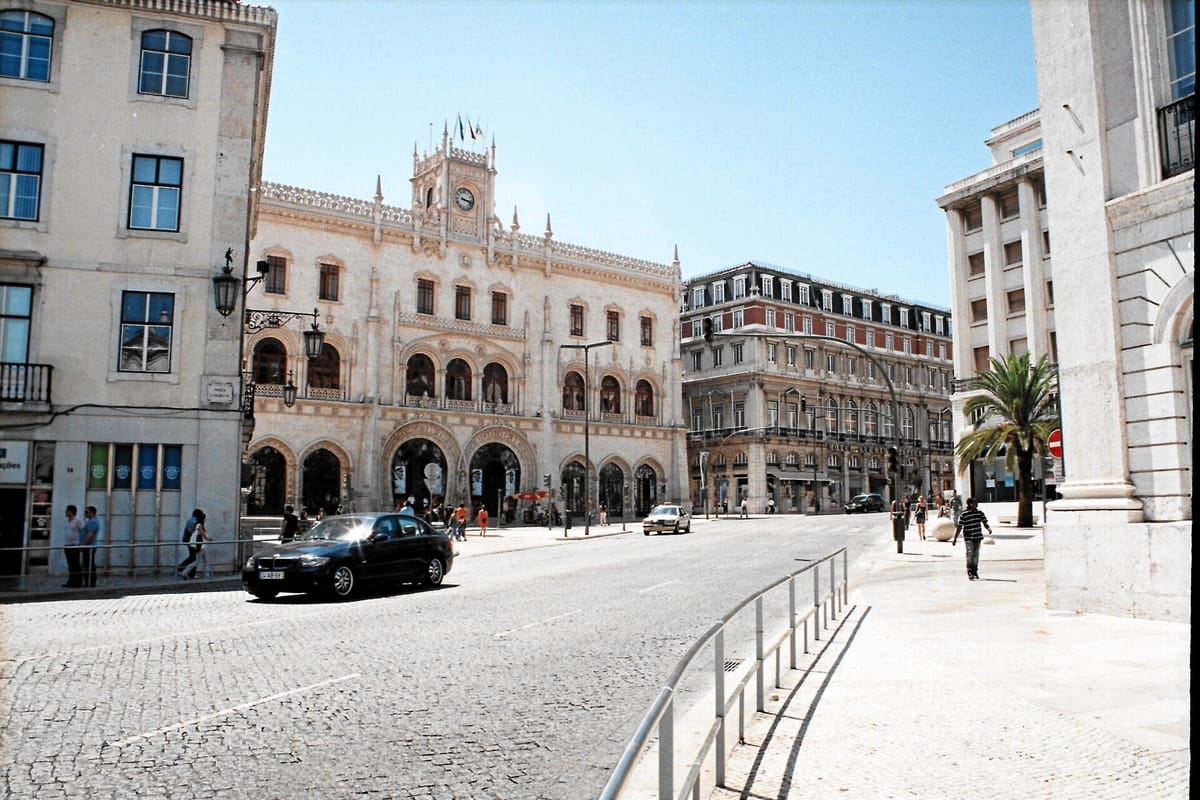
- Culture: the Teatro Nacional D. Maria II reopens on the Rossio today after a 15.1 million euro refurbishment, with free tickets until Sunday.
- Health: the health regulator has 368 aesthetic establishments waiting to be inspected and has managed 223 inspections since 2023.
- Policing: the PSP's summer operation ended with 7,214 arrests, and the single commonest penalty notice was for using a mobile phone at the wheel.
The Certificado Energetico in Portugal in 2026
You cannot advertise, sell or let a home in Portugal without an energy certificate, and the rules around it are stricter than most sellers expect: a qualified assessor has to visit the property in person, the rating runs on a fixed scale, and the document is valid for ten years. Our new guide walks through who issues it, what the site visit involves, what registration costs, and the penalties for marketing a property without one.
Consignacao do IRS in Portugal in 2026
Portuguese income tax lets you direct 1 percent of the tax you already owe to a charity, a church or a cultural body, and it costs you nothing at all: the money comes out of the State's share, not out of your refund. The guide explains the two routes into it, the end-of-March deadline on one of them, how to read the list of 5,517 eligible entities, and exactly which box on the declaration to fill in.
The December Cheque for Pensioners Now Has Its Brackets
The extraordinary pension supplement trailed in Parliament was approved on Thursday in the Council of Ministers and announced by Luis Montenegro in an address to the country, as the first of a package aimed at the cost of living. About two million pensioners are covered, at a cost of roughly 400 million euros. The tiers run against the value of the monthly pension: 200 euros for pensions of 537.13 euros or less; 150 euros above that and up to 1,074.26 euros; 100 euros above that and up to 1,611.13 euros; and nothing at all above 1,611.13. It arrives with the December pension and alongside the Christmas subsidy, so the lowest pensions see three amounts in the same month, and attribution is automatic, with no application to make. The measure was already written into the 2026 State Budget as a contingency conditional on budget execution, and execution has been good enough. What it is not is a raise. The payment is made once; it does not lift the base pension, so it does not compound into the next annual update. Permanent extraordinary increases for the lowest pensions, the approach taken by the previous Socialist governments, were proposed again by PS, PCP and the Bloco de Esquerda during the 2026 budget debate and voted down. The government's position is that a one-off can be sized to what the accounts can bear in a given year; the objection is that pensioners cannot plan around a payment that may not come again. Nothing is settled for 2027, where the likeliest course is another refusal of a permanent rise and another wait on the public accounts.
The State Underwrites 233.5 Million Euros of Work in Angola
Two joint orders from the Finance and Economy ministries appeared in Thursday's Diario da Republica, putting Portuguese state guarantees behind 233.5 million euros of bank lending to Angola. Each guarantee covers 95 percent of the loan, both were granted under the Portugal to Angola convention, and both run for 17 years plus 120 days. The larger operation is the rehabilitation of the infrastructure of the Nova Vida development in Luanda: earthworks and paving, water supply, storm and waste drainage, and the remodelling and expansion of a wastewater treatment plant. The contract went to Mota-Engil Engenharia e Construcoes Africa at an initial value of 228 million dollars, and Caixa Geral de Depositos is lending Angola 208.39 million euros over 15 years. The second covers 65.8 kilometres of the EN354 between Cuima and Cusse, across the provinces of Huambo and Huila, work held by AngolACA Construcoes, the Angolan arm of the Portuguese Grupo ACA, with Abanca Portugal lending 25.14 million euros over 17 years. The State is not doing this for nothing: it collects a guarantee commission of 30.89 million euros, already built into the financing, while the Banco Portugues de Fomento, acting as Portugal's export credit agency, takes a management fee worth 3 percent of that commission. The orders place the decision inside the standard machinery of official export credit support. Put plainly, a Portuguese bank lends to a foreign state, a Portuguese company does the building, and the Portuguese taxpayer carries almost all of the risk that the loan is not repaid.
Farm Input Costs Turn Up Again, and Food Prices Follow Later
Eurostat figures published on 10 September show the average price of agricultural inputs across the European Union, meaning the goods and services consumed in farming rather than invested in, rising 4.7 percent in the second quarter against the same period of 2025. Over the same months the average price of agricultural output fell 5.8 percent. Two lines account for most of the increase: energy and lubricants, up 22 percent, and fertilisers and soil improvers, up 13.4 percent, with nitrogen fertilisers at one point standing 71 percent above their 2024 average. Portugal recorded the gentlest rise in the Union alongside Hungary, at 1.2 percent, against 16.4 percent in Lithuania. That does not insulate Portuguese shoppers, because food is traded and priced across the single market. The International Monetary Fund makes the timing argument in a blog post on what governments should do when prices spike: when the Middle East war began earlier this year some fertiliser prices rose by close to 50 percent, and although they have since normalised, the spike landed in the sowing season, so the effect on yields, farm incomes and food prices keeps working through the current harvest. The Fund also flags a possible strong El Nino and warns that price subsidies should ideally be avoided. For households, euro area inflation was 3.2 percent in August against 2.9 in July, Portugal's harmonised index 2.6 percent, and the national consumer price index 3.3 percent, an acceleration explained almost entirely by diesel. Unprocessed food eased to 3.4 percent from 3.7. That is the number reflecting what is being harvested now.
The National Theatre Opens Its Doors Again, and Entry Is Free
The Teatro Nacional D. Maria II reopens on the Rossio today, three years after closing, in a building that has housed the national theatre since 1846. The reopening programme runs free of charge until Sunday, with tickets to be collected rather than bought. The centrepiece is a premiere of Shakespeare's Macbeth, directed by the artistic director Pedro Penim, with a cast including Barbara Branco, Hugo van der Ding and Jose Raposo. The choice is pointed: Macbeth was the play on stage on 2 December 1964, the night a fire destroyed most of the theatre. The requalification, funded through the Recovery and Resilience Plan, represented an investment of 15.1 million euros and, according to the board, improved safety, accessibility, comfort and the functioning of the building. While the scaffolding was up the company ran a programme called Odisseia Nacional in more than 100 municipalities. Today also brings a videomapping show and sets from the DJs Beatbombers, Marfox and Zengxrl; Saturday offers guided visits and the launch of the Macbeth book; Sunday closes with Coro do Recomeco, staged across several parts of the building. The week was not frictionless. The theatre's workers' committee warned of physical and psychological exhaustion and of improvised working conditions, citing missing furniture, lifts and goods hoists getting stuck, faults in the fire detection system and no air conditioning. The board replied that the reopening meets the technical and safety conditions required by law, that the complaint referred to the Prologo programme held in June and July while systems were still being tested and adjusted, and that the issues raised were resolved.
A Queue of 368 Beauty Clinics, and 223 Inspections to Date
Complaints reaching Portugal's health regulator about beauty clinics have been rising, and they say much the same thing: that procedures which count as healthcare are being performed by people not qualified to perform them, in premises that do not meet the legal requirements. The Entidade Reguladora da Saude has now published its running tally. Between 2023 and the end of the first half of 2026 it carried out 223 inspections: 67 in 2023, 55 in 2024, 82 in 2025 and 19 in the first six months of this year, spread across Lisboa (eight), Santarem (six), Porto (three) and Castelo Branco (two). Targets are picked on the seriousness of what is reported and the risk to users, on requests for cooperation from ASAE and Infarmed, and on the opportunity presented by other fieldwork. Two establishments were suspended as a precautionary measure in the first half of 2026, taking the total since 2023 to 21, in most cases because people without the necessary qualifications were found practising; those files also go to the Ministerio Publico. Two orders prohibiting improper practice were issued this half, out of eight since the monitoring began, one of which closed an establishment permanently. The scale behind the enforcement is the queue. In the first half of 2026 alone the regulator received complaints about 41 establishments, and 476 since the action plan was approved on 1 April 2022. Of those analysed, it concluded that 368 establishments warranted an inspection. The plan covers botulinum toxin, hyaluronic acid and biostimulators: procedures marketed in the language of beauty and regulated in the language of medicine. A joint campaign with ASAE, the Direcao-Geral do Consumidor and Infarmed makes the point in its title, Nao e so estetica. E saude.
Seven Thousand Arrests, and 11,730 Tickets for a Phone at the Wheel
The PSP has published the final tally for Policia Sempre Presente: Verao Seguro 2026, its three-month summer operation across bathing areas, tourist zones, historic and shopping centres, airports, transport interchanges, nightlife venues, large events and residential areas. It recorded 7,214 arrests, up 6.5 percent on the 6,771 of the same period last year. The largest categories are on the road: 1,559 arrests for drink-driving and 1,558 for driving without a legal licence, together more than four in ten of the total. Then come 753 for drug trafficking, with 303,133 individual doses seized, 498 for property crime including 81 robberies, 461 for disobedience, 251 for resisting or coercing a public official, 218 for prohibited weapons, 152 for domestic violence and 78 for illegal immigration, plus 1,072 on warrants. Seizures came to 946 weapons (305 firearms, 396 bladed), 8,032 rounds of ammunition and 319 vehicles. On traffic enforcement the force ran 4,630 operations, stopped 169,418 vehicles, monitored 360,667 by radar and administered 47,755 breath tests, issuing 60,420 penalty notices. The single largest line is worth reading twice: 11,730 were for using a mobile phone while driving, ahead of 8,693 for speeding, 5,952 for missing the compulsory vehicle inspection and 2,656 for driving without insurance. Over the same three months the PSP registered 13,837 road accidents, in which 26 people died and 4,953 were injured, 216 of them seriously.