Portugal Buys Up to Two More Years for the Airport Ground Handling Licences That Were Due to Lapse on 25 October
The Council of Ministers approved a transitional solution on Thursday for Lisbon, Porto and Faro. It is the fourth extension since March 2025, and it lasts until a tender opened in October 2024 finally produces a licensed operator.
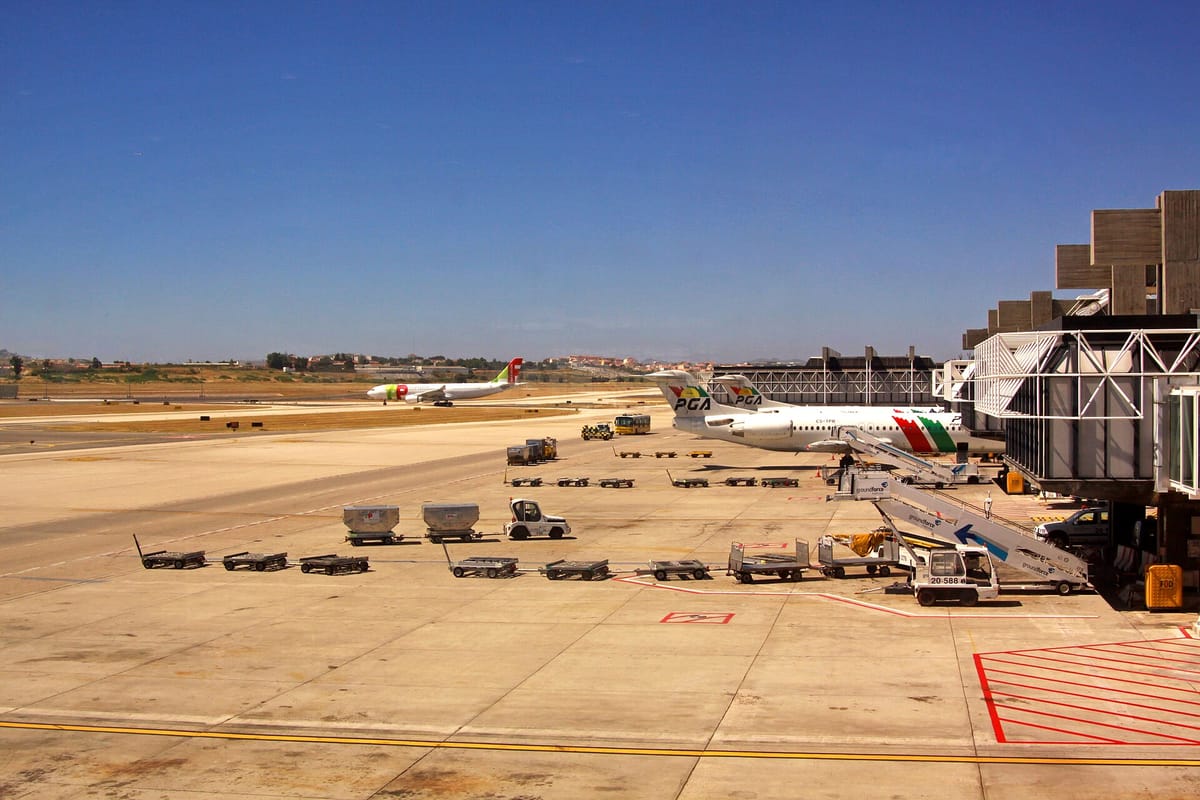
The licences that allow anyone to load a bag, push a wheelchair or marshal an aircraft at Lisbon, Porto and Faro airports were due to lapse on 25 October. On Thursday the Council of Ministers decided they will not, and the extension it approved can run for as long as two years.
The measure appears in the communiqué from the meeting of 17 September as "a transitional solution that guarantees the continuity of airport operations at the airports of Lisbon, Porto and Faro, allowing the exceptional extension of the current ground handling licences while the award and transition to the new providers is not complete". The government adds that it "guarantees operational stability for passengers, airlines and the remaining entities in the sector, without prejudice to the conclusion of the tender now under way".
What ground handling actually covers
Assistência em escala, ground handling, is everything that happens to an aircraft and its passengers on the ground and is not done by the airline's own flight crew. Check-in desks, baggage loading and delivery, aircraft cleaning, pushback, de-icing, catering delivery, ramp marshalling, assistance for passengers with reduced mobility.
At Portugal's three busiest airports the work is licensed rather than simply contracted, and the number of licences is capped. That is why the expiry date matters: without a valid licence a handler cannot legally operate, and there is no spot market to fall back on.
The tender that will not end
The Autoridade Nacional da Aviação Civil (National Civil Aviation Authority, or ANAC) opened the competition for the new licences in October 2024. Two bidders were selected: SPdH/Menzies Aviation, and a Spanish consortium of Clece and South. The consortium finished first.
It has not held that position. ANAC moved to annul the Clece and South award in May, citing defects in insurance, equipment, human resources and the safety programme. In July it confirmed the exclusion outright, on the ground that the consortium had not demonstrated compliance with the technical and procedural requirements, specifically the mobilisation of the means it had promised. The regulator then called Menzies forward to produce its qualification documents. That process is still running.
Thursday's decision is the fourth extension since March 2025. The most recent one carried the licences across the IATA summer season to 25 October 2026. Each has been a bridge over the same unfinished tender.
Two years is the ceiling, not the term
The communiqué does not name a period. The extension can run up to two years, and the Ministério das Infraestruturas (Ministry of Infrastructure) will fix the actual length by despacho, a ministerial order. So the practical question of whether this lasts six months or twenty-four is still open, and will be answered administratively rather than by the Council of Ministers.
The wording also makes clear the extension is conditional in purpose: it lasts while the award and transition are incomplete. If Menzies clears the qualification stage quickly, the new regime can start before the ceiling is reached.
What it changes for passengers
In the immediate term, nothing, which is the point. The same handlers keep working under the same licences, and the 25 October cliff edge that would have forced either an emergency decision or a disruption at the start of the winter schedule has been removed.
Over a longer horizon it means the ground operation at Lisbon, Porto and Faro will spend up to two more years being run by incumbents holding extended licences rather than by operators who have won a competition on service commitments. Portugal's airports have had a difficult run of ground-side problems, and this autumn is already a congested one: easyJet cabin crew have called a strike in October affecting around five hundred flights from the same three airports, and Lisbon airport taxis switch to fixed prices on 15 October.
If you are flying through any of the three this winter and something goes wrong with a bag or with assistance you booked, the handler responsible is unlikely to have changed since your last trip. That is the whole effect of Thursday's decision, and for now it is probably the safer outcome of the two available.