Five Hundred Flights From Lisbon, Porto and Faro Sit Inside easyJet's October Strike, and the Crew Have Booked a Second One for the Week Before Christmas
Cabin crew voted 188 to nothing on Thursday to stop work from 2 to 6 October and again from 19 to 23 December. The union blames roster instability, unequal treatment against the pilots and pressure to fly overtime.
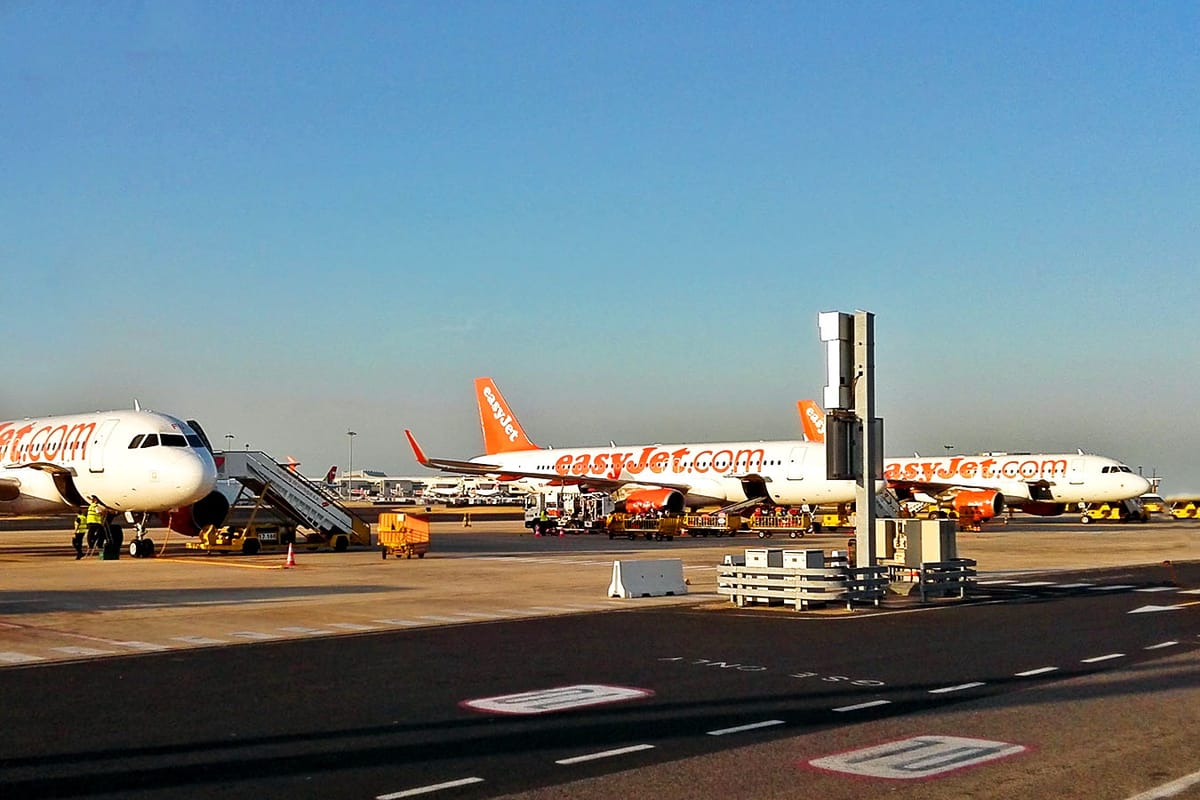
Cabin crew at easyJet's three Portuguese bases voted on Thursday to strike twice before the end of the year: from 2 to 6 October, and again from 19 to 23 December. The second date puts a five-day stoppage directly across the week that passengers fly home for Christmas.
The motion came from the leadership of the Sindicato Nacional do Pessoal de Voo da Aviação Civil (National Civil Aviation Flight Crew Union), known as SNPVAC, and it passed without a single vote against: 188 in favour, unanimously. An official union source gave the outcome to ECO and to the Lusa news agency.
Five hundred flights in October, and more in December
For the October stoppage the union estimates that roughly 500 scheduled flights from the Porto, Lisbon and Faro bases fall inside the strike window. Minimum services, which in Portugal are fixed by agreement or by an arbitration tribunal rather than by the employer, have not yet been set and will be negotiated later.
December is deliberately left open. "For the December days it is not yet possible to know the exact number of flights, but it is expected that the number will be considerably higher, because we are in the Christmas season, when the number of flights is always reinforced by the rise in demand," the same union source said.
That is the point of choosing the date. A strike in the first week of October costs the airline a shoulder-season week. A strike from 19 to 23 December costs it the days on which its Portuguese network is fullest and on which a cancelled seat is hardest to rebook.
What the crew say the dispute is about
The union frames the vote as a response to "the continued deterioration of working conditions and the constant failure of the company to respond to the fair and proportionate demands the union has been putting forward".
Three specific grievances sit behind that phrasing. The first is the lack of stability in rosters, meaning crew cannot rely on the schedule they are given. The second is what the union calls discriminatory treatment relative to the pilots, in the compensation offered under the Acordo de Empresa (company-level collective agreement), a complaint about two groups of flight crew being treated differently under the same instrument. The third is pressure to work overtime for commercial reasons.
Speaking to Lusa on Tuesday, before the vote, the union said the crew's conditions "continue to deteriorate in Portugal" and that "we have constantly alerted easyJet to this situation, which has changed little or nothing, with very negative impacts on crew rights".
The decision follows an emergency general assembly held on 15 September, called to examine the labour situation at the airline and decide what to do about it. The union had said beforehand that every option was on the table.
Context for passengers
This is the second industrial action to hit easyJet's Portuguese crew this year. The last one was on 3 June, as part of the general strike, when an arbitration tribunal set the minimum services across the transport network. In August, a separate dispute in France grounded six easyJet Portugal flights over a weekend, which gives a sense of how thin the margin is on these routes.
easyJet is not a marginal operator here. It has run a base at Faro since 2021 and marked five years there in June with 1.7 million seats across 18 routes for the summer alone, alongside its Lisbon and Porto operations.
Nothing is cancelled yet. Strike notice periods and minimum-services rulings both come first, and the picture will only be clear a few days out. But anyone holding an easyJet booking on those ten dates should know now that a cancellation is a live possibility, and that a cancelled flight brings rights with it: our guide sets out what an airline owes you when it cancels, and where the line falls between rerouting and compensation. A strike by an airline's own staff does not automatically count as the "extraordinary circumstance" that lets a carrier avoid paying.