Tribunal Arbitral Fixes the 3 June Greve Geral Minimum Services Tape — CP Trains Run at 25% of Normal Frequency, Carris Lisbon Bus Routes Hold 100% on Hospital and School Lines and TAP Operates 34 Flights Across Continental, Açores and Madeira
Tribunal arbitral sets 3 June general strike minimum services: CP runs at 25% of normal frequency, Carris keeps hospital-school Lisbon bus routes at 100% in peak hours, TAP operates 34 flights.

The arbitral tribunal that hears Portugal's public-service strike disputes published the serviços mínimos for the 3 June greve geral over Thursday 29 and Friday 30 May, drawing a thin operating tape across the country's largest transport networks just as the CGTP-led action against the Rosário Palma Ramalho labour-reform package locks in.
The ruling that matters most to commuters runs through CP — Comboios de Portugal. The tribunal arbitral set rail circulation at 25% of normal frequency for the strike day, covering Alfa Pendular and Intercidades long-distance services, Regional and InterRegional lines, and the Urbanos networks for Porto, Coimbra and Lisbon. CP confirmed on Saturday 30 May that disruptions may bleed into Tuesday and Thursday around the strike day, with Lisboa–Porto, Lisboa–Algarve and the suburban Sintra, Cascais and Azambuja corridors carrying the heaviest perturbation risk.
In Lisbon, the Carris file is the granular one. The tribunal arbitral fixed minimum services at 100% of normal operation on a defined set of bus routes that serve hospitals and schools — carreiras 703, 708, 717, 726, 735, 736, 738, 751, 755, 758, 760 and 767 — between 06h00 and 09h00 and between 16h00 and 19h00. Outside those windows, the same routes run at 50% of normal frequency. The exclusive deficient-passenger transport, the carro do fio, the pronto-socorro and the postos médicos all keep full service.
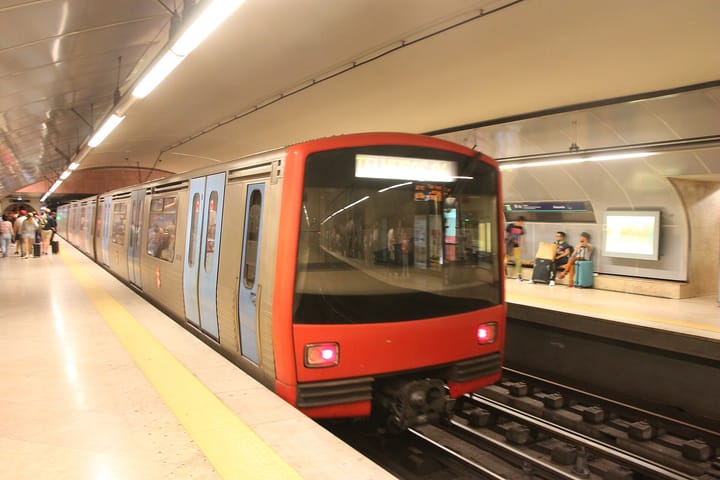
The Metropolitano de Lisboa is the exception that proves the pattern: it sits outside the minimum-services obligation, meaning passengers should plan for a closed network on the strike day. Transtejo/Soflusa and Fertagus are covered by separate minimum-services tapes that match the CP framework.
On the aviation side, TAP secured an arbitral ruling guaranteeing roughly 34 flights through the strike day. The matrix preserves three daily round-trips between Portugal Continental and the Açores — two to Ponta Delgada (one with a night stop) and one to Terceira — and two daily round-trips to the Madeira (both ex-Lisboa, one with a night stop). The rest of the TAP timetable is exposed, and the airline has already begun rebooking passengers on the cancellation perimeter.
The strike itself is the second general action this year against the labour-reform package — the Pacote Laboral that closed Concertação Social negotiations on 7 May without an accord between UGT, the Government and the employer confederations, and now heads to the Assembleia da República. CGTP is the convener; Frente Comum, the local-government Trabalhadores da Administração Local sector, Fenprof's teachers and Sindicato dos Jornalistas have all formally adhered. The reform's flashpoints — limits on collective dismissal recovery, an extended individual hours bank, application gaps for outsourced workers and restrictions on strike rights — remain the union case.
For residents and travellers, the practical guidance is tight. CP recommends checking circulation status on the company's app from Tuesday 2 June; Lisbon commuters should treat the Metro as closed and plan around the Carris hospital-school routes for in-city movement; TAP passengers booked into and out of Lisbon on 3 June should call the airline before heading to the airport. Schools, hospitals, refuse collection and some call-centre operations are also expected to be hit.