Funchal Proposes Doubling Its Tourist Tax to 4 Euros a Night From January, With Cruise Passengers Paying 4 Euros Too
Funchal council has opened a 30 working day consultation on raising its tourist tax from 2 to 4 euros per person per night from 1 January 2027, capped at seven nights, and the cruise passenger tax from 2 to 4 euros. Only Madeira residents are exempt by residence.
Câmara Municipal do Funchal (Funchal City Council) has put out for public consultation a draft regulation that would raise its municipal tourist tax from 2 euros to 4 euros per person per night from 1 January 2027, still capped at seven nights in a row. The tax on cruise passengers who come ashore would also double, from 2 euros to 4 euros per person.
It is a proposal, not yet law. The council approved the draft at its meeting on 1 October, unanimously according to Observador, and the notice opening the consultation, Aviso n.º 24792/2026/2, appeared in the Diário da República (the official gazette) on 8 October. The consultation runs for 30 working days from that date.
What would change
- Overnight tax: 4 euros per person per night, up to seven consecutive nights, in every kind of paid accommodation in the municipality, all year round.
- Cruise tax: 4 euros per passenger disembarking from a cruise ship calling at Funchal's terminals.
- Start date: 1 January 2027 for the overnight tax and for the new cruise rate.
The list covers hotels, guesthouses and hostels, the traditional Quintas da Madeira, resorts, rural tourism, campsites including glamping, timeshare and alojamento local (registered short-term rentals).
Who would not pay
The draft keeps the three exemptions in today's rules and adds four. Guests would not pay the overnight tax if they are:
- residents of the Autonomous Region of Madeira, shown by a document proving their tax address there (the council says this includes Porto Santo);
- aged 12 or under;
- people with a disability who show proof of it (today's rule specifies an incapacity of 60 percent or more; the draft does not repeat that threshold);
- staying for medical appointments, tests or treatment, with one companion, on proof of the booking or care;
- health professionals working under contract to SESARAM, the regional health service;
- stranded by bad weather, flight disruption or the closure of Madeira's airport, with a document from the airline or the airport operator;
- guests at the Centros de Juventude (regional youth centres).
Ordinary hostels are not exempt. For cruises, children aged 12 or under, passengers ending their voyage in Funchal, passengers on ships forced into port by breakdown or emergency, and crew would not pay.
What it means for residents and visitors
- Mainland and Azores residents pay: only Madeira residents are exempt. A couple from Lisbon spending a week in a Funchal hotel would pay 56 euros in tourist tax under the draft, against 28 euros today.
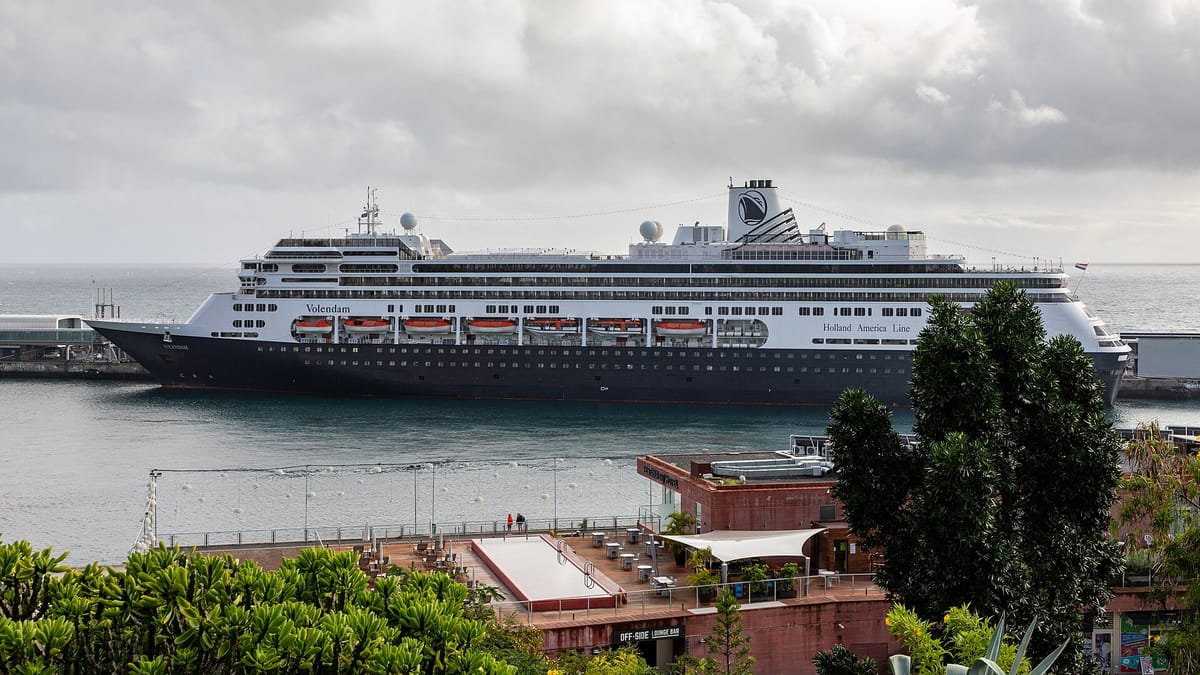
- Cruise passengers: the 4 euro charge applies per passenger who disembarks at a port call. The port authority, APRAM (Administração dos Portos da Região Autónoma da Madeira), collects it for a 2.5 percent fee under an agreement with the council, and the rest of the new cruise rules start only once that agreement is signed.
- Long stays: the seven-night cap stays, and guests who move between establishments in Funchal without a break do not start paying again if they show the earlier invoice.
What it means for hosts
Hotels and alojamento local owners already collect the tax. They, or a booking platform they have handed the job to, would charge the 4 euros on the invoice, marked as not subject to VAT. They would then declare the month's takings on the council's online tourist tax platform by the last working day of the following month (today's rule says the 15th) and pay within 10 days of declaring, by Multibanco reference.
Collectors keep 2.5 percent of what they hand over, plus VAT where due. New short-term rentals must register on the platform within 30 days of receiving their registration number from Turismo de Portugal, and exemption paperwork must be kept for four years. Failing to register or to pass on the money carries fines of 1,000 to 20,000 euros for an individual and 2,000 to 40,000 euros for a company.
Why the council wants more
Funchal recorded 7,462,550 overnight stays in 2025, about 58.6 percent of the regional total, and 728,212 cruise passengers passed through the port. The tax raised 14.33 million euros in 2025, its first full year, which the council says covered 34 percent of the 42.12 million euros it spent on services under tourist pressure, such as street cleaning, public works and mobility. At 4 euros, it projects 28.66 million euros a year before collection costs.
The council's financial annex splits the new rate into 1.52 euros for the cost of the services visitors use and 2.48 euros as a deterrent against tourist overload. Mayor Jorge Carvalho told reporters it was unfair for Funchal's residents alone to bear the costs, citing rubbish collection, water use and the strain on supply and sewage networks, according to Observador.
The annex compares Funchal with other councils: Lisboa and Cascais charge 4 euros a night, Porto 3 euros, Vila Nova de Gaia 2.50 euros, Sintra 2 euros and Braga 1.55 euros. Santa Cruz and Santana in Madeira, and Ponta Delgada in the Azores, charge 2 euros. Porto has started its own move to 4 euros.
How to comment and what happens next
Suggestions, proposals or objections must carry the sender's name and signature. They can be emailed to [email protected] or handed in at the Loja do Munícipe (citizens' service desk), Rua 5 de Outubro, n.º 63, Funchal. The draft is on the council's consultation page.
After the consultation the text goes back to the council and then to the Assembleia Municipal (municipal assembly), which approves municipal regulations. When Funchal began the review in January, the mayor said the whole process would take six to nine months, Observador reported. Until a new regulation is approved, the 2 euro rate in force since October 2024 still applies.