Four Train-Makers Line Up for Portugal's €584 Million High-Speed Fleet Built to Run at 300 km/h
Portugal's high-speed rail ambition has moved from track-laying to train-buying. CP (Comboios de Portugal — Portugal's state railway operator) has opened a tender worth up to €584 million for the fleet that will eventually run on the...
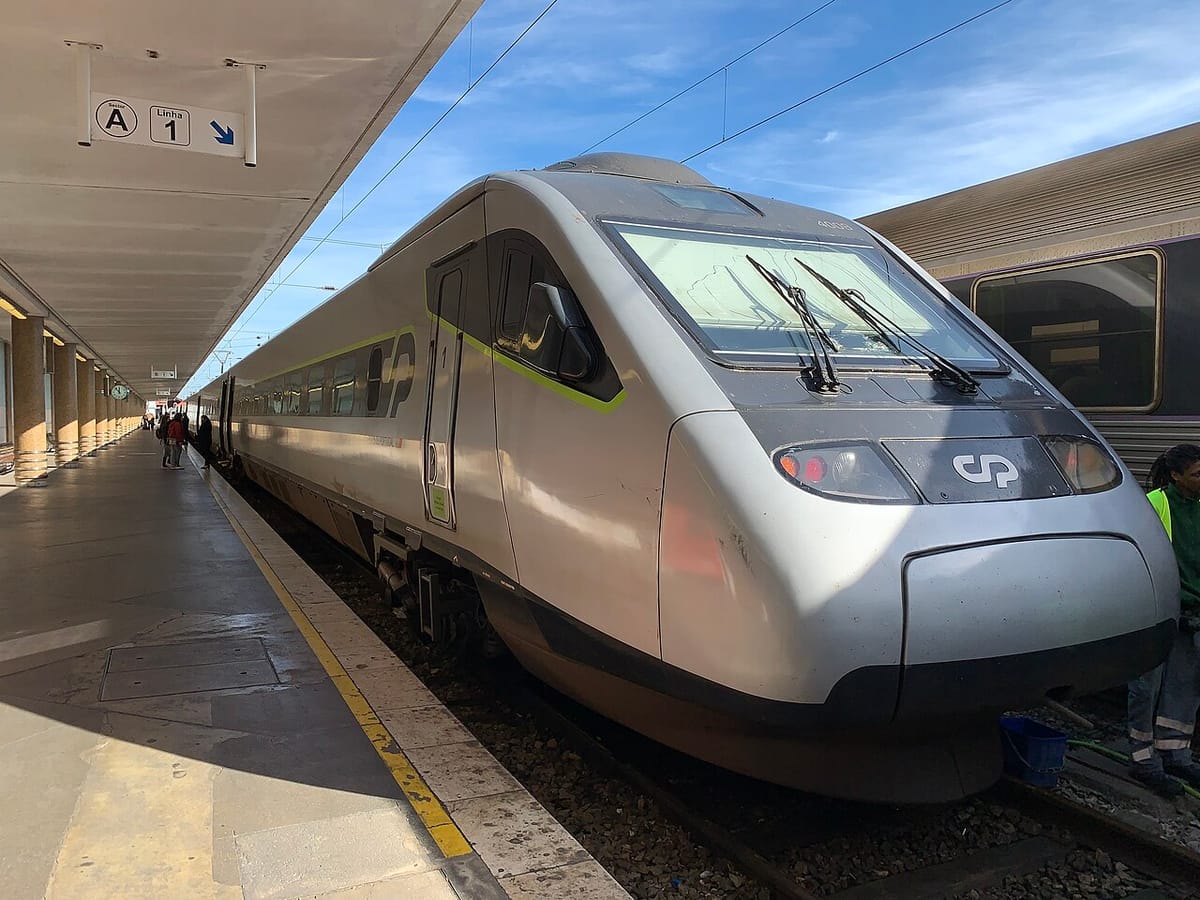
Portugal's high-speed rail ambition has moved from track-laying to train-buying. CP (Comboios de Portugal — Portugal's state railway operator) has opened a tender worth up to €584 million for the fleet that will eventually run on the planned Lisbon–Porto high-speed line, and four of Europe's biggest manufacturers are circling the contract.
The order covers 12 trainsets, with an option for eight more, each capable of 300 km/h and carrying at least 500 seated passengers. The price also buys spare parts and two years of full maintenance — a reminder that a modern rail contract is as much a long-term service deal as a purchase of metal.
The contenders
Four suppliers clear CP's threshold requirement of proven high-speed operation somewhere in Europe. France's Alstom, which already maintains CP's existing Alfa Pendular fleet, is the presumed front-runner and is expected to offer its Avelia family. Germany's Siemens Mobility can field the Velaro platform, a design rated well beyond 300 km/h. Spain's Talgo brings its Avril, whose variable-gauge axles switch between the Iberian track gauge (1,668 mm) and the European standard (1,435 mm) — a useful trait on a peninsula that still runs on the wider Iberian rails. Italy's Hitachi Rail rounds out the list with the ETR 1000, the Frecciarossa that already runs in Italy and Spain.
Price will decide a quarter of the score. The rest is weighted toward whole-life economics: maintenance (16%), energy consumption (14%), technical specification (9%) and passenger capacity (6%). It is a scoring grid built to reward trains that are cheap to run over decades, not merely cheap to buy.
A long runway
Nobody should expect to board one soon. CP wants the first train delivered in the first quarter of 2031, with the rest arriving at roughly one a month through the third quarter of 2032. That timetable is deliberately synced to the infrastructure: the new line is being built in phases, and the €167 million Poceirão–Bombel section — awarded only last week — is one of the early civil-works pieces of the same national programme.
The prize at the end is a journey that has frustrated travellers for generations. The high-speed line is designed to link Lisbon and Porto in about one hour and fifteen minutes, roughly half the time the fastest trains manage today. For a country whose two big cities sit at opposite ends of a slow spine, cutting that trip is less a convenience than a quiet reshaping of the economic map — provided the trains, and the track beneath them, arrive on schedule.