Foreign Nationals Keep Greater Lisbon's Buses Rolling, Filling 57% of the Cab at One Operator
The buses that thread through Greater Lisbon are increasingly driven by people who were not born in Portugal. Figures from the operators that run Carris Metropolitana (the Greater Lisbon regional bus network) show foreign nationals now make up...
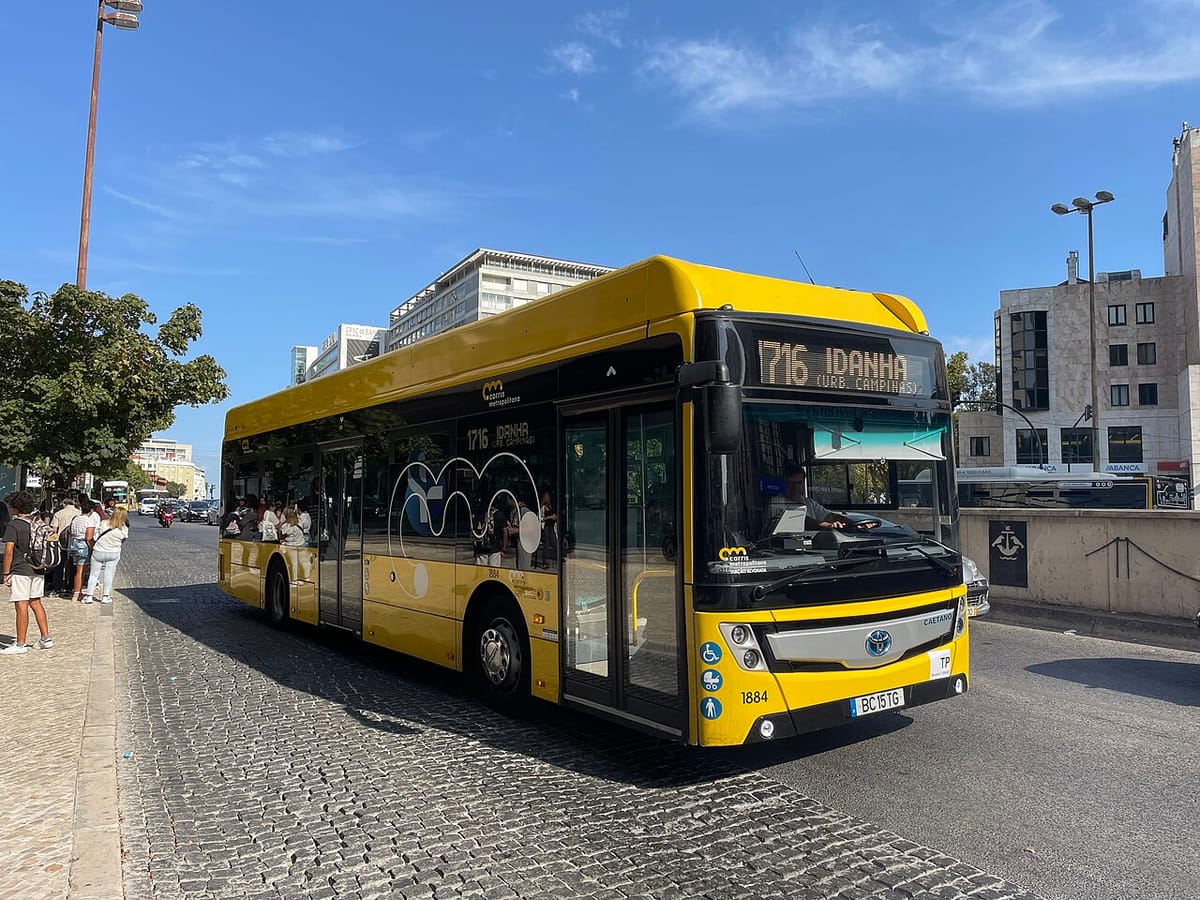
The buses that thread through Greater Lisbon are increasingly driven by people who were not born in Portugal. Figures from the operators that run Carris Metropolitana (the Greater Lisbon regional bus network) show foreign nationals now make up between a quarter and well over half of the driving workforce, depending on the company.
At the top of the range is Alsa Todi, where 275 of 480 drivers — 57% — are foreign. Viação Alvorada reports 37%, Rodoviária de Lisboa 31%, and TST (Transportes Sul do Tejo — South Tagus Transport) 25.3%. The overwhelming majority come from the CPLP (Comunidade dos Países de Língua Portuguesa — Community of Portuguese Language Countries), the Portuguese-speaking bloc that includes Brazil, Cape Verde, Angola and Guinea-Bissau — a shared language that removes one of the biggest barriers to safely putting a new driver behind the wheel of a city bus.
Why the cab is filling with newcomers
Portugal, like much of Europe, is short of professional drivers. The job is demanding, the hours awkward and the domestic labour pool ageing, so operators have turned abroad to keep timetables intact. The companies are careful to frame the hiring as equal-opportunity recruitment rather than a stopgap, but the arithmetic is plain: without foreign drivers, a large share of Greater Lisbon's departures would simply not run.
Getting those drivers road-legal is no formality. Every candidate must hold a category-D licence, pass medical and psychometric evaluations, and earn the CAM (Certificado de Aptidão de Motorista — Driver Aptitude Certificate) before carrying a single passenger, followed by theoretical and practical training on the operator's own routes.
Where the operators want change
That paperwork is exactly where the companies say the system drags. Alsa Todi has asked the government to speed up work-visa issuance and simplify the legalisation of foreign workers, and to let a foreign professional qualification — the CAP certificate held in many other countries — count as the Portuguese CAM rather than be re-earned from scratch. Shorten those steps, the argument runs, and a willing driver could be working weeks earlier.
The numbers land in the middle of a fraught national argument about immigration, on a day when a migration crisis in the Spanish enclave of Ceuta dominated the headlines. The bus depots offer a quieter counter-narrative: a public service that already depends, daily, on the newcomers it is trained to screen carefully and put to work. Two of the operators, TST and Rodoviária de Lisboa, declined to comment on their figures.