ERSE Proposes Halving the Mobi.E Network Fees on Every Electric Car Charge From January, Saving Drivers About 15 Cents per 100 Kilometres
The regulator wants to cut the EGME fees on public charging sessions by 52.1 percent in 2027. The saving is small because the operator's charge, not the network fee, drives the price of a charge. The final tariffs are approved in December.
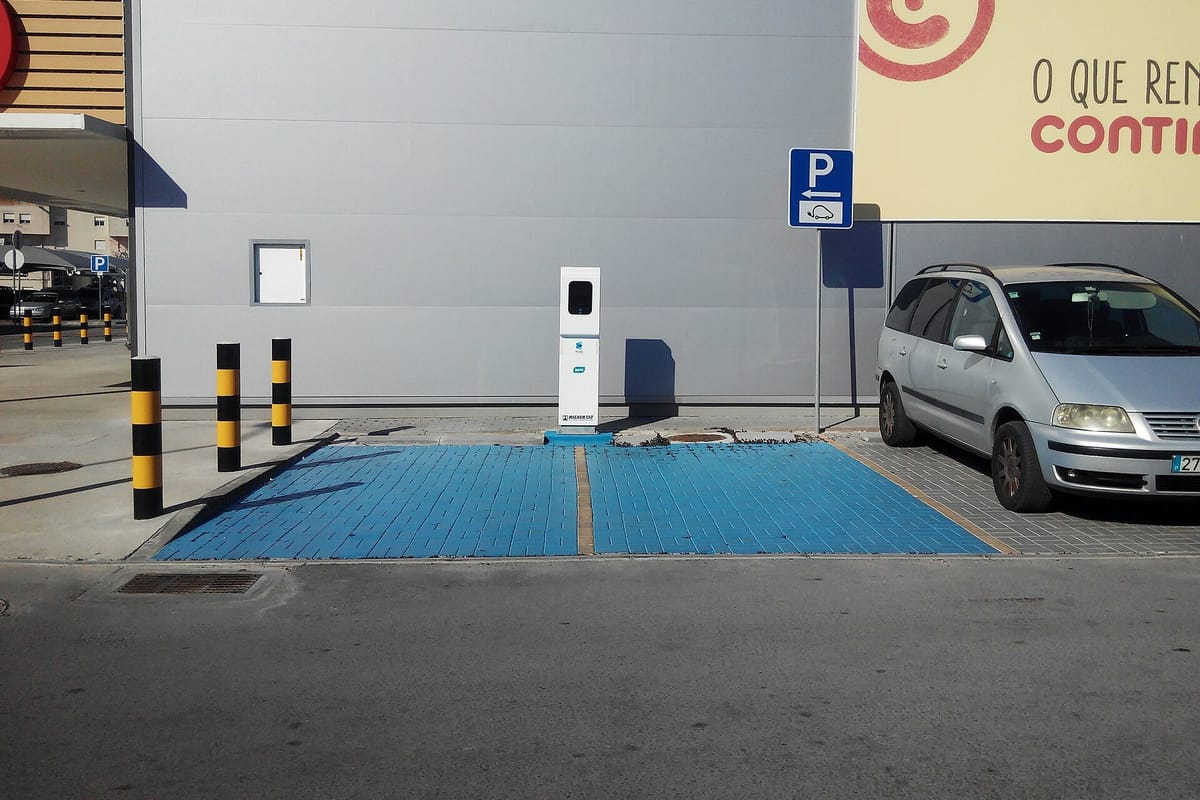
Charging an electric car on Portugal's public Mobi.E network should cost slightly less from 1 January 2027. The energy regulator ERSE has proposed cutting the fees that the network's managing entity (the EGME, a role held by MOBI.E) charges for every session by about half: 52.1 percent for the fees paid by charging-point operators and by electricity retailers for electric mobility, and 51.3 percent for the fee paid by the owners of charging points, according to ERSE's proposal of 15 October.
The saving for drivers is small. ERSE puts it at 15 cents for every 100 kilometres driven. Jornal de Negócios, which set the proposal against dearer fuel on Friday, led with that figure. Drivers of petrol and diesel cars, meanwhile, keep a fuel-tax discount that parliament has extended only until 31 December.
What makes up the price of a public charge
A session on the Mobi.E network is billed in separate parts, as MOBI.E explains. The retailer behind your card or app (the CEME) charges for the electricity, including grid access tariffs, and for its service. The charger's operator (the OPC) charges for using the post, and must display that price there. The EGME fees sit on top, and then come the electricity consumption tax of 0.001 euros per kWh on the mainland and VAT on the whole bill: 23 percent on the mainland, 22 percent in Madeira and 16 percent in the Azores.
ERSE's worked example assumes 11.5 kWh sessions and a car using 15 kWh per 100 km. On a normal charger (up to 22 kW) the total comes to 7.32 euros per 100 km with taxes; on a fast charger it comes to 10.53 euros. Energy is 1.74 euros and grid access 1.22 euros in both. The two EGME fees come to 7 cents each. The big difference is the operator's service charge: 2.68 euros on a normal post and 5.29 euros on a fast one. ERSE expects the EGME fees to be only 1 to 2 percent of what drivers pay in 2027, so the choice of operator matters far more. On that typical session, the saving works out at a little over 11 cents (our calculation from ERSE's figures).
Why the fees are falling, and what is still to be decided
Use of the network has run well ahead of ERSE's forecasts. It handled more than 8.89 million charging sessions in 2025 across 23,156 charging points, and ERSE now expects about 11.8 million in 2026, 79 percent more than it assumed when it set this year's tariffs. It had expected the transitional regime to end on 31 December 2026; instead, Decree-Law 155/2026 of 31 July extended it to 31 December 2027, and charging points stay on the central platform unless their operators opt out. The EGME is allowed 2.09 million euros in revenue for 2027, but 575,000 euros is being handed back as an adjustment, so the tariffs need to recover only 1.51 million.
The figures are a proposal. ERSE's tariff council gives its opinion first, and ERSE's board then approves the tariffs that apply from 1 January 2027 across the country. The 2026 tariffs were approved in late December 2025. Under the new electric mobility rules, operators may leave the MOBI.E platform before the end of 2027, which ERSE says makes 2027 session numbers highly uncertain.
These fees are separate from the household electricity tariffs ERSE proposed on the same day, covered in our report on the 2027 electricity proposal. Electric cars made up nearly half of new car sales in September.