Portugal Auctions 1,050 MVA of Grid Access for Batteries and Solar, Giving Host Councils Up to 70 Percent of the Proceeds
The first grid-connection auctions since 2021 offer 750 MVA for stand-alone batteries and 300 MVA for wind or solar with on-site storage. Host councils get 30 or 70 percent of what bidders pay, plus 2.5 percent a year for five or ten years.
Portugal has opened competitive auctions for grid connections, the first since 2021 according to the ministry as reported by Lusa and ECO, offering 1,050 megavolt-amperes (MVA) of capacity on the high-voltage transmission network, mostly for large battery parks. The Ministério do Ambiente e Energia (Ministry of Environment and Energy) announced them on Monday. Two orders by the Secretary of State for Energy, Despachos n.º 12924-B/2026 and 12924-C/2026 of 22 October, launched the procedures, and the Direção-Geral de Energia e Geologia (DGEG, the energy directorate) has published the full rules.
What is on offer, and where
The larger auction offers up to 750 MVA for stand-alone batteries at 400 kV substations run by the grid operator REN: Rio Maior, Abrantes, Falagueira, Estremoz, Alcochete, Palmela, Pegões, Divor, Alqueva, Ferreira do Alentejo, Panóias, Vale Pereiro and Tavira. Each battery must be able to deliver its full connection capacity for at least four hours.
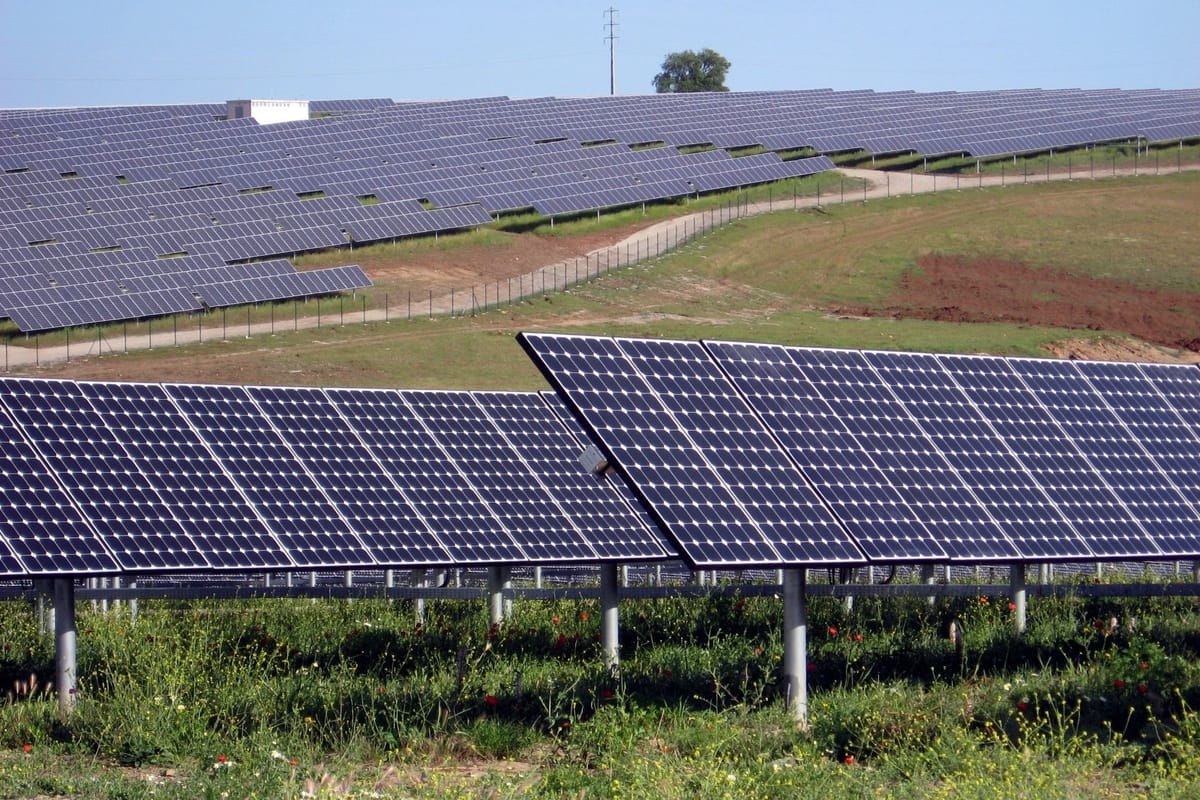
The second auction sells 300 MVA of what the rules call "capacidade sobrante" (spare capacity) for new wind or solar plants, or hybrids of the two, at Abrantes, Rio Maior, Sines and Santo André. Each plant must include a battery on site of at least 20 percent of its connection capacity, again with four hours of storage. Projects that keep farming under the solar panels (agrivoltaics) get a bonus in the bidding.
Both are electronic ascending-price auctions run by the market operator OMIP and open to any company or consortium that qualifies. Bidders must seek at least 50 MVA and lodge a 500,000 euro provisional guarantee. Winners get no guaranteed tariff or subsidy: they earn from the market and from grid services.
How councils get paid
Part of what bidders pay goes to the councils hosting the projects, in proportion to the capacity in each. In the spare-capacity auction, 70 percent of the proceeds go to the host councils and 30 percent to the national electricity system. In the battery auction the split is reversed: 30 percent to councils, 70 percent to the system.
Developers must also pay host councils 2.5 percent of their winning bid every year, for ten years for renewable plants and five years for batteries, counted from the start of operation. DGEG will publish the annual amounts by municipality. The tender rules do not tell councils how to spend the money.
What it means for bills
The share kept by the electricity system counts as revenue against the policy costs that sit in the tariff every consumer pays (the "uso global do sistema" charge), under rules the energy minister will set by order. How much that trims bills depends on the bids. As we reported this month, keeping the grid in balance has become far more expensive since 2023.
The ministry says batteries store cheap renewable power from sunny hours and release it at peak times, lowering peak prices and the need for gas plants. After the April 2025 Iberian blackout, grid stability became a priority: the batteries must meet the technical grid rules published last week, including frequency and voltage support. The ministry links the auctions to a draft storage strategy aiming for 3 gigawatts of batteries by 2030, Lusa reported.
What happens next
Interested firms have 10 working days from publication to send questions, the jury has 15 to answer, and applications then stay open for 15 more. DGEG has not yet published calendar dates for those steps. The jury will announce the bidding date at least five working days ahead. After bidding, winners have 36 to 48 months from receiving their capacity title to obtain an operating licence, and the rules allow 30 months to build most connections. Capacity won here can later be split or moved under the September rules.