easyJet Cabin Crew Begin Five Days of Strikes With 443 Portuguese Flights Already Cancelled, and Their Union Heads to Court Over Replacement Crews
The SNPVAC union says 80 percent of flights from Lisbon, Porto and Faro are off until Tuesday. easyJet expects to fly 55 percent of its schedule using crews from other bases. What passengers on cancelled flights are owed.
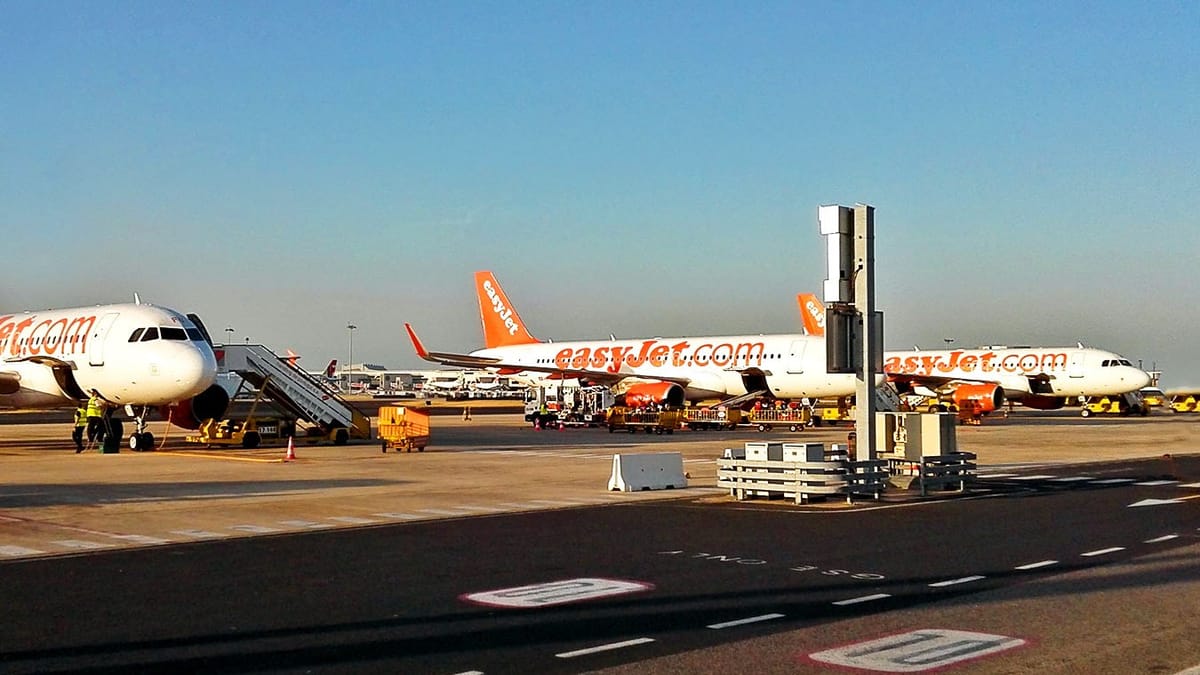
easyJet's Portugal-based cabin crew began a five-day strike on Friday morning, and their union says 443 flights from the airline's bases in Lisbon, Porto and Faro have already been cancelled between Friday, 2 October, and Tuesday, 6 October. That is about 80 percent of the flights the crew at those three bases were due to operate.
The strike was called by the Sindicato Nacional do Pessoal de Voo da Aviação Civil (National Civil Aviation Flight Crew Union, SNPVAC). Its leader, Ricardo Penarroias, told the Lusa news agency at about 7:15 on Friday that only the flights covered by minimum services were leaving.
A dispute over replacement crews
easyJet expects to operate about 55 percent of its Portuguese schedule during the strike. An official source told Lusa that the minimum services set by the authorities cover about 22 percent of the airline's Portugal-based activity, and that it is also flying to and from Portugal with aircraft and crews from other European bases that are not on strike. The airline says this is done "in full compliance with the applicable legislation and regulations".
The union calls it illegal. Union official Ana Dias said crews from France arrived in Porto on Thursday and would probably fly in place of strikers, and Penarroias said a flight from Porto on Friday would be crewed by local managers. The union will file a complaint with the Autoridade para as Condições de Trabalho (Working Conditions Authority, ACT) and go to court. "It is a recurring practice by the company, which prefers to pay fines than to cancel the flight," Penarroias said.
What the crew want
The crew's demands centre on stable rosters, pay that rises with seniority, and the terms of a new company agreement. The union says easyJet's August proposal was rejected by an overwhelming majority, and that a later offer added only 0.7 percent. "We have roster changes constantly," Dias said, and crew often do not know what they will be doing the next day. Under the current terms, the union says, a crew member with one year of service can earn the same as one with more than twenty. easyJet said it was "extremely disappointed" that the strike was going ahead despite its efforts to reach an agreement.
A second strike is already set for 19 to 23 December, in the busy run-up to Christmas. The crew voted for both stoppages on 17 September, as we reported at the time.
What passengers are owed
Passengers on a cancelled flight are protected by the EU's air passenger rights regulation (Regulation (EC) No 261/2004). They can choose a full refund or another flight to their destination, and while they wait the airline must provide meals and, where needed, a hotel.
Cash compensation of 250, 400 or 600 euros, depending on the distance of the flight, is also due unless the passenger was told of the cancellation at least 14 days before departure, or was offered an alternative close to the original times. The Court of Justice of the EU ruled in 2021 (Case C-28/20) that a strike called by a union of the airline's own staff is not an "extraordinary circumstance" that lets the carrier escape compensation. Because the strike was announced only on 17 September, many passengers on this week's flights are likely to have had less than 14 days' notice.
Claims go first to easyJet. In Portugal, the body that enforces the regulation is the Autoridade Nacional da Aviação Civil (National Civil Aviation Authority, ANAC), which takes complaints when an airline does not respond or refuses a valid claim.