Dried and Salted Fish Prices Leap 27 Percent in a Year, Seven Times Inflation, While Citrus, Rice and Sugar Turn Cheaper
INE's October price tables show dried and salted fish up 27.2 percent and fish overall up 10.6 percent, against 2.5 percent for food and 3.8 percent headline inflation. Citrus, chocolate, sugar, rice and pasta now cost less than a year ago.
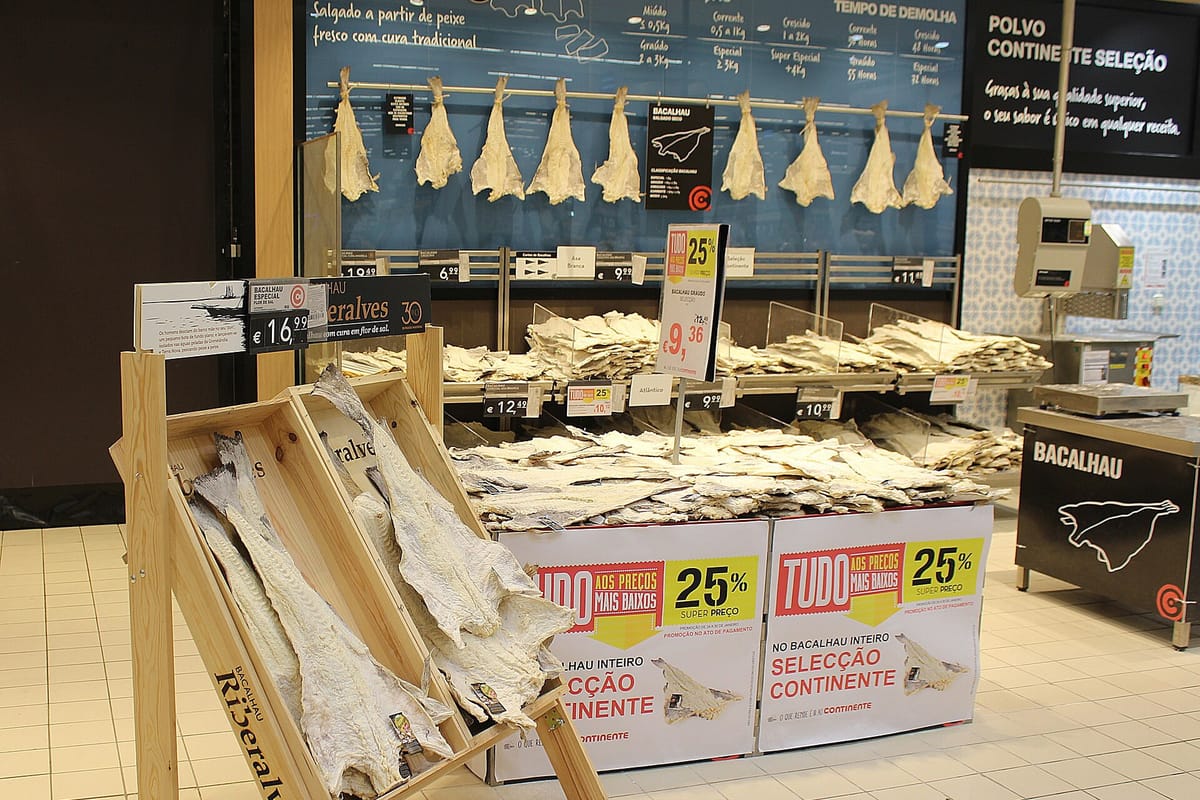
Dried, salted and smoked fish, the price category that includes salt cod, cost 27.2 percent more in October than a year earlier, according to the detailed consumer price index tables published by Statistics Portugal (INE). That is about seven times the headline inflation rate of 3.8 percent. Fish and seafood as a whole rose 10.6 percent, while the food index overall went up only 2.5 percent. Some everyday staples, including oranges and other citrus fruit, rice and other grains, sugar and pasta, cost less than they did a year ago.
RTP put fish back in the news on Monday evening with a report that food in Portugal costs about 40 percent more than in 2019. RTP said this was the largest rise in the euro zone, though still below the OECD average. It singled out fish, eggs and pulses, and said dried, salted and smoked fish, the category that includes bacalhau (salt cod), had risen by more than 110 percent in seven years. We could not check the seven-year figures against an official series this morning. The figures below come from INE's October release.
What rose most in the year to October
INE's October consumer price index, published on 11 November, includes a workbook of price indices for about 300 product groups. Comparing October 2026 with October 2025 gives these changes:
- Dried, salted or smoked fish (the category that includes bacalhau): up 27.2 percent. The index has risen every month this year.
- Fresh, chilled or frozen fish: up 9.2 percent.
- Berries: up 15.2 percent.
- Fruit vegetables such as tomatoes, peppers and courgettes: up 13.0 percent.
- Fresh pulses such as green beans and peas: up 9.5 percent.
- Leafy vegetables: up 7.9 percent.
- Margarine: up 7.4 percent.
Eggs, which shot up in earlier years, have now levelled off: their index was only 0.6 percent higher than a year earlier. Meat rose 1.1 percent and bread 2.4 percent.
What is cheaper than a year ago
- Citrus fruit: down 10.4 percent.
- Chocolate and cocoa products: down 4.5 percent.
- Sugar: down 3.7 percent.
- Rice and other grains: down 3.6 percent.
- Apples, pears and stone fruit: down 3.9 percent.
- Pasta and couscous: down 1.6 percent.
- Coffee: down 0.4 percent. Cheese and milk are also slightly down.
Why the headline rate is higher than food
Energy is the main reason inflation is at 3.8 percent. INE says the energy index rose 17.4 percent year on year in October. Unprocessed food (fresh products such as fish, fruit and vegetables) rose 3.7 percent. Core inflation, which leaves out both energy and unprocessed food, was 2.8 percent. We covered the headline figure when the flash estimate came out at the end of October.
What it means for you
Overall, the weekly shop is rising more slowly than other household bills. The exception is fish. Christmas Eve bacalhau may well cost more than last year, so it may pay to compare prices per kilo by grade and to watch for promotions over the next few weeks. Fresh fish and salad vegetables are also up sharply, while fruit, grains, pasta and sugar have become cheaper. Consumer group DECO PROteste's own monitoring found its basket of 63 essential foods up 6.2 percent since January.