
December's One-Off Pension Supplement Is Now Law, and the Decree Shields It From IRS Withholding and From Creditors
Decree-Law 201/2026 confirms 200, 150 or 100 euros with the December pension for anyone on up to 1,611.39 euros a month. Nothing to apply for, no tax taken at source, and the CSI top-up is left untouched.
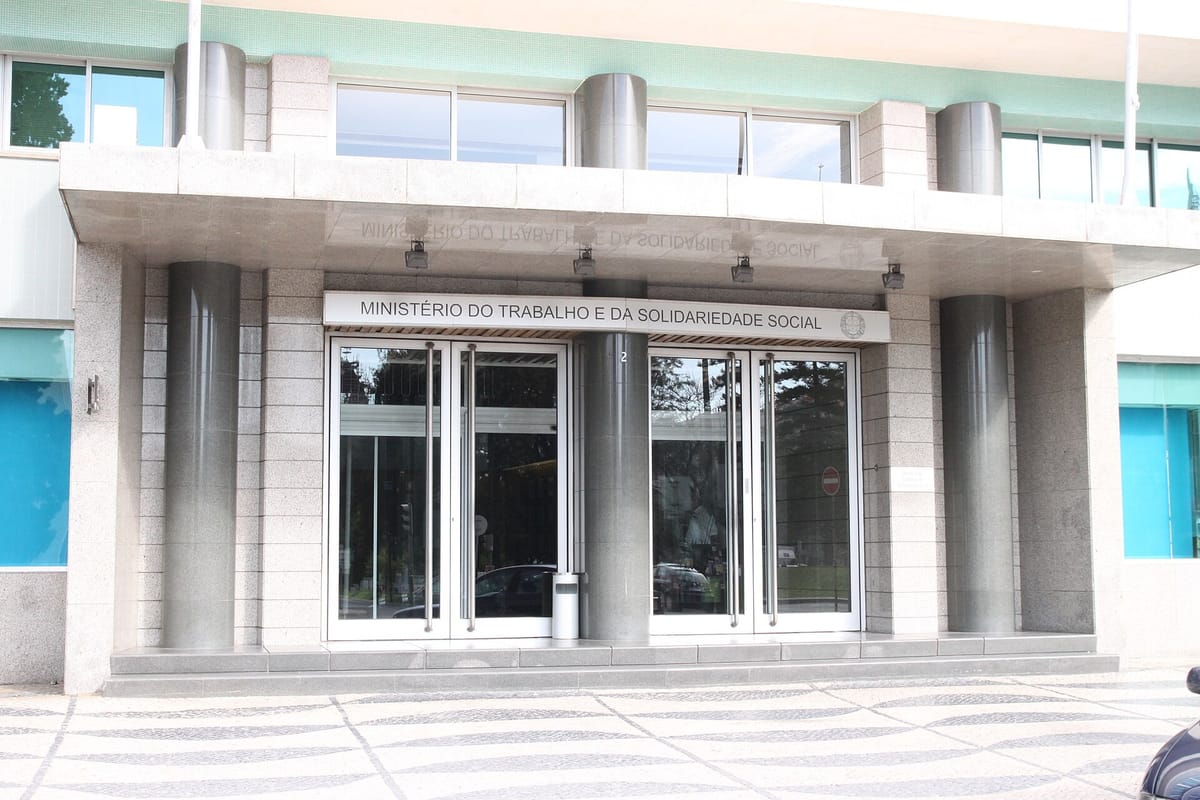
The one-off pension supplement that the Council of Ministers approved on 17 September is now law. Decreto-Lei n.º 201/2026 (Decree-Law 201/2026) was published in the Diário da República (the official gazette) on Thursday 8 October and took effect the next day. It confirms the three payment bands, and it settles several questions the September announcement left open: whether the money is taxed at source, whether creditors can touch it, and who is left out.
How much, and for whom
The supplement depends on the total of all the pensions a person receives each month:
- 200 euros for pensions of 537.13 euros or less;
- 150 euros for pensions above 537.13 euros and up to 1,074.26 euros;
- 100 euros for pensions above 1,074.26 euros and up to 1,611.39 euros.
Above 1,611.39 euros a month, which is three times the Indexante dos Apoios Sociais (IAS, the social support index), nothing is paid. When we reported the Council of Ministers' decision on 18 September, we gave the ceiling as 1,611.13 euros. The figure in the published law is 1,611.39 euros.
The supplement covers old-age, invalidity and survivors' pensioners in the general Segurança Social (Social Security) system, retired civil servants and survivors under the Caixa Geral de Aposentações (CGA, the civil service pension fund), and banking-sector pensioners. To qualify, the pension has to be due by 30 November 2026.
Paid in December, with no application
The money arrives with the December pension, and nobody has to apply for it. The Instituto da Segurança Social (ISS, the Social Security Institute) pays it on Social Security pensions and the CGA pays it on civil service pensions. For people who draw a pension from both, each body pays a share in proportion to the pension it pays. On bank pensions, the CGA or the pension fund that pays the pension also pays the supplement, working from the information it already holds. The State Budget covers the cost.
What the September announcement did not say
Three rules in the decree make the payment worth more to the people with the least:
- No IRS withheld. Nothing is deducted at source for income tax.
- It cannot be seized. The law makes the supplement impenhorável, so it is protected from garnishment by creditors.
- It does not cut the CSI. The payment is ignored when the Complemento Solidário para Idosos (CSI, the means-tested top-up for older people on low incomes) is calculated. A pensioner on the CSI keeps the full 200 euros and loses nothing from the top-up. The CSI reference value is due to rise to 720 euros a month in 2027.
Who does not get it
The decree excludes some pensions and benefits outright:
- pensions for permanent incapacity or death caused by an occupational disease;
- other pensions that are compensation in nature;
- non-contributory pensions paid by the CGA;
- the dependency supplement, the dependent-spouse supplement and the CSI itself, which do not count as pensions for this purpose.
For CGA pensioners, the payment comes in a difficult month. The fund is cutting 2,937 recently awarded pensions after a calculation error, and that correction is separate from this supplement.
A third year of one-off payments
The preamble says the payment follows the same pattern as in 2024 and 2025, and that it depends each year on the state of the public accounts. This is the third year the government has used a one-off payment rather than a permanent increase. Because the supplement is not added to the pension itself, it does not count when pensions are updated in January, and nothing in the law promises a repeat in 2027.
Ministers approved the decree on 17 September. President António José Seguro promulgated it on 29 September.


