Creatine and Whey Protein Are Now Banned From Portugal's Prisons, Because the Search Kit at the Gate Cannot Tell Them From Drugs
A despacho signed by the DGRSP's director-general bars food supplements in powder, granulate or tablet form from every Portuguese jail, arriving by visit, parcel or any other route. The stated reason is that gatehouse equipment cannot distinguish them from narcotics.
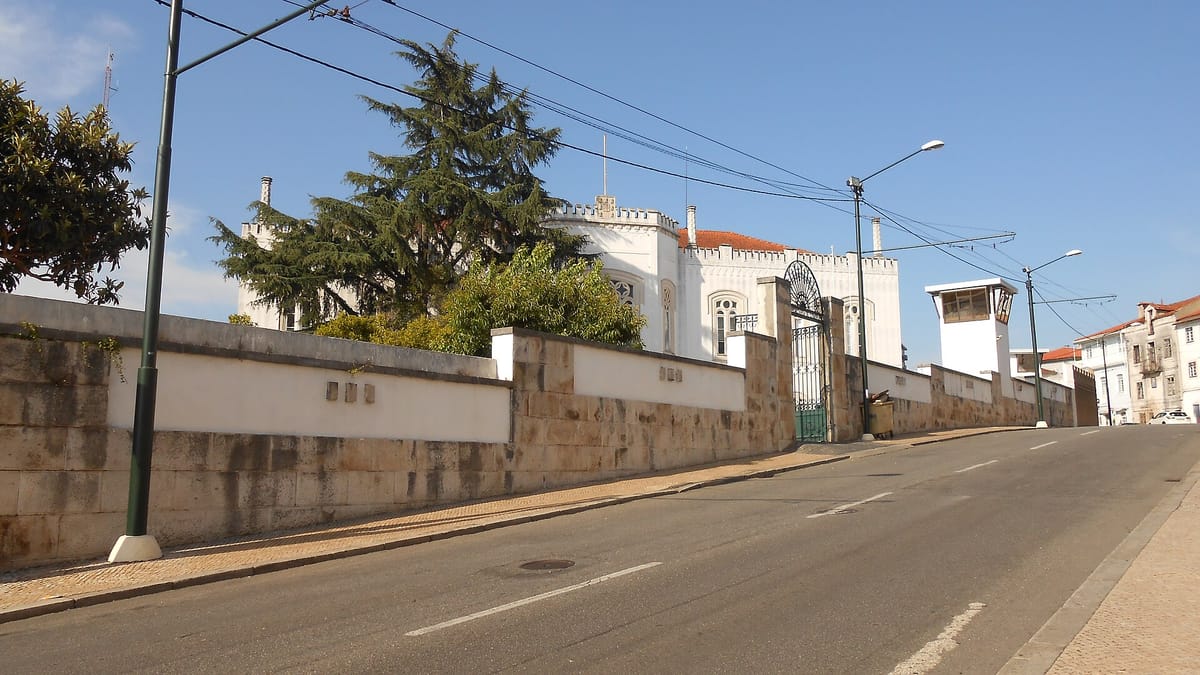
Portugal's prison service has banned creatine and whey protein from its jails, and the reason given in the order is not about health or about doping. It is that the officers on the gate cannot tell one white powder from another.
The despacho, signed by Orlando Carvalho, director-general of the Direção-Geral de Reinserção e Serviços Prisionais (Directorate-General for Reintegration and Prison Services), and seen by the Lusa news agency, prohibits the "entrada, posse e circulação nos estabelecimentos prisionais de suplementos alimentares sob a forma de pó, granulado, ou comprimido", the entry, possession and circulation inside prisons of food supplements in powder, granulate or tablet form. It names creatine, branched-chain amino acids and dairy proteins specifically, and it closes every route in: visits, parcels, or any other channel arriving from outside.
The reasoning in the order
The central justification is a search problem. The banned products, the DGRSP writes, have a "morfologia, coloração e densidade" that the inspection equipment available at prison gatehouses cannot distinguish from the main narcotic substances. Worse, the physical similarity works in both directions: a fine, pale powder in a sealed tub allows what the order calls "adulteração por mistura homogénea", adulteration by even mixing, so a genuine tub of protein can be cut with something else and still pass a visual check.
From there the order builds a second argument. Supplements, it says, are neither "bens de primeira necessidade" nor "substâncias terapêuticas", neither essential goods nor therapeutic substances, so no inmate is deprived of anything he needs by their absence. Against that low cost the service sets its duty to guarantee the physical integrity and health of the people in its custody, and a risk it describes plainly: letting these products in is liable to feed informal trading circuits inside the wings, with the extortion, coercion and conflict between prisoners that follow anything valuable and scarce.
Two internal consultations preceded the decision. The DGRSP's own Centro de Competências para a Gestão de Cuidados de Saúde (Competence Centre for Health Care Management) was heard, and an opinion was requested from a criminal police body. According to the order, both came back against allowing the products in.
The guards wanted it
Frederico Morais, president of the Sindicato Nacional do Corpo da Guarda Prisional (National Union of the Prison Guard Corps), told Lusa the decision was a win, and his stated reason has nothing to do with contraband. Allowing prisoners to build muscle mass, he argued, creates a safety problem for officers in situations of conflict and physical confrontation.
That is a candid framing of a debate most prison systems conduct in euphemism, and it sits oddly beside the order itself, which rests its case on drug detection rather than on the physique of the prison population. The two arguments point the same way but are not the same argument, and only one of them is written into the despacho.
Why the gate is the weak point
The anxiety about substances entering Portuguese prisons is not theoretical, and 2026 has supplied the evidence twice. In March, the Polícia Judiciária ran Operação Gambito and dismantled a network moving anabolic steroids into jails. Three people were arrested and ten were formally named as suspects, and two of the ten were serving prison officers, suspected of being paid to act as the entry point for exactly the kind of goods the new order is aimed at.
A month later a second operation produced searches at the Hospital das Forças Armadas (Armed Forces Hospital) and at the Carregueira prison in Sintra, again over suspected trafficking in anabolic steroids. Five people were detained, one of them an employee of the hospital pharmacy.
Read against that record, the ban is less a nutrition policy than an admission about screening capacity. If the gatehouse could reliably identify what is in a tub, the tub would not need to be banned. The order says as much: the problem is the "meios de vistoria disponíveis nas portarias", the inspection means available at the gates.
A service under external scrutiny
The DGRSP is making this call while under sustained international pressure over conditions in its estate. In June, the Council of Europe's Committee of Ministers set September 2027 as its deadline for tangible progress on prison overcrowding running at 103.4 percent, reading conditions as deteriorating. Also in June, the service's own tape showed twenty-eight deaths in Portuguese prisons by early June, including seven suicides, as families pressed for inquiries.
The same period has produced movement in the other direction. Portugal created two new prison-reintegration careers in July, and the new criminal-policy law takes effect on 1 September, sending prisoners out to clear forest undergrowth. In August we reported on the far end of that idea working: Parques de Sintra now employs five men who first cleared its hillsides as prisoners, three of whom run teams.
What is left unanswered
- The order names products, not thresholds. Powder, granulate and tablet forms are out. It does not address supplements in liquid or capsule form, nor items sold through the prison canteen, and the published text gives no transition period for tubs already inside.
- Medical exceptions are implied rather than stated. The despacho excludes the banned items from the category of therapeutic substances, which suggests anything genuinely prescribed travels a different route through the prison health service. The order does not spell that route out.
- Nothing in it improves detection. The stated problem is that gatehouse equipment cannot distinguish creatine from narcotics. Banning creatine removes one class of lookalike; it does not give officers a better test.
- Families bear the change immediately. Supplements arriving by visit or parcel are a routine part of what relatives send. The prohibition covers both channels from the moment it takes effect, with no announced grace period.
Portugal now joins a small group of European prison systems that treat sports supplements as contraband rather than as a canteen item. The order is defensible on its own terms, and its own terms are the point: a service that cannot screen a tub of powder has decided the cheapest fix is to stop the tub at the door.