Construction Output Slows to 1.8 Percent Growth as the Pay Bill on Portugal's Building Sites Swells 8.5 Percent
Building activity grew 1.8 percent in September, slowing for a fourth month in a row, while construction firms paid out 8.5 percent more in wages. Hourly labour costs are rising faster in construction than in any other sector, INE data show.
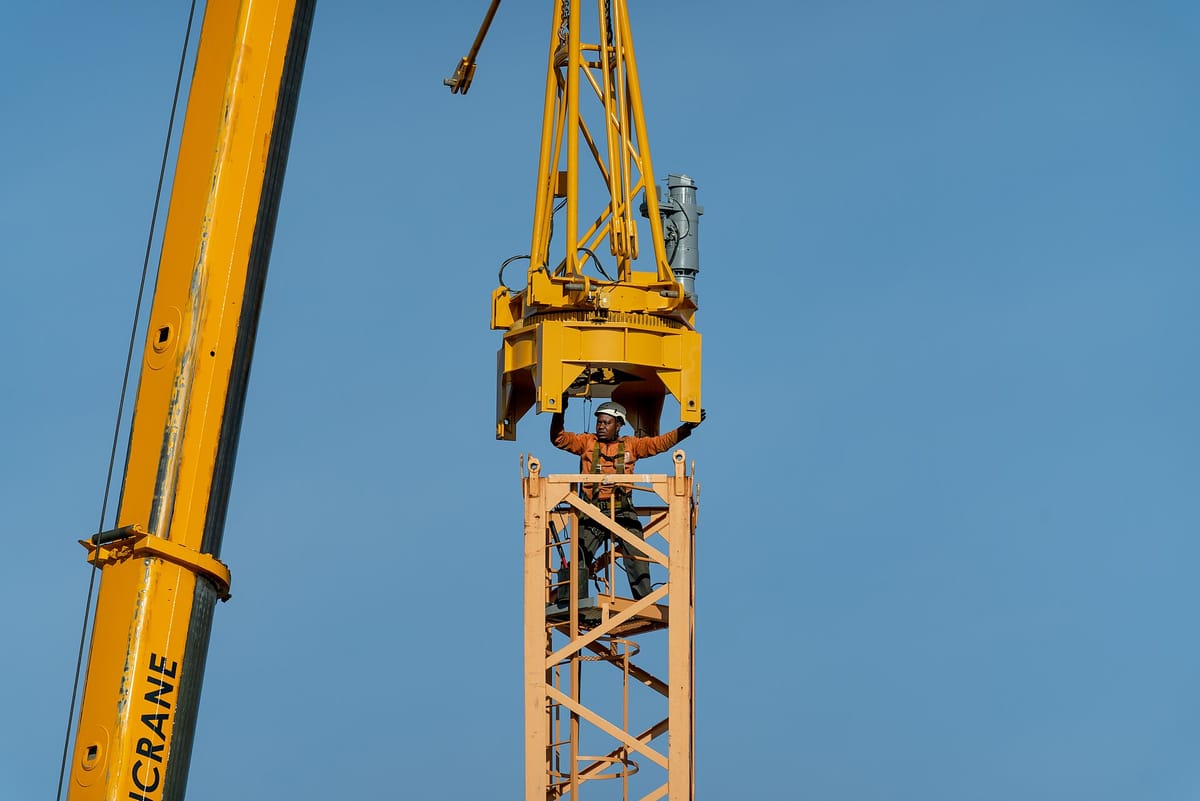
Activity on Portugal's building sites grew 1.8 percent in September from a year earlier, slowing for a fourth month in a row, while the wages construction firms paid out rose 8.5 percent. The figures come from the monthly construction indices published on 11 November by the Instituto Nacional de Estatística (INE, Statistics Portugal), and a separate INE release on Friday shows construction now has the fastest-rising labour costs of any sector.
Output: homes steady, public works cooling
INE's Índice de Produção na Construção (construction production index, in Portuguese) grew 1.8 percent year on year in September, down from 1.9 percent in August. The rate has eased every month since May, when it stood at 3.7 percent; it was 2.1 percent in June and 2.0 percent in July. On the month, output rose 0.2 percent.
- Buildings, which include homes, grew 1.7 percent, the same rate as in August, and contributed 1.1 percentage points of the total.
- Civil engineering (roads, rail, networks and other public works) slowed from 2.3 percent in August to 1.9 percent, contributing 0.7 points.
The index is a three-month moving average adjusted for calendar and seasonal effects, and INE builds it from the hours worked in each segment, which it uses as a proxy for output. The figures are provisional: they rest on replies covering 83.3 percent of the sample's workforce, against 87.0 percent a year earlier, and the two previous months are revised each time.
Pay: a bigger bill for the same crews
The same release shows employment in construction up 2.1 percent on a year earlier, unchanged from August, while the index of wages actually paid rose 8.5 percent, 1.2 points faster than the month before. The pay bill is growing about four times as fast as the number of people on it. On the month, employment rose 0.7 percent and pay fell 1.1 percent.
INE's quarterly Índice de Custo do Trabalho (labour cost index, in Portuguese), published on Friday, points the same way. It measures what employers spend per hour actually worked, and in the third quarter it rose 6.9 percent in construction, the steepest of any sector, against 6.2 percent in services, 4.8 percent in industry and 4.3 percent in activities largely in the public sector. Across the whole economy, hourly labour costs rose 5.3 percent, after 5.6 percent in the second quarter (revised up from the 5.4 percent we reported in August).
In construction, the average cost per worker rose 6.6 percent and hours worked per worker fell 0.3 percent. Wage costs in the sector have cooled slightly, from 7.1 percent in the second quarter to 6.9 percent in the third.
Portugal is well above the European norm. In the second quarter, the latest period with EU-wide figures from Eurostat (Belgium's are missing), hourly labour costs rose 3.2 percent across the EU, and Portugal was among the 17 countries above that average. Bulgaria led with 9.9 percent.
Why it matters for housing
INE does not explain the gap between output and pay, and neither release links it to house prices. But labour is a large part of what a new home costs to build. INE's separate index of new-home construction costs, published a week ago, showed labour up 7.7 percent and materials up 7.2 percent in September, and labour accounts for 44 percent of that index.
The sector has struggled to find workers. The Banco de Portugal (Bank of Portugal) found that 38 percent of construction workers were born abroad, and an OECD skills map published last week listed builders among the occupations in shortest supply. Slower activity on sites also matters because many homes already licensed have not been finished: about 88,000 of those licensed in the past seven years had not yet been completed, many of them still under construction.
INE publishes the October construction indices on 14 December.