"Affordable" Rent Ceilings Absorb More Than 35 Percent of a Typical Local Income in 197 Municipalities, and Nearly 80 Percent in Lisbon, Porto and Cascais
Set the government's affordable-rent ceiling for a one-bedroom flat against INE's median local income and the rent takes over 35 percent of earnings in 197 municipalities, from Braga and Faro to Coimbra, and close to 80 percent in Cascais, Lisbon and Porto.
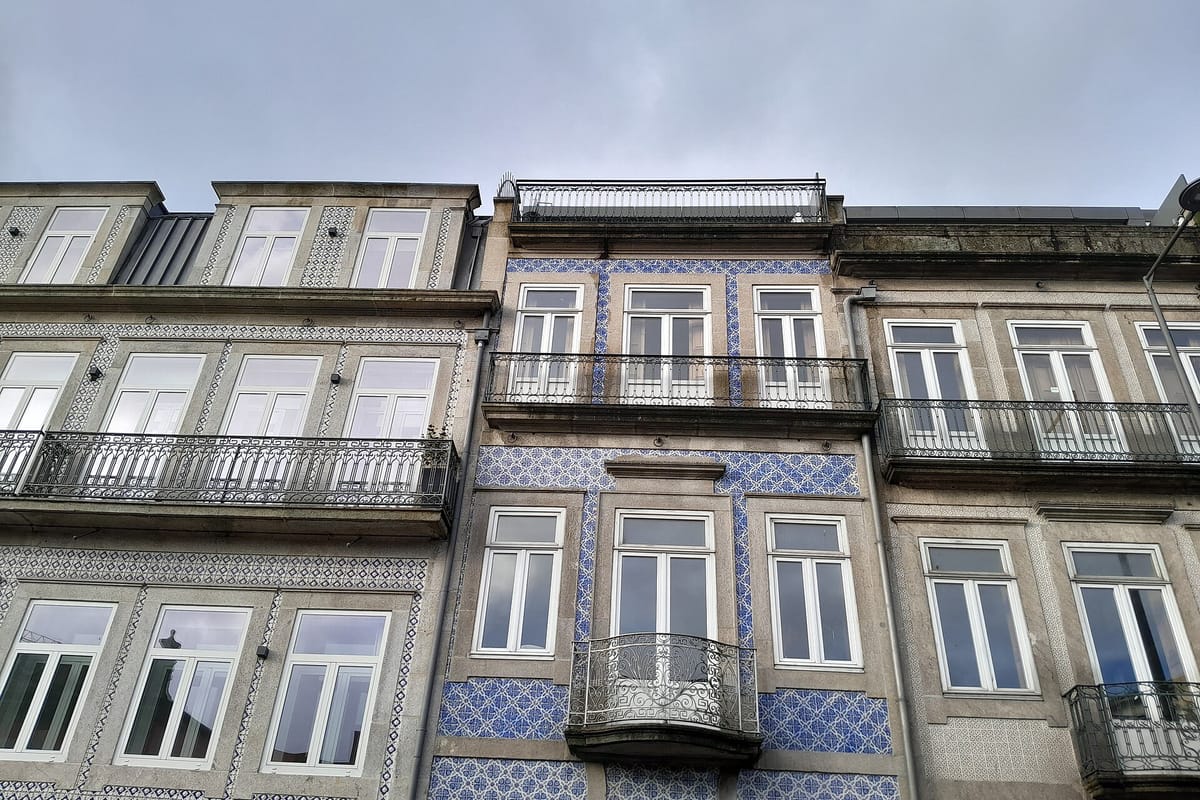
A single person on a typical local income cannot rent a one-bedroom flat at the government's own "affordable rent" ceiling without spending more than 35 percent of their earnings in 197 of Portugal's municipalities, about two in three of those with data. The calculation, first published by the newspaper Jornal de Notícias and reported on Friday in Observador's morning press review, uses two official sources. The Portugal Brief repeated it from those sources and reached the same result.
The 35 percent mark is the effort rate (taxa de esforço, the share of income that goes on rent) that is widely used as the limit of what a household can bear and as a reference for rent support.
How the numbers work
The rent side is Portaria n.º 454/2026/1, published in the Diário da República on 13 October. It sets the maximum rent, by municipality and flat size, that a landlord may charge under the new simplified affordable-rent scheme (Regime Simplificado de Arrendamento Acessível, RSAA) and still have the rent exempt from income tax. The income side is INE's latest local income statistics: the median declared gross income minus IRS paid, per taxpayer, for 2024 (INE indicator 0012757, updated on 24 July 2026). The national median is 12,316 euros a year.
Twelve months of the ceiling for a one-bedroom flat (a T1), set against that median, gives the effort rate. In the three worst places it is close to 80 percent:
- Cascais: a T1 ceiling of 964 euros a month against a median of 14,524 euros a year, or 79.6 percent.
- Lisbon: 1,006 euros against 15,188 euros, or 79.5 percent.
- Porto: 866 euros against 13,210 euros, or 78.7 percent.
Not only Lisbon and the Algarve
All nine municipalities in Greater Lisbon, all nine on the Setúbal peninsula and all 15 Algarve municipalities with data are above 35 percent (INE publishes no figure for Alcoutim, the region's 16th). So are 64 of the 85 municipalities in the North with data, 31 of 76 in the Centre region, 26 of 34 in Oeste and Vale do Tejo and 20 of 44 in the Alentejo. On the mainland, 174 of 272 municipalities are over the line. Some examples:
- Faro: 53.1 percent (572 euros against 12,918 euros).
- Braga: 50.0 percent (531 euros against 12,750 euros).
- Aveiro: 47.6 percent; Évora: 45.8 percent; Coimbra: 45.5 percent; Leiria: 42.2 percent.
- Viseu and Beja: about 37 percent each.
The rate falls below 35 percent mainly in inland municipalities on the scheme's lowest T1 ceiling of 308 euros, such as Guarda (28.4 percent), Portalegre (28.5 percent) and Bragança (29.3 percent).
Couples do better. Comparing the two-bedroom (T2) ceiling with two median incomes, the effort rate passes 35 percent in 39 municipalities.
What it means for you
- The ceilings are maximums, not market rents. They mark the most a landlord can charge and still keep the tax exemption, so a cheaper flat can still qualify for the scheme.
- INE's figure is a median per taxpayer, after IRS. Half of taxpayers earn less, so the burden is heavier for many tenants than these rates show.
- If you rent under the scheme or are looking for a flat, check the ceiling for your municipality and flat size in the annex to the Portaria before you agree a rent.
The scheme has had a slow start: of about 1,000 applications in the first take-up figures, only about 200 were for new leases. The figures also fit a wider pattern: house prices in Portugal have outpaced incomes by 60.8 percent since 2015.