Chega Files the 37th Censure Motion of Portuguese Democracy, and Only One Has Ever Passed
André Ventura entered the motion on Wednesday afternoon over Luís Montenegro's refusal to dismiss Interior Minister Luís Neves. The PS will not supply the 116 votes, and Chega says a parliamentary inquiry follows the defeat.

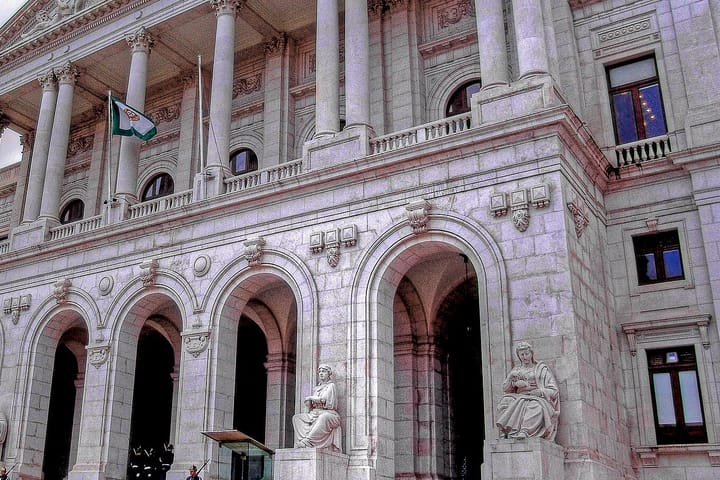
Chega entered a moção de censura (motion of censure) against the government at the Assembleia da República (Assembly of the Republic) on Wednesday afternoon, four days after André Ventura first set a deadline for it. The stated ground is unchanged: Luís Montenegro has not dismissed Luís Neves as Minister of Internal Administration. What has changed is that the motion now exists on the parliamentary record, and that Chega has attached a consequence to losing it.
We set out the arithmetic when the threat was made: a censure motion needs 116 votes and the PS is not offering them. Nothing about that has moved. José Luís Carneiro has repeated that it will not be his party that creates a political crisis.
The thirty-seventh, and the only one that worked
Lusa's count puts this at the 37th motion of censure in Portuguese democracy. Thirty-five have been rejected. Exactly one has passed: the motion the PRD brought against Cavaco Silva's X Constitutional Government on 4 April 1987. Cavaco Silva went on to win an absolute majority in the election that followed later the same year, which is roughly the opposite of what the instrument is designed to achieve.
The party ledger since 1976 reads: PCP eleven, CDS-PP seven, PS and the Left Bloc five each, Chega four with today's filing, Os Verdes two, and the PSD, the Liberal Initiative and the now-extinct PRD one apiece.
For Montenegro personally this is the third. His previous government took two inside twelve days in early 2025, from Chega on 18 February and from the PCP on 2 March. Both failed. The government fell anyway on 11 March, on a confidence motion of its own making. That sequence is the reason nobody in São Bento treats a lost censure vote as the end of the story.
The calendar and the fallback
Ventura told reporters at Chega's national headquarters that under the Assembly's regimento (standing orders) the motion "should be debated three days after it is tabled", but that he will wait for the Speaker and for the Conferência de Líderes (Conference of Leaders) to fix the date. Parliament's ordinary sitting period does not resume until 15 September, which is also the day a new legislative session begins and the one-motion-per-session bar lifts.
The new element is what happens after the vote. If the motion is defeated, Ventura says the comissão parlamentar de inquérito (parliamentary committee of inquiry) into Neves's years running the Polícia Judiciária (Judicial Police) goes ahead. Chega has used that instrument before, most recently when it filed for an inquiry into Operação Influencer. An inquiry needs far fewer signatures than a censure motion needs votes.
Ventura also said he spoke twice to President António José Seguro before deciding, the second time by telephone on Tuesday, and characterised Belém as watchful and concerned but of the view that the matter belongs to the government and parliament. That is a description by one party leader of a private call, not a statement from the presidency.
What Ventura is alleging
The allegations he listed are the ones that have accumulated since July: personal use of a Judicial Police vehicle no longer in operational service, chemical materials from a drug case reaching a friend of the minister, weapons missing from the force, questions over undelivered income declarations, and a builder who had worked for the police being called to do work on a property of the minister's. These are Ventura's characterisations. The formal proceedings behind them are narrower: a criminal inquiry over a missing drug-case trailer, a European Public Prosecutor's verification process into 17 police contracts, a Court of Auditors trial, and the seized car he kept on becoming minister. Neves has refused to resign and says he will carry on governing.
What This Means for Expats
- This is not a route to an early election. A motion passes only with 116 votes, an absolute majority of the 230 deputies in effectivity of functions, and the only bench large enough to supply them has said no.
- The date to diary is 15 September. Parliament's ordinary work resumes then, and the 2027 State Budget, not this motion, is the negotiation that decides tax and spending for the year ahead.
- The Interior Ministry is the one you deal with. It runs the PSP and GNR and, since SEF was wound up, the border and residence-check functions foreign residents meet at airports. A minister under this much pressure is unlikely to be launching new administrative reforms.
- Precedent argues for calm. Thirty-six motions, one success, and that one preceded a landslide for the government it censured.
The vote itself will tell you little that is not already known. The number worth watching is how the PS votes and what it says while voting, because the same two benches have a budget to agree in October, and Chega's purpose in filing is to photograph them standing together.