Prosecutors Open a Criminal Inquiry Into Interior Minister Luis Neves Over a Missing Drug-Case Trailer
Prosecutors and the Judicial Police have opened an inquiry touching Interior Minister Luis Neves over a trailer seized in a record cocaine case that vanished from an impound and resurfaced at a contractor's yard. Neves says he welcomes the probe and denies wrongdoing.
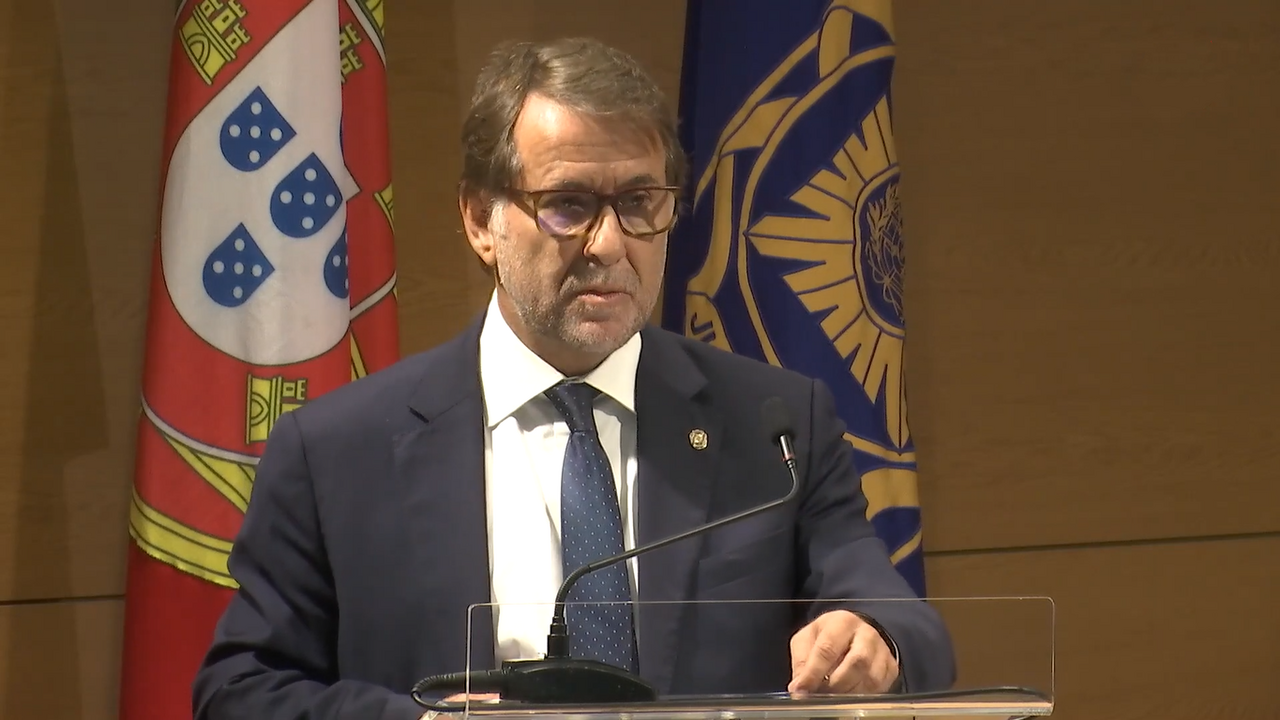
Portugal’s Interior Minister has become the subject of a criminal inquiry, in one of the more awkward episodes to hit Luís Montenegro’s government this summer. The Prosecutor General’s Office (Procuradoria-Geral da República, PGR) and the Judicial Police (Polícia Judiciária, PJ) have opened an investigation touching Luís Neves, the Minister of Internal Administration (Ministro da Administração Interna) and, until 2025, the PJ’s own national director.
At the centre of the case is a trailer. It had been seized during Operação Pacoba, a December 2024 raid in which the Judicial Police dismantled one of Europe’s largest cocaine-processing labs and confiscated roughly 1,478 kilograms of the drug. The trailer, an asset held in a Public Ministry (Ministério Público) case, later vanished from an impound run by the Maritime Authority and turned up at the yard of Construbarcelos, a construction firm owned by João dos Santos Carvalho, described in Portuguese reporting as a friend and contractor of the minister.
Investigators say the movement of the trailer carries “indications of abuse of power and misappropriation” (indícios de abuso de poder e descaminho), because only the PJ’s national director could have authorised shifting an asset tied to a prosecutor-led case. The link is uncomfortable for Neves on more than one front: Construbarcelos is reported to have carried out renovation work on a property he owns in Odemira, in the Alentejo, and to have won around €1.9 million in public contracts between 2020 and 2025, the years in which Neves led the Judicial Police.
The minister has pushed back firmly. In a statement on 21 July he said that “in recent days I have been the target of attacks that call my honour into question,” insisted he was “gathering all the documents” to explain the matter point by point, and said he actually welcomed the inquiry: “I am very pleased with that.” He has not resigned and retains the confidence, at least publicly, of the prime minister.
The opposition has seized on the affair. The leader of the Socialist Party (Partido Socialista, PS), José Luís Carneiro, demanded that Neves explain himself “clearly and unequivocally,” while the Communist Party (Partido Comunista Português, PCP) accused the government of being “in a state of degradation” and did not rule out tabling a censure motion when parliament returns from its summer recess. For a minister whose entire remit is policing, borders and internal security, an inquiry alleging the mishandling of evidence from a landmark drug case is politically corrosive whatever its eventual outcome.
It is worth stressing what the inquiry is and is not. An investigation of this kind (in Portuguese, an inquérito) is the standard first phase of a criminal case; it establishes whether there is enough evidence to charge anyone and carries no presumption of guilt. Many such inquiries close without charges. But the combination of a high-profile minister, a former top policeman, a missing piece of evidence from a record cocaine seizure and a contractor with both private work and public contracts in the frame guarantees the story will run.
For residents watching Portuguese politics from the outside, the episode is a reminder of how independently the country’s prosecutors can act — a serving minister can be placed under investigation by the very force he once commanded. It also lands at a delicate moment for a minority government already under pressure over immigration and staffing in its own agencies, and now facing an autumn in which the opposition smells an opening.