Bondalti Completes a €76 Million Clean-Energy Overhaul of Its Estarreja Chemical Plant
Bondalti, Portugal's largest chemicals group, has finished its 76-million-euro REPower project at the Estarreja Chemical Complex — solar parks, a pioneering industrial battery and electric steam boilers that together cut about 36,000 tonnes of CO2 a year. A third came from the PRR.
One of Portugal's heaviest industrial sites is running on markedly cleaner power. Bondalti, the country's largest chemicals group, has completed a 76-million-euro decarbonisation programme at its Complexo Químico de Estarreja (Estarreja Chemical Complex) in the Aveiro district — a project the company calls one of its biggest ever, and one expected to cut carbon dioxide emissions by around 36,000 tonnes a year.
Sun, storage and electric steam
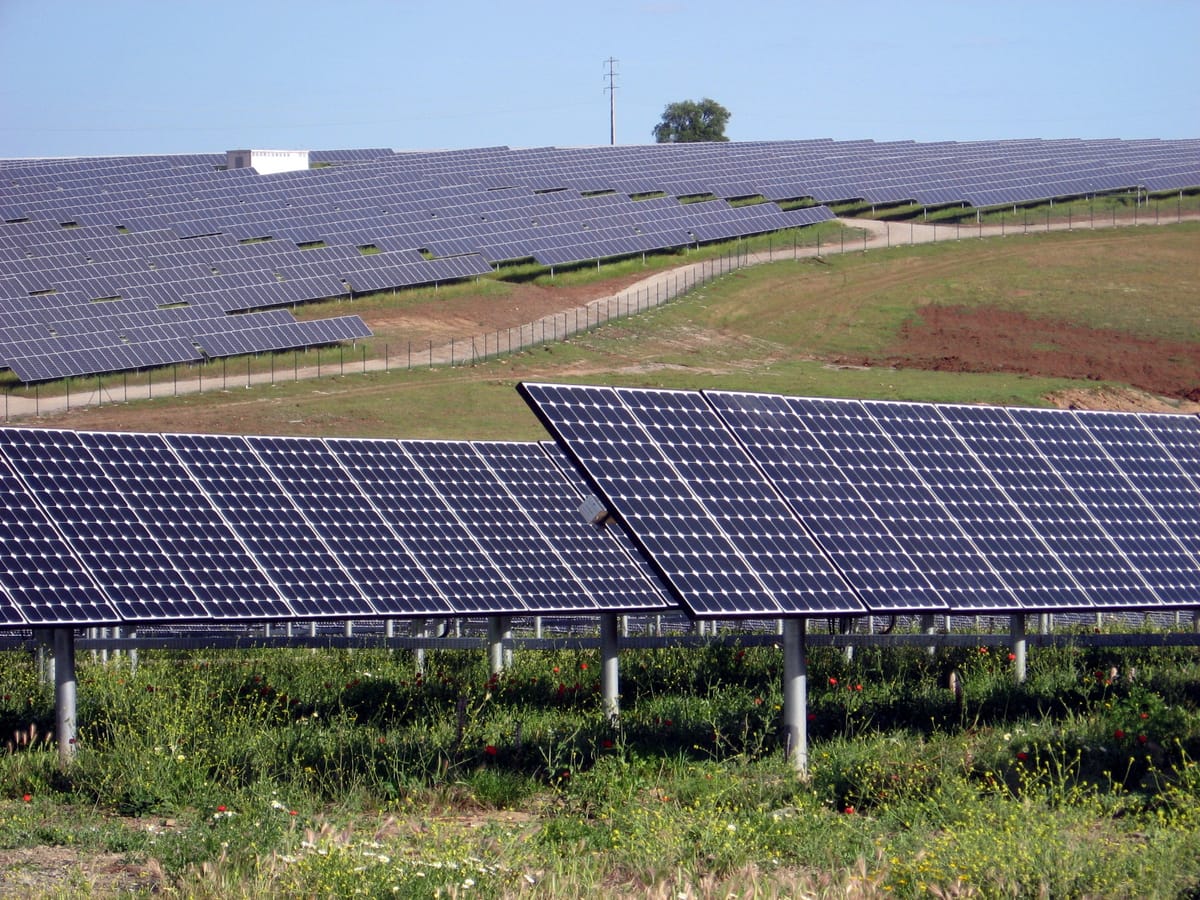
The programme, branded REPower, rewires how the plant gets and uses its energy. Two photovoltaic solar parks with roughly 30 megawatts-peak of capacity — more than five thousand panels spread across about 30 hectares, installed by Greenvolt and Voltalia — now supply around 17% of the annual electricity consumed by the site's chlor-alkali unit. Alongside them sits a modular battery system rated at 12 megawatts and 12 megawatt-hours, which Bondalti describes as a pioneering industrial-scale energy-storage installation in Portugal.
The third piece is the quiet one but arguably the most important: the electrification of steam production. By swapping fossil-fired boilers for electric ones and adding new electrolysers, Bondalti replaces combustion with electricity that can increasingly come from renewable sources — the step that actually drives the emissions down rather than merely offsetting them.
Public money, private bet
The investment was part-funded by the state: 32 million euros of the 76-million-euro total came from the Plano de Recuperação e Resiliência (Recovery and Resilience Plan, or PRR), Portugal's slice of the EU's post-pandemic recovery fund. That makes Estarreja a test case for a wider ambition — using recovery money to decarbonise energy-hungry heavy industry rather than only lighter, greener sectors.
For a chemicals maker, the economics are delicate. Cutting emissions while keeping a globally traded product competitive is the central challenge for the sector, and electricity prices, carbon costs and the pace of the grid's own greening will all shape whether the sums add up over time.
Why it matters
Estarreja has been synonymous with Portuguese heavy chemistry for generations, and its complex is among the country's larger industrial emitters. A project that trims tens of thousands of tonnes of CO2 there carries more weight than the same effort at a smaller plant, and it signals that Portugal's decarbonisation push is beginning to reach the parts of the economy that are hardest to clean up. The completed works also leave Bondalti better insulated against volatile fuel prices — a reminder that, for industry, cutting carbon and cutting costs increasingly point the same way. On where the national emissions line actually went, our reading of the 2026 EDGAR release, which puts Portugal's emissions up 1.6 percent in 2025 against a falling European total, with gas-fired power and industrial burning carrying 72 percent of the rise sets the latest reference.